Cearvol Wave OTC Hearing Aids: Strong Speech-in-Noise Performance at a Budget Price
Cearvol Wave delivers strong value, though not without some trade-offs.)
Our expert team selects and tests products rigorously. We may earn commissions if you buy through our links. Here's how we keep reviews independent.
Buy at Cearvol:format(webp))
Quick Take
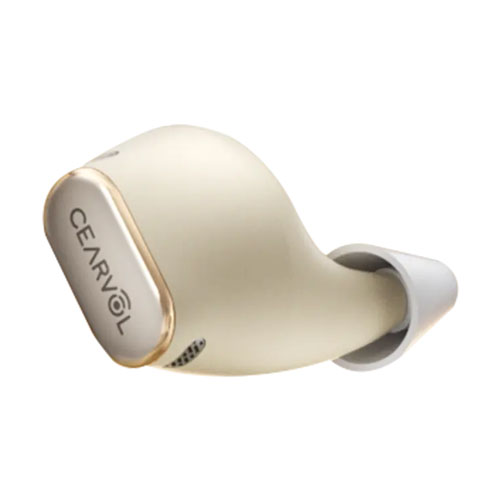
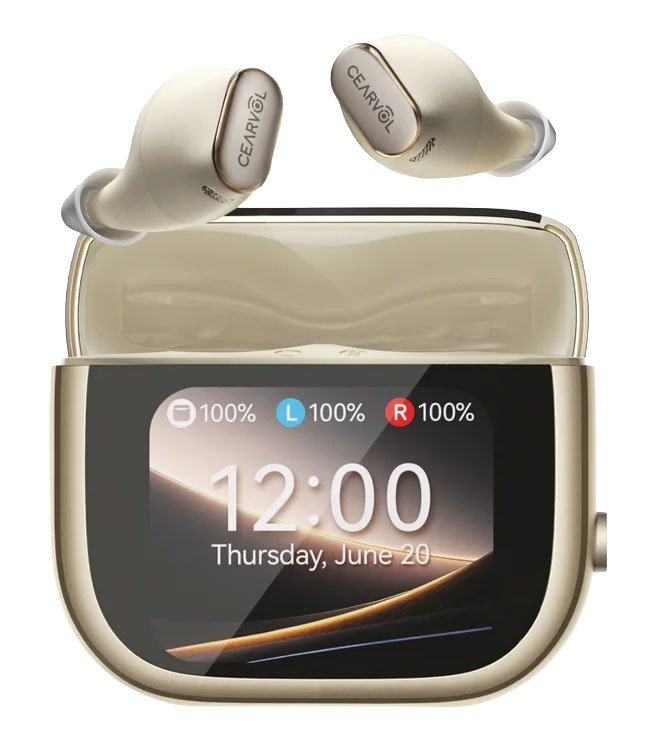
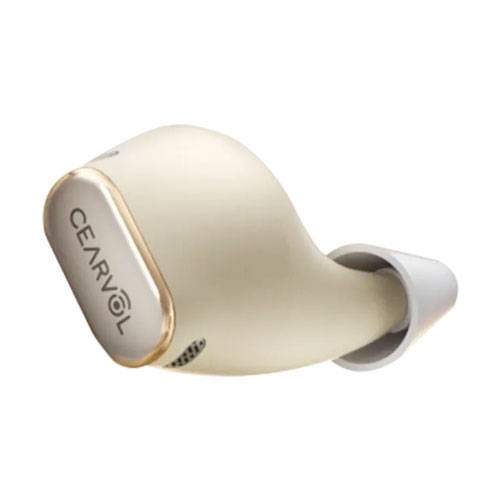
Cearvol Wave is a budget-priced over-the-counter hearing aid with an unusually ambitious feature for its $399 price tag. It is a visible-in-ear style device, meaning it looks more like a modern earbud than a traditional behind-the-ear or in-the-ear hearing aid. This design gives Cearvol room to include Bluetooth streaming, rechargeable batteries, app-based personalization, AUX-IN audio through the charging case, and even a remote microphone mode built into the case.
On paper, Cearvol is making some big claims. The company says Wave is powered by its “NeuroFlow AI 2.0” platform, with advanced Deep Neural Network (DNN) processing designed to analyze the listening environment, enhance voices, suppress noise, reduce feedback, and make the user’s own voice sound more natural. As always, those kinds of AI claims deserve careful scrutiny. Marketing language can make almost any hearing aid sound futuristic. What matters more is whether the device actually improves real-world listening performance.
That’s where the early lab results are interesting.
In HearAdvisor’s independent lab testing, Cearvol Wave achieved a SoundScore of 4.32 out of 5—well above the OTC category average of 3.43, and especially notable given the Wave’s sub-$400 price. Its strongest result was speech-in-noise, where it scored 2 percentage points above the OTC category average. For many people shopping for hearing aids, that is the result that matters most. Background noise is one of the most common and frustrating listening challenges, whether it is in a restaurant, family gathering, coffee shop, or busy workplace.
However, there are also several factors to consider before purchasing the Cearvol Wave, including its potential durability, feedback performance, and how your voice sounds when using it (i.e., own-voice perception or occlusion).
Editor’s Note: While our partner company, the independent HearAdvisor lab, has evaluated Cearvol Wave for its acoustic performance, a full hands-on review of the product is still pending, and some of the following information is based on product specifications and other manufacturer data.
Pricing
Verified seller for Cearvol Wave.

Cearvol
Risk-free trial
Buying through Cearvol gives you a simple, low-risk way to try hearing aids from home. Your hearing aids are delivered directly to your door, ready to use out of the box for mild to moderate hearing loss, and backed by a 30-day risk-free trial with a money-back guarantee. If you need help along the way, Cearvol's support team is available by phone, email, and chat to provide guidance without the need for in-person clinic visits.
- 30-day trial
- Money-back guarantee
- Direct delivery
- Remote support
Never miss a price drop
Get notified when prices drop for this product
HearAdvisor Test Results for Cearvol Wave
As noted above, the most persuasive case for Cearvol Wave is its performance in noise, where it performs 2 percentage points above the OTC average and 1.7 points above all hearing aids tested by HearAdvisor to date.
Here are the results from the five parameters tested in the independent HearAdvisor lab:
OVERALL SOUNDGRADE: A | AVERAGE |
|---|---|
Speech in Quiet | 3.3 (+0.2) |
Speech in Noise | 3.2 (+1.7) |
Feedback Handling | 4.0 (-0.5) |
Own Voice | 1.5 (-1.0) |
Music Streaming | 4.5 (+1.0) |
OVERALL SOUNDSCORE | 4.3 (+0.7) |
Note that HearAdvisor concentrates its testing on what we believe are some of the “best” and “most popular” hearing aids available. As you can see from the table above, the HearAdvisor test scores for Cearvol Wave are close to—and in many cases better than—the average for ALL 100+ hearing aids tested by the lab, which includes virtually all of the best prescription hearing aids in the world in the last 3-4 years. The overall weighted SoundScore of 4.3 for Cearvol Wave places it in the top-10 of all currently available OTC hearing aids and in the top-21% of all the hearing aids we’ve tested to date.
Because hearing in quiet is a less demanding metric in which a lot of amplifiers score relatively well, Wave scored about the same compared to all hearing aids tested by the lab.
However, Wave posted strong results in music streaming, scoring 1 percentage point above the overall average. That backs up Cearvol’s marketing of Wave as a 2-in-1 hearing aid and Bluetooth audio device, intended for both everyday hearing support and direct streaming from phones, TVs, computers, or other audio sources.


The picture is not all positive, though. The biggest weakness in the lab data was own-voice comfort. The Wave scored one point below the overall average in this area, which suggests some users may notice their own voice sounding hollow, boomy, or plugged up. This is often related to occlusion, which happens when the ear canal is more physically blocked by the device or ear tip. Some people adapt to this sensation over time, but for others it can be a dealbreaker.
Feedback handling was also a relative weakness. While the Wave still performed reasonably well in absolute terms, it measured 0.7 points below the OTC category average and 0.5 points below the overall average. Cearvol says its AFC 2.0 feedback-control algorithm dynamically evaluates the feedback path and adapts to changing wearing conditions. The lab results suggest that feedback control may be adequate for many users, but it does not appear to be one of the Wave’s standout strengths compared with other hearing aids.
What We Think Cearvol Wave Does Well
The most compelling argument for the Cearvol Wave is simple: it appears to deliver strong speech-in-noise performance at a very low price.
At $399, the Wave is priced far below many self-fitting OTC hearing aids, and dramatically below traditional prescription hearing aids. That alone does not make it a good product. But the HearAdvisor results suggest Wave is not just cheap; it appears to be a legitimate performer in the category, especially for users who struggle to follow speech in background noise.
:format(webp))
Those results also line up with Cearvol’s marketing emphasis. The company highlights AI-powered noise reduction, voice enhancement, and real-time environmental analysis. We would be cautious about taking the AI branding at face value without more technical validation, but the lab results do suggest that whatever processing Cearvol is using, Wave performed well in controlled speech-in-noise testing.
Wave’s streaming performance is another plus. Many budget OTC hearing aids either skip Bluetooth streaming entirely or provide a more limited audio experience. Cearvol promotes the Wave as a hearing aid and Bluetooth streaming device in one, and the strong music-streaming score makes it more appealing for users who want to listen to music, podcasts, videos, or phone audio through their hearing aids.

Battery life for Cearvol Wave is still a question mark for us, as we think the company's published numbers should be understood as total use with the charging case rather than continuous wear time from the hearing aids alone. Cearvol says the Wave provides up to 28 hours of total listening time with the case, and a 15-minute quick charge can deliver up to 3 hours of use. This would seem to indicate it should be enough for most daily use, but as with other Bluetooth-enabled OTC hearing aids, real-world battery life may vary depending on streaming, listening mode, volume, noise-reduction demands, and the device's age.
Touchscreen Charging Case Acts as a Control Center and Remote Mic
One of the more unusual parts of the Wave system is the charging case. It does not simply store and recharge the hearing aids. It also acts as a control hub, remote microphone, and wired audio bridge.
:format(webp))
Cearvol says the touchscreen case can be used to adjust left and right volume, switch listening modes, adjust noise reduction, enhance voices, manage calls, and set alarms. This type of control could be useful for users who dislike tiny earbud buttons or do not want to pull out a phone every time they need to make a quick adjustment. In this way, its function is similar to the charger/control case used in the Audien Atom X which is also offered at $400 but didn’t perform as well as the Wave in HearAdvisor lab testing.
The Cearvol Wave charging case also includes an AUX-IN port. That means users can connect a 3.5 mm audio cable to compatible TVs, airplane entertainment systems, computers, gym equipment, or other devices with a headphone jack. For people who travel frequently, watch TV with others nearby, or want a private wired audio connection, this is a practical feature rarely seen in this price range.
The remote microphone mode is another unique addition. Cearvol says the charging case can be placed near a speaker, lecturer, stage, or meeting participant, then transmit that sound directly to the hearing aids. In theory, that could help in meetings, lectures, or small-group situations where the person you want to hear is farther away. We have not evaluated this facet of Wave under real-world conditions, but the feature itself is unique among hearing aids and particularly surprising for a budget OTC product.
App-Based Personalization and NAL-NL2
The Wave is designed to be personalized through the Cearvol app, which is available for both iOS and Android.


Users can either input hearing loss values or take an in-app hearing test, after which the hearing aids are adjusted for their unique needs. According to Cearvol, the app plays tones across multiple frequencies and then applies those results to the user’s personal listening settings. This distinguishes Wave from OTC hearing aids with a simple preset amplifier. Cearvol also says the Wave uses the NAL-NL2 fitting formula—a widely recognized prescription-fitting method used by hearing care providers that balances audibility and comfort across frequencies.
That is encouraging, but it is worth keeping realistic expectations. App-based self-fitting can be useful, especially for adults with mild to moderate hearing loss, but it is not the same as a professional fitting in a sound booth with real-ear measurement and clinical expertise and counseling. For many first-time users, the setup process, ear-tip selection, and comfort adjustments can have a major impact on whether the device actually works well day to day.
The Wave’s own-voice score also makes fit especially important. Users who perceive their ears are plugged up (i.e., occluded) or bothered by their own voice may need to experiment with different ear tip sizes or settings. Some may be able to find an acceptable balance between speech clarity and comfort. Others may prefer a more open-fit device, even if that means giving up some streaming quality or low-frequency amplification.
Who Should Consider the Cearvol Wave?
The Cearvol Wave looks most compelling for budget-conscious consumers with mild to moderate hearing loss who prioritize hearing speech in noisy environments. Based on the HearAdvisor data, speech-in-noise performance is the clear standout. If your top priority is following conversations in restaurants, social gatherings, or other challenging environments, the Wave deserves attention, especially at $399.
:format(webp))
It may also be a good fit for users who want Bluetooth streaming without paying premium OTC prices. The strong music-streaming result, combined with direct Bluetooth and AUX-IN support, makes the Wave more versatile than many inexpensive hearing aids.
In this way, its design also mimics an earbud-type consumer electronic device rather than a hearing aid. You may view this as good or bad, depending on your perspective, but it is not discreet in the sense of being “invisible in the ear,” unlike some other OTC and custom-prescription hearing aids.
The Wave may not be well suited for users who are highly sensitive to occlusion or who strongly dislike the feeling of something blocking the ear canal. The visible-in-ear design and occluding fit may help with sound delivery and streaming, but the trade-off is that some users may hear their own voice as hollow or boomy. That is not a small issue. Own-voice comfort can make or break the daily usability of a hearing aid.

Cearvol’s product specifications indicate that Wave has an Ingress Protection rating of IPx5. That means it has been tested to resist low-pressure water jets from any direction, so it should tolerate everyday moisture exposures such as sweat, light rain, or brief splashes. The “X” means the device was not rated for dust protection, while the “5” refers specifically to water resistance. Importantly, IPX5 does not mean the hearing aid is waterproof or safe for showering, swimming, or submersion; it simply indicates a reasonable level of protection against incidental moisture during normal daily use. For reference, most top-quality prescription hearing aids have an IP68 rating, which offers significantly higher protection against moisture and dirt/debris—so you should be more careful using this product around water or in dusty conditions.
Users who are prone to feedback or who need a very stable fit should also be cautious. The Wave’s feedback handling was not poor overall, but it was below average in HearAdvisor’s testing.
Additionally, we cannot at this time make a firm recommendation about the product’s use as an all-day device because the battery usage time information is somewhat opaque.
:format(webp))
Early Verdict
The Cearvol Wave is not a perfect OTC hearing aid, but the early lab results are stronger than we would normally expect from a $399 device. Its speech-in-noise performance is the headline result, and its streaming quality is also impressive for the price. Add in the touchscreen charging case, AUX-IN support, remote microphone mode, app-based personalization, and Bluetooth streaming, and the Wave offers a surprisingly broad feature set.


The main caution is comfort. The Wave’s below-average own-voice score suggests some users may find their own voice unnatural or plugged up, especially if they are sensitive to occlusion. Feedback handling is another area where the Wave does not appear to lead the category. It also has a lower Ingress Protection rating of IPx5, suggesting you might need to be more careful around water and dust/dirt.
For now, our tentative take is this: the Cearvol Wave looks like a strong budget OTC option for users who prioritize speech clarity in noise and streaming performance, and who are willing to tolerate a more occluding in-ear fit. It is not the safest pick for users who want the most natural own-voice experience, but it may be one of the more interesting low-cost OTC devices we have seen in the lab. We’re also very interested in learning more about the remote-mic performance of its charging case.
A full HearingTracker review is still pending, and we will update our impressions once we have more hands-on experience with comfort, app usability, real-world battery life, remote microphone performance, and day-to-day reliability.
Alternatives to Cearvol Wave
As noted above, consumers who want an earbud-like OTC hearing aid with a charging case / control hub for around $400, may wish to check out the Audien Atom X. However, the Atom X has a lower HearAdvisor SoundScore (3.3/5) than Wave and is a preset hearing aid (i.e., its app doesn’t feature a hearing test that tunes the device for your unique hearing loss). Likewise, Cearvol’s Diamond X1 is a $310 earbud-type device without a touchscreen that performed reasonably well (3.4/5 SoundScore) in the lab.
For a more conventional behind-the-ear type hearing aid, you may wish to check out Elehear Beyond ($399) or Elehear Beyond Pro ($699). Although the Beyond is a preset hearing aid (as opposed to self-fitting with an app-based test) it ranks in the top 10 in HearAdvisor’s OTC testing. The Beyond Pro is a self-fitting OTC device, which Elehear can also program remotely based on your audiogram, and it came out as a top performing OTC device in HearAdvisor's lab tests.
Abram Bailey, AuD
Founder and PresidentDr. Bailey is a leading expert on consumer technology in the audiology industry. He is a staunch advocate for patient-centered hearing care and audiological best practices, and welcomes any technological innovation that improves access to quality hearing outcomes. Dr. Bailey holds an Au.D. from Vanderbilt University Medical Center.