Lucid Hearing is owned by Hearing Lab Technologies, LLC (HLT), which is a Texas-based manufacturer of hearing products. Founded in 2009, HLT is the parent company of other well-known hearing care brands such as Etymotic, Westone Audio, and HearGear. Along with offering Lucid hearing aids at stores and websites like Walmart, Targe, and Amazon, HLT also operates about 500 Lucid Hearing Centers, which are mostly located in Sam's Club stores.
Editorial
Lucid Hearing Aids in 2026: Models, Features, Prices, and Reviews
Our expert team selects and tests products rigorously. We may earn commissions if you buy through our links. Here's how we keep reviews independent.
)
4.0/5
The Lucid Tala is a new over-the-counter (OTC) hearing aid priced at $1,299.99 per pair, designed to enhance speech clarity and offer wireless streaming for both iOS and Android devices. While it features customizable sound settings through the Lucid Hearing app and boasts a 16-hour battery life, it lacks ear-level controls and has subpar Bluetooth audio quality, making it a mixed bag for users.
)
4.0/5
Lucid Engage is an over-the-counter hearing aid priced at $699 per pair, designed for individuals with mild to moderate hearing loss. It features Bluetooth streaming, app-controlled personalizable sound settings, and rechargeable batteries, and can be purchased online or in stores like Best Buy, Walmart, and Sam's Club.
Editor's note: Lucid's website has been offline since mid-May 2026, and the company has lost its operational role at Sam's Club hearing centers to NationsBenefits. At least one forum member has reported that Sam's Club is no longer honoring warranties or providing accessories for previously purchased Lucid hearing aids (unverified). Until Lucid confirms its status, we recommend holding off on new purchases.
Lucid Hearing is a Texas-based hearing aid company founded in 2009 with the goal of making better hearing widely accessible. Lucid is the major hearing aid supplier of Sam’s Club, and is also responsible for managing its approximately 500 Lucid Hearing Aid Centers. Over the past decade and a half, the company has built a large presence in the U.S. market by offering lower-cost over-the-counter (OTC) and professionally-dispensed prescription hearing aids, as well as hearing protection products and accessories. In fact, Lucid has become one of the largest OTC hearing aid distributors, with their products offered through its Lucid Hearing and AmericaHears websites, as well as at Amazon, Target, and Walmart.
:format(webp))
What you need to know about Lucid hearing aids
Traditionally, Lucid Hearing has not produced its own hearing aids but instead partners with “white label” manufacturers who supply the devices according to its specifications using Lucid technology. While we believe the overall value of Lucid hearing aids is good, their devices are generally more basic in terms of build, technology, and sound quality. For example, major global hearing aid brands offer features such as AI- and sensor-driven speech-in-noise strategies and apps with geolocation and fitness-tracking capabilities.
Nonetheless, the independent HearAdvisor lab has rated Lucid Hearing devices highly—specifically the Tala, Engage, and Enrich Pro (each earning “A” or “B” SoundGrades)—and they appear to provide good value given their lower prices.
Lucid’s retail strategy, combined with ongoing investments in proprietary sound processing technology, has positioned the company as a recognizable and reliable name in both the traditional hearing care market and the still-young OTC category. Because of their strong retail presence at Sam’s Club, Lucid also offers the opportunity to try OTC hearing aids at a local Sam's Club and then decide whether it's right for you or if you should opt instead for a prescription aid (see below).
Importantly, the company has a good reputation for service and is among the few OTC hearing aid providers that can be counted on for good online and phone support.
In this article, we'll provide you with the key information and data about Lucid Hearing products, technology, and pricing that you need to make an informed decision about whether they are right for you.
:format(webp))
What we like about Lucid hearing aids
Lab-tested to Work
The independent HearAdvisor lab has found that all three Lucid hearing aids tested improved speech understanding in noise and in quiet, and two models (Tala and Engage) earned an "A" SoundGrade and the lab's Expert Choice Award.Value Hearing Aids
Lucid hearing aids provide good benefit and are generally more economical than competing brands.Numerous Offices and Good Support
There are about 500 Lucid Hearing Centers in Sam's Clubs that are staffed by licensed hearing professionals (usually hearing aid specialists and some audiologists), making it convenient for people who frequently travel and may need service at a second location.Unique Personalization Features in App
The Lucid app has exceptional personalization features with access to multiple programs, volume control, LucidShape (details below), and more.Wireless Streaming
Several Lucid products offer wireless control and Bluetooth™ streaming for both iOS and Android devices.All-day Battery Life
Lucid rechargeable hearing aids offer 16 hours or more of battery life, although run time will vary with streaming, age of batteries, and other factors.Generous Trial Period
90-day trial period with a money-back guarantee.LIfetime Support
Free lifetime remote support for OTC devices; lifetime cleanings and adjustments included with prescription hearing aids
Limitations
Need Sam's Club Membership for Rx Devices
Although the hearing test is free for anyone over age 19, the purchase of prescription hearing aids requires a Sam’s Club membership ($50).Add-ons Can Make for Less Value
Prescription hearing aids at Sam's Club can be more expensive with premium options and add-ons, lessening the value proposition.Locked Hearing Aids
Although not unique, Lucid hearing aids have “locked” software, so other hearing care practices outside of the Lucid/Sam's Club network cannot assist you—an industry tactic HearingTracker would like to see end.Lack Some of the Most-Advanced Features
Hearing aids are not produced by the world's largest manufacturers and do not feature some of the most advanced technologies available today, such as motion sensors, health-tracking features, and language/translation capabilities.OTC Devices Rely on Preset Profiles
Lucid Hearing OTC aids are preset devices that rely on hearing profiles and are not "self-fitting" devices that are programmed via an online hearing test or audiogram.Some Models Are Non-wireless
Not all hearing aids support Bluetooth audio streaming or the Lucid Hearing app.Costco Has a Longer Trial Period
Sam's Club's arch-rival in hearing aids, Costco, offers an industry-best (6-month) trial period.
Yes, but the details depend on what, where, and when you buy. For OTC hearing aids purchased online, Lucid Hearing offers 0% in-house financing starting at $25 per month for 12 months. You’ll have to enter a contract.
For prescription hearing aids, conditions vary. While the minimum APR is 14.9%, you may find locations that waive the interest during a promotion period. There’s no down payment for the first 30 days (except for subprime financing at a higher interest rate), and financing periods can range from 24 to 60 months. Visit a Lucid Hearing for more details, and make sure you understand the financing terms.
Lucid Hearing Aid Product Portfolio
Lucid Hearing offers a diverse portfolio that spans OTC and prescription products, as well as exclusive models sold only at Sam’s Club. If you're a Sam's Club member, you can generally save money by buying Lucid OTC hearing aids through the big box retailer.
Lucid OTC Hearing Aids
The OTC category includes products such as Tala, FIO, Engage, Enlite, and Enrich. Like all OTC hearing aids, they are designed for adults with perceived mild-to-moderate hearing loss and can be purchased without a hearing exam, audiogram, or prescription. All rely on "preset" programs/profiles, which Lucid says were developed from machine learning on millions of audiograms to provide the best hearing in the most common listening scenarios at the push of a button.
However, preset OTC hearing aids are substantially different from "self-fitting" hearing aids that rely on a hearing test or actual audiogram for better frequency matching to your unique hearing loss. But, as explained later, Lucid's more advanced wireless (app-based) models have the LucidShape feature, which makes them more similar to self-fitting OTC aids.
Below is a table that summarizes each model.
Model | Style | Price | Battery Type | App Controls | Onboard Button(s) | Audio Streaming | Programs | SoundGrade |
|---|---|---|---|---|---|---|---|---|
Tala | Earbud | $1,300 | Rechargeable | 4 | A | |||
FIO | ITE | $1,000 | Rechargeable | 4 | not tested | |||
Engage Rechargeable | RIC | $700 | Rechargeable | 4 | A | |||
Engage | RIC | $650 | Size 13 | 4 | not tested | |||
Enlite | ITE | $300 | Size 10 | 2 | not tested | |||
Enrich Pro BTE | BTE | $300 | Size 312 | 2 | not tested | |||
Enrich Pro ITE | ITE | $200 | Size 10 | 2 | B | |||
Enrich | BTE | $200 | Size 13 | 3 | not tested |
Summary of Lucid Hearing over-the-counter (OTC) hearing aids. To see entire table, please use the above gray scroll bar.
As noted in the table above, Lucid offers OTC hearing aids in almost every style in a wide price range from $200 to $1,300. Its premium Tala, Engage, and FIO models offer app-based adjustments, and Tala and Engage also offer Bluetooth wireless streaming for both iOS (iPhone 6 and newer) and Android (check the Lucid Phone Compatibility webpage to see if your mobile device works with them). While its Enrich and Enlite models are non-wireless and don't offer app-based controls, they can provide good amplification for people with milder, less complex hearing loss.
Lucid Tala
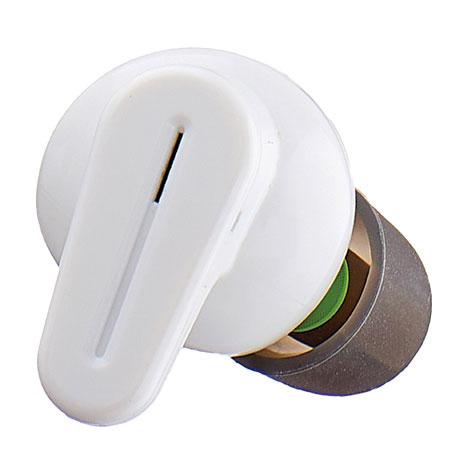
Tala is Lucid's premium rechargeable earbud-style OTC hearing aid that was launched in August 2023. It offers wireless control via the Lucid app and Bluetooth audio streaming for both iOS and Android devices (you need to specify iOS or Android when ordering), with a battery life of up to 16 hours, including 2 hours of streaming time. It comes with a portable case that provides an additional 3 charges (about 48 additional hours of use).
From $1,300per pair
The Lucid Tala is a new over-the-counter (OTC) hearing aid priced at $1,299.99 per pair, designed to enhance speech clarity and offer wireless streaming for both iOS and Android devices. While it features customizable sound settings through the Lucid Hearing app and boasts a 16-hour battery life, it lacks ear-level controls and has subpar Bluetooth audio quality, making it a mixed bag for users.
Expert Review
Tala scored impressively well in independent HearAdvisor lab testing, earning an "A" SoundGrade and the lab's Expert Choice Award—outscoring several premium OTC and prescription aids in speech-in-noise testing. While we're not big fans of the earbud form factor due to its cosmetics and the occlusion effect (the barrel-like sound of one's own voice), some people prefer this type of hearing aid because it looks more like a consumer electronics device than a hearing aid. For them, Tala is a good choice—particularly for situational listening. The lab found that it performed well above average for speech in quiet and noise, well below average in feedback handling, and above average in occlusion and in music streaming quality.
Be aware that Tala's price tag of $1,299.99 places it on the higher end of the OTC hearing aids (i.e., you can get prescription hearing aids at Sam's Club or Costco for only a few hundred dollars more), but it appears to be a good option for those interested in an ITE/earbud-style OTC hearing aid.
:format(webp))
Lucid Engage and Engage Rechargeable RICs
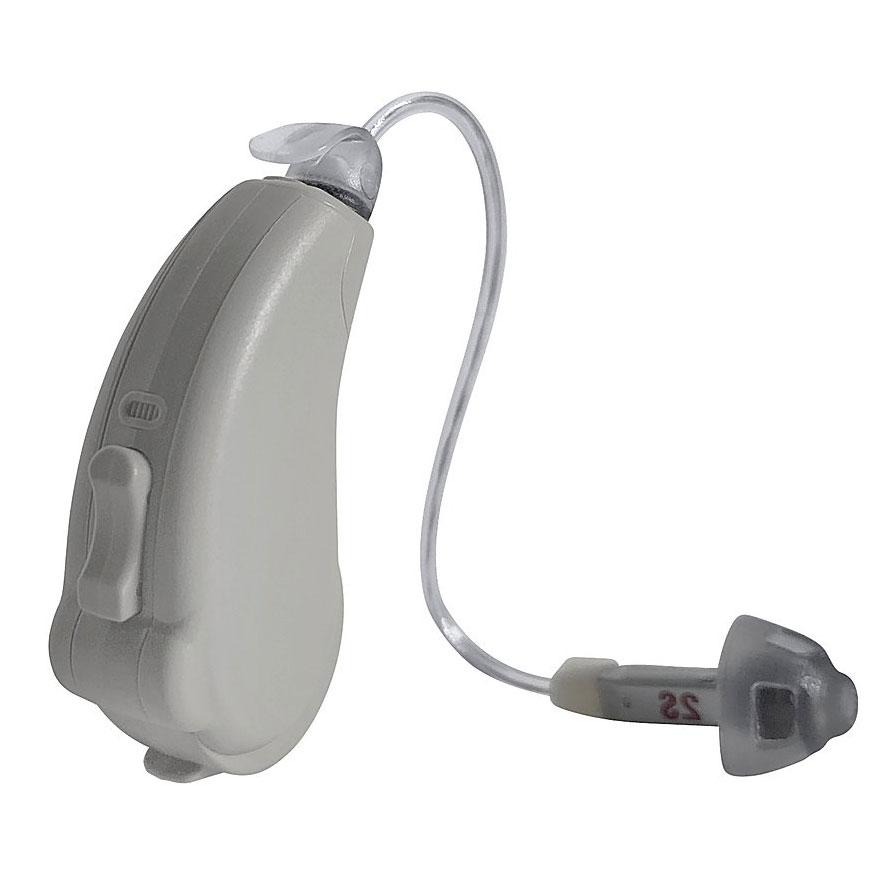
Engage is Lucid’s versatile OTC, available in a receiver-in-canal (RIC) form factor that uses either size 13 replaceable batteries or lithium-ion rechargeable batteries. At $850 for the rechargeable or $650 for the button-cell version, Engage is intended as an affordable option for users who want a traditional hearing aid style in an OTC product, with the Rechargeable version appealing to those who prefer the convenience of not changing batteries.


You can expect approximately 16 hours of battery life with the rechargeable version or 4-7 days using button-cell batteries (depending on streaming usage, device age, and the listening environment). Both versions feature push-button controls for switching listening programs, adaptive noise reduction, and feedback suppression.
From $699per pair
Lucid Engage is an over-the-counter hearing aid priced at $699 per pair, designed for individuals with mild to moderate hearing loss. It features Bluetooth streaming, app-controlled personalizable sound settings, and rechargeable batteries, and can be purchased online or in stores like Best Buy, Walmart, and Sam's Club.
Expert Review
Like the Lucid Tala, the Lucid Engage Rechargeable hearing aid tested very well in the HearAdvisor lab, earning an "A" SoundScore and the lab's Expert Choice Award. Engage performed well above average on speech in quiet, above average on speech in noise, well below average on feedback handling, well above average on occlusion results, and above average on music streaming quality.
The rechargeable and battery-driven models appear to be virtually identical in terms of form and functionality, with the rechargeable version being slightly larger at the bottom of the device. Moreover, we suspect (but have not confirmed via the lab) that Engage is similar or identical to the core processing technology found in Lucid's prescription hearing aids.
Lucid FIO
FIO, launched in 2022 and available for $1,000, is a rechargeable in-the-ear (ITE) OTC hearing aid from Lucid that combines simplicity with modern app-based personalization. FIO offers four preset listening modes—Mild, Moderate, Bass Boost, and Max—that can be selected via the Lucid app.

The rechargeable lithium-ion battery provides up to 16 hours of use on a single charge, with a portable charging case that makes daily recharging easy. The portable case holds 4 extra charges (up to 64 hours of use time). Like Tala and Engage, FIO supports Lucid’s LucidShape in-app sound adjustments but, unlike them does not include direct Bluetooth streaming of phone calls or music. The HearAdvisor lab has not yet tested this hearing aid.
:format(webp))
Lucid Enlite
Moving into Lucid Hearing's more basic sub-$300 hearing aids, Enlite is an entry-level OTC in-the-ear (ITE) hearing aid, positioned as an affordable and easy-to-use option for first-time wearers. It uses a size 10 replaceable battery and offers simpler digital sound processing without the complexity of app-based controls or wireless streaming.


Enlite has a two-position switch on its faceplate that selects either high or low volume. While it lacks Bluetooth streaming and advanced customization, it's designed as a practical choice for users with milder hearing loss who are seeking basic amplification. The HearAdvisor lab has not yet evaluated this hearing aid. Price: $299.99.
:format(webp))
Enrich Pro BTE
Also at $299.99, the Lucid Enrich Pro BTE is a low-cost traditional behind-the-ear (BTE) hearing aid that the editor (KS) has actually tried and thinks could serve as a good "starter hearing aid" for someone with milder hearing loss. The Enrich Pro BTE includes many of the core features you’d expect from a good late-1990s or early-2000s (pre-wireless) digital hearing aid. It features directional microphones to enhance speech understanding in noisy places, and a simple push-button lets wearers toggle between two listening profiles. A rocker switch provides manual volume control, while audible beeps confirm which program is selected or warn when the Size 312 battery is nearly depleted.

Enrich Pro BTE comes with soft, comfortable ear tips for a secure fit. Although it has a "just-okay” sound and build quality—and it won't wow you with cool features (no app, tap controls, etc.)—it should work well for people with a milder hearing loss seeking a simple, no-frills, economical hearing solution.
:format(webp))
Lucid Enrich Pro ITC
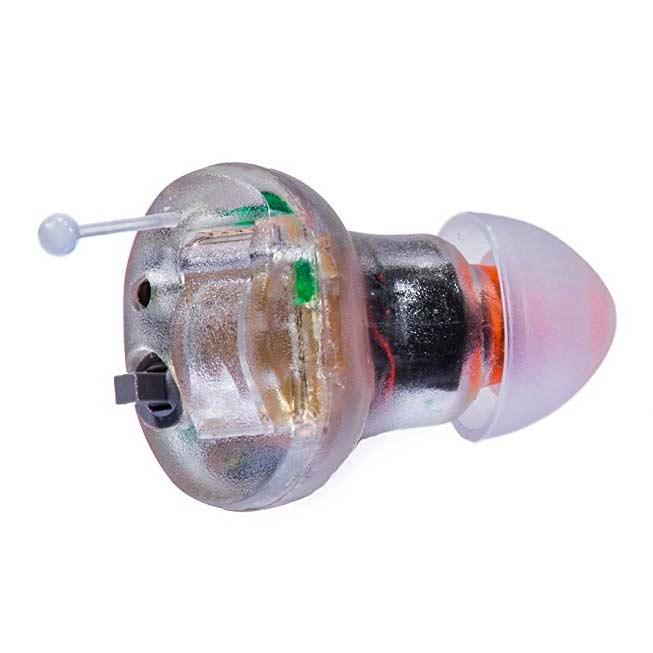
The Enrich Pro ITE offered for $200 is a small, budget in-the-canal (ITC) hearing aid that has two preset programs and a volume control via a switch on the faceplate, which gives it slightly more utility than the Enlite (which only has a 2-position switch on the faceplate for the high/low volume). It uses a size 10 replaceable battery that should last 3-4 days. As a preset, single-microphone, non-wireless hearing aid, it offers basic amplification for those seeking an economical option with a relatively discreet appearance.
From per pair


Although not scoring as high as Tala or Engage in HearAdvisor testing, the Enrich Pro ITC earned a solid "B" SoundGrade from the lab, placing it in the top 40% of OTC hearing aids tested to date. It performed above average in speech in quiet and noise, below average in feedback handling, and below average in occlusion results (due to its closed-fit design). Enrich Pro is non-wireless, so it does not use the app, nor does it stream audio.
:format(webp))
Lucid Prescription Hearing Aids
Lucid Hearing’s prescription hearing aids at Sam's Club start at $1,299 per pair. However, according to Lucid Hearing, you can spend as much as $4,000 for a pair of their more advanced technology hearing aids with an extended warranty. Other premium options, such as high-fidelity receivers, rechargeable batteries, or custom earmolds, can drive the price even higher.

The table below provides an overview of Lucid Hearing’s standard prescription hearing aids with the receiver-in-canal (RIC) models on top and the custom in-ear models toward the bottom.
Model | Style | Price/pair | Battery | Bluetooth/app |
|---|---|---|---|---|
Ultra 128-Channel BTE | RIC | $4,355 | Size 13/Rechargeable | |
Ultra 104-Channel BTE | RIC | $3,755 | Size 13/Rechargeable | |
64-Channel Advanced BTE | RIC | $2,955 | Size 312 | |
32-Channel Advanced BTE | RIC | $1,555 | Size 312 | |
Liberty 24-Channel BTE | RIC | $1,299 | Rechargeable | |
128-Channel Custom | ITE/ITC | $3,999 | Size 10 | |
96-Channel Custom | ITE/ITC/IIC | $4,399 | Size 10 | |
64-Channel Custom | ITE/ITC/CIC | $2,699 | Size 10 | |
32-Channel Custom | ITE/ITC | $2,799 | Size 10 |
Lucid prescription hearing aids. Prices for custom aids can vary widely and are generally more expensive than those for behind-the-ear (BTE) devices.
Lucid's BTE/RIC prices may vary based on model style and options like custom earmolds. Although the company refers to its receiver-in-canal (RIC) hearing aids as behind-the-ear (BTE) hearing aids, the hearing industry usually reserves the term "BTE" for hearing aids that use a “sound tube” instead of a wired “speaker in the canal” to convey sound to the ear canal.
Lucid Hearing’s custom prescription hearing aids include in-the-ear (ITE) half-shell and full-shell, in-the-canal (ITC), completely-in-canal (CIC), and invisible-in-canal (IIC) designs, ranging from 36 to 128 channels, and their prices may range considerably. Additional channels enable fine-tuned amplification of frequencies critical for speech clarity.
Because Sam's Club is the exclusive distributor of Lucid prescriptive hearing aids, HearingTracker has devoted an in-depth look at the specific models of these hearing aids on our Sam's Club Hearing Aids webpage.
What do Lucid Hearing aids include?
For prescription hearing aids, the initial hearing test and consultation at a Lucid Hearing clinic are free. You won’t need a Sam’s Club membership until you make a purchase or if you buy online. When purchased through Sam's Club, you get a 90-day 100% money-back trial period and free lifetime support, while buying through LucidHearing.com gives you a 60-day trial period and lifetime remote support. Prescription hearing aids also include free lifetime adjustments and cleanings at a Lucid Hearing Center.


Buying OTC hearing aids either through Sam's Club or the Lucid website comes with a unique perk: If you wish to return your OTC hearing aids within the trial period, you can choose to upgrade to prescription hearing aids instead.
Note that Lucid OTC hearing aids purchased through a third-party retailer only come with a 30-day manufacturer return period or the retailer's specific return policy. This can make it advantageous to buy through Sam's Club or the Lucid Hearing website.
Lucid Hearing Aid Technology and Innovation
Central to Lucid Hearing’s approach is its proprietary “Powered by Lucid®” technology platform. Unlike conventional hearing aids that rely on fewer processing channels, Lucid’s premium devices use up to 128 channels of sound analysis and amplification. This multi-channel approach is said to allow the aids to deliver improved speech clarity across different environments when programmed correctly.
Lucid Hearing’s HearSense AI, released in 2025 on premium hearing aid models, enables the hearing aid to automatically adjust to each scenario a wearer encounters, without requiring manual adjustments or fine-tuning.
A Unique Twist on Traditional Hearing Aid Compression: ADRO
The company promotes its Adaptive Dynamic Range Optimization (ADRO) system—originally developed for cochlear implants—as a breakthrough that makes sound more comfortable and more intelligible in everyday listening. ADRO reportedly allows for more natural variations in loudness; it remains as a linear amplifier in certain channels until the rules of its algorithm are violated relative to comfort versus audibility. Loudness can vary in the discrete channels with input levels, and it serves as a slow-acting gain (volume) optimizer to keep sounds within a comfortable listening range.

In plain English, this means ADRO slowly increases volume in certain frequencies if too many sounds are below audibility, and it decreases volume if too many are uncomfortably loud. The goal is to retain the natural dynamics of speech and background sounds. Clinical research on hearing aids and implants dating back to 2001 supports this sound-processing method,1-5 which is now used almost exclusively by Lucid.
Lucid names its prescription hearing aids based on the number of channels the device offers. However, with most hearing aids, once you exceed a certain number of channels (e.g., more than, say, 9), it really doesn't matter how many additional channels the device features. That's because the audiometric data from your audiogram is generally not divided into more than 5-9 bands for programming the aid. However, Lucid noted to HearingTracker that ADRO processes sound independently in each frequency channel, so the more channels there are, the more precise and clearer the sound.
But we think it's more likely that Lucid uses the number of channels as a proxy for its technology level and the features included in its prescription hearing aids. For example, Lucid's “Focus” and “Speech Clarity Enhancement” features are offered in its Ultra 128-channel RIC but not in its Ultra 104-channel RIC.
Personalization with LucidShape and AudioEQ
Lucid also incorporates personalization into its technology ecosystem. Its companion mobile app (available on iOS and Android) allows users of Lucid's more advanced hearing aids to adjust programs and customize sound for specific environments, and monitor device status.
LucidShape™ offers impressive hands-on control, enabling you to customize the device's output. Unlike some other OTC devices that only provide volume and basic three-band adjustments for bass, middle, and treble, LucidShape offers more frequency-specific options. This allows you to tune your OTC hearing device more closely to how a prescription hearing aid is adjusted. While it isn't quite on that level, it is one of the most comprehensive spectral adjustments we’ve seen in an OTC device.
:format(webp))
Also found in Tala and Engage, the app-based feature, AudioEQ, allows control of various aspects of your streamed audio, similar to the “transparency” features found in earbuds like Apple AirPods Pro. Audio Mix lets you adjust the balance between the streamed audio and the ambient sounds picked up by the microphones. Moving the slider toward “Streaming” provides a more direct, isolated sound, such as for phone calls. Conversely, a balance leaning toward “Ambient” increases the microphone mix, which can be safer in busy areas where situational awareness is important.
:format(webp))
What do customers think of Lucid Hearing?
At this writing, Lucid Hearing has a 4.2/5 rating, while Sam's Club Hearing Aids scores a 4.9/5 rating with Consumer Affairs.
The few customers who weren’t satisfied with Lucid Hearing predominantly struggled with poor battery life and unstable Bluetooth connections. Other customers praised Lucid Hearing’s customer service and support for being professional and diligent, although some expressed disappointment that it can be difficult to find a staff member when dropping in without an appointment.
Here are a few samples:
I decided to purchase hearing aids from Lucid because the price was affordable compared to other companies like Miracle Ear. The experience of getting set up with Lucid's technology was great. The staff was very accommodating, explaining everything clearly, and made me feel at ease, almost like being welcomed into someone's home.

The hearing aids themselves are comfortable and provide clear audio. I have no complaints and would recommend them to anyone looking for hearing aids. The purchasing experience was pleasant because there was no pressure to buy, unlike my experience with Miracle Ear, where I always felt forced to make a purchase...
One of my favorite features is the Bluetooth functionality, which I'm using right now. However, the battery doesn't last long when using Bluetooth, which is a bit of a downside. They are not rechargeable, but it's affordable batteries.
Overall, I'm 100% satisfied with the hearing aids. When considering customer service and the quality of the product, I would give them top marks. Although they seemed pricey at first, when I compared them with other providers like Miracle Ear, Lucid was about $1,000 cheaper, which makes them quite competitively priced. — Brett of Louisiana, November 9, 2024
I'm not happy with Engage. The batteries keep going dead and won't last all day. They cut in and out all the time. I'll be talking right now on my phone and one of them or both of them will go completely out, not connect momentarily, then they come back up. For the price I gave for these hearing aids, I'm not fond of them. I've been back to Sam's Club three different times and they replaced one hearing aid completely for me. The doctor there has been superb on trying to help me. — James of Florida on February 5, 2023
My Lucid hearing aids have been problematic from the beginning. The right one screeches terribly whenever the slightest of thing touches it. I can't use the phone on that ear and when people hug me they want to know what the horrible sound is from. My left hearing aid constantly is requesting a new battery. I will put in a new battery and two days later, it is asking for a new battery again. I am using brand new batteries from Sam's just as the technician suggested. These hearing aids are 13 months old. The technician will fiddle and fiddle with them, however, nothing gets resolved. I go home with the same issues I walked into the store with. — Myra N of Maryland on April 10, 2024
My wife suggested I get a hearing test and it happened that Engage was having a free hearing test for Lucid at Sam's Club. I stopped in there and got a free hearing test. I definitely needed hearing aids so I picked them up that same day. I didn't have to wait to get them. The audiologist helped me and was great. Every time I go down there, they help out. For anything that I need down there, they're willing to do it. My hearing aids fit great but it takes a couple of weeks to get used to them. Once you get used to them, they're perfect. I like them. — John of Kansas on February 3, 2023
It seems clear that service quality depends on the individual hearing care professionals, and some hearing centers may be understaffed or experience high turnover, which isn't uncommon in network hearing care offices. This hit-or-miss nature of customer service is reflected in many of the poor reviews, with people upset about no one answering the phone, no walk-in appointments, or long wait times. However, there are also plenty of people who are very satisfied with their Sam's Club hearing care providers.
Should you use Lucid Hearing?
Lucid Hearing offers a comprehensive set of products and services to address your hearing needs. It’s one of the best options in case you don’t know whether you should pick OTC or prescription hearing aids. The free in-person hearing test and consultation can help you decide, especially if you’re a Sam’s Club member or live close to one of its hearing centers. Provided your hearing loss doesn’t require a custom model, you could be fitted with a hearing aid on the spot. If you value in-person services and would like to take home a hearing solution right away, it’s worth giving Lucid Hearing a try.
Alternatives to Lucid Hearing
Lucid Hearing isn’t the most affordable option for OTC or prescription hearing aids.
- Costco Hearing Aid Center: For prescription hearing aids, Costco hearing aids are a great alternative if you’re seeking in-person services, particularly if you already have a membership or if a Costco Hearing Aid Center is closer to you than its Sam’s Club counterpart. Costco offers top technology in all form factors from four of the world's largest hearing aid manufacturers, including custom-fit models, for prices starting at around $1,500 per ear for Rexton hearing aids. You also get a free professional hearing test and fittings that include real-ear measurement, Costco’s standard 6-month trial period, a 3-year warranty, as well as free cleanings, check-ups, and programming adjustments for the lifetime of the hearing aid.
- Local hearing clinics: If you value a personal relationship with your care provider, look into hearing clinics in your area. Particularly if you have a more severe or complex hearing loss or bothersome tinnitus (ringing in the ears), a hearing care professional in an independent practice who adheres to best practices is likely your best choice for achieving superior results. These practices often don't face the same high-intensity patient loads as a Sam's Club or Costco might, meaning they can have more time to address your individual hearing needs.
- Online hearing aids: Several companies offer a happy medium between the convenience and affordability of OTC hearing aids and the level of amplification and care of prescription hearing aids, and some also offer good online support that even includes handling insurance claims on your behalf.
- Audicus provides remote fittings and services. Its hearing aids can address mild to severe hearing loss, at prices ranging from $699 to $1,699 per ear when you buy upfront. Alternatively, you can subscribe for a monthly fee of $89, with services and extended warranties included.
- Hear.com is a concierge-type hearing care service. They manage the entire process of obtaining a hearing aid, from the initial consultation to scheduling an appointment with a local care provider, and finally handling insurance and financing details. Prices range from $299 to $6,500 per pair, though with discounts and promotions applied, you could pay much less.
- Yes Hearing sells hearing aids at a significant discount, ranging from $1,395 to $3,995 per pair. A local care provider will visit you at your home for a hearing test, fitting, and follow-up services, all included in your purchase.
- ZipHearing facilitates your hearing care journey, putting you in touch with a local care provider for in-person services. The average price of $4,500 for a pair of hearing aids includes your hearing test, fitting, and follow-up services.
- Other OTC hearing aid options: You might not need prescription hearing aids if you’re dealing with mild-to-moderate hearing loss. We offer recommendations for budget-friendly, self-fitting OTC hearing aids in our Best OTC Hearing Aids Guide.
References
- Blamey PJ. Adaptive dynamic range optimization (ADRO): a digital amplification strategy for hearing aids and cochlear implants. Trends Amplif. 2005;9(2):77-98.
- Blamey PJ, Martin LF, Fiket HJ. A digital processing strategy to optimize hearing aid outputs directly. J Am Acad Audiol. 2004 Nov-Dec;15(10):716-28.
- James CJ, Blamey PJ, Martin L, Swanson B, Just Y, Macfarlane D. Adaptive dynamic range optimization for cochlear implants: a preliminary study. Ear Hear. 2002 Feb;23(1 Suppl):49S-58S.
- Ali H, Hazrati O, Tobey EA, Hansen JH. Evaluation of adaptive dynamic range optimization in adverse listening conditions for cochlear implants. J Acoust Soc Am. 2014 Sep;136(3):EL242.
- Ni A, Akbarzadeh S, Lobarinas E, Kehtarnavaz N. Personalization of Hearing Aid Fitting Based on Adaptive Dynamic Range Optimization. Sensors (Basel). 2022 Aug 12;22(16):6033.
)
Karl Strom
Editor in ChiefKarl Strom is the editor-in-chief of HearingTracker. He was a founding editor of The Hearing Review and has covered the hearing aid industry for over 30 years.
)
Tina Sieber, PhD
Health WriterTina Sieber is a technology journalist with over 10 years of experience and a PhD in Biochemistry. Following an episode of sudden one-sided hearing loss, she was diagnosed with a benign brain tumor in 2018. She has since started writing about hearing loss and reviewing hearing aids for major tech publications.