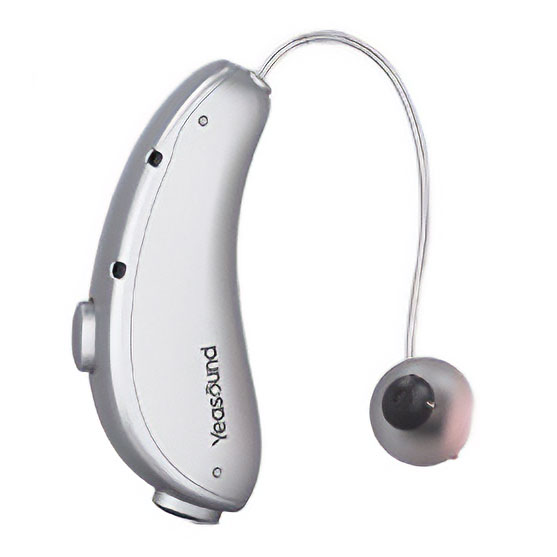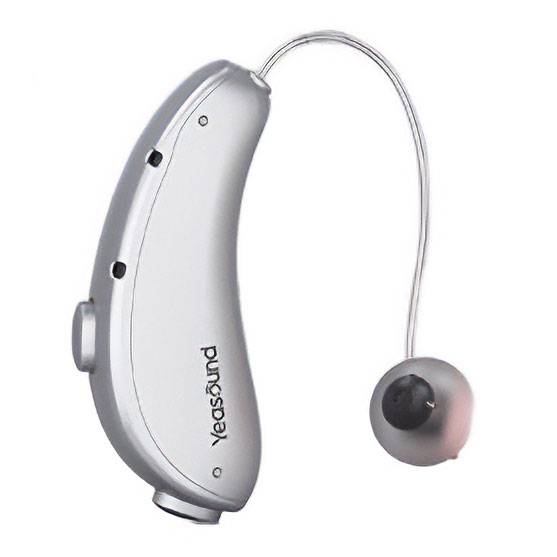
Yeasound RIC800: Audiologist and Lab Reviewed
Our expert team selects and tests products rigorously. We may earn commissions if you buy through our links. Here's how we keep reviews independent.
Buy at Yeasound
Yeasound’s RIC800 is the company’s newest receiver-in-canal (RIC) over-the-counter hearing aid, sold online for around $699 (currently discounted to $659 on the company's website). On paper, the RIC800 promises a meaningful step up from the older RIC700 Plus, with AI-based noise reduction, a new automatic (“adaptive”) program, and the same strong core checklist: hands-free calling, app control for iOS/Android, and up to 31 hours of rechargeable battery life.
After working through the unboxing, app setup, and HearAdvisor lab testing, my impression is pretty clear: RIC800 is a solid OTC option under $1,000—but the improvements over RIC700 Plus feel incremental, and the price bump is the main sticking point.
Quick verdict
If you want a straightforward, preset-based OTC RIC that’s discreet, dependable, and generally “feels” closer to a traditional hearing aid than many earbud-style OTC devices, RIC800 is worth a look—especially when on sale. Just go in with realistic expectations: no audiogram-based fitting, limited telehealth support, and only four hearing-profile presets.
A quick summary of what I found in our lab testing: Testing of the Yeasound RIC800 by the independent HearAdvisor lab resulted in an “A” SoundGrade for the RIC800, with exceptional performance for speech in noise, speech in quiet, feedback handling, and music streaming quality. One thing it didn't score higher than most other OTC aids was own-voice perception (occlusion). In short, RIC800 is one of the best-performing OTC hearing aids we've tested to date.
Pricing
Verified seller for Yeasound RIC800.

Yeasound
Buying through Yeasound gives customers direct access to their latest OTC hearing technology, backed by a 100-day risk-free trial, warranty coverage, and dedicated customer support. As a company built on over 20 years of audio technology expertise, Yeasound focuses on combining prescription-inspired design with modern features like Bluetooth connectivity and smart sound processing—making advanced hearing solutions more accessible and affordable for everyday users.
- In stock! Ships within 1–2 business days.
- 100-day risk-free trial
- 1-year warranty plan
- Free shipping
Never miss a price drop
Get notified when prices drop for this product
What’s changed from the RIC700 Plus?
The biggest day-to-day difference is the charging case experience.
RIC700 Plus shipped with a larger case that doubled as a charging dock + dryer, and the way the USB plug sat on the bottom made it awkward to use when you weren’t docked. RIC800 moves to a smaller portable case with the USB-C port on the back, which is simply easier to live with.
:format(webp))
On the hearing aid side, RIC800’s main headline upgrades are:
- Claimed improvements to AI noise reduction and overall processing
- A new adaptive/automatic program intended to adjust settings for you as your environment changes
- A modest improvement in lab-measured performance (more on that below), with the most noticeable jump in streaming quality

Unboxing and hardware impressions
RIC800 arrives with the essentials plus a few nice practical touches:
- Portable charging case with clear L/R indicators and front LEDs
- Multiple dome styles (open, closed, power) and wax filters
- A measurement tool for the hearing aid receiver wire (handy, but most users won’t touch it unless troubleshooting fit)
- USB-C charging cable


One small hardware note from my time with this hearing aid:
- The case doesn’t have that satisfying magnetic “pull/lock” when you seat the devices. They still charge fine, but premium cases often feel more secure.
:format(webp))
Lab testing: Respectable, but limited in “adjustability”
In objective HearAdvisor lab testing, RIC800 scored well overall (4.4 out of 5) as shown in the table below, with minor improvements over RIC700 Plus—the largest being audio streaming quality.

There was no difference between the initial and tuned fits in testing for the RIC800, because there were no additional programming or physical adjustments available to justify a “tuned” outcome in our testing decision tree. In plain English: what you get out of the box is close to the ceiling of what the product can do. I find this both good for simplicity's sake but limiting because it offers less personalization for your individual listening preferences.
RIC800 | RIC700 | |
|---|---|---|
Speech in quiet | 4.1 | 4.0 |
Speech in noise | 2.1 | 1.7 |
Music streaming | 4.3 | 2.7 |
Own voice | 2.1 | 2.0 |
Feedback handling | 5.0 | 5.0 |
Overall HearAdvisor Acoustic Test Score | 4.4 | 4.1 |
In the box on the right, you can also view the overall Hearingtracker Score (4.2 out of 5), as well as individual attribute ratings, and listen to a sound sample. The HearingTracker score is slightly lower than the lab testing score, primarily due to the lack of app features and onboarding/tech support from an audiologist or hearing aid specialist.
As we were publishing this article, Yeasound sent out a general message to all of its users that they’d just opened a “dedicated after-sales support available on the East Coast of the United States.”
Using the Yeasound app
RIC800 supports wireless control, streaming, and hands-free calls on both iOS and Android. The app does a lot right, but it’s not the snappiest experience if you’re the type who constantly tweaks settings or wants to compare it with some of the top prescription hearing aid apps.
The good stuff
- Program access, including the new Adaptive mode that automatically adjusts its settings based on your environment
- Our testing showed the Adaptive program performed slightly better than leaving it in the General or Noisy fixed programs
- You have the choice of settings: Adaptive, General, Noisy, Music, and Outdoors
- Volume control (synced or independent left/right) and mute button
Since this review was originally published in February 2026, we've had reports from consumers who found excellent support from Yeasound in finding solutions for challenges like eartips and onboarding. Yeasound can also accept audiograms via email and remotely program the hearing aids.

If you do want to use one of the fixed manual programs, you can unlock additional sound settings, including:
- A Speech-focus mode
- A 3-band Equalizer / Enhancer
- Microphone directionality focus controls
- A built-in “fine-tuning wizard” that asks you questions and tries to adjust settings based on your input
- The useful, but slightly hidden, Hearing Type screen is your “big lever” for matching your unique hearing loss to three common frequency shapes:
- High-frequency emphasis (the default setting, as this is the most-common hearing loss type)
- Flat loss
- Mid-to-high emphasis
If you don’t know what kind of hearing loss you have, we always encourage our readers to visit a hearing care professional to obtain an accurate hearing test (plus rule out any possible underlying conditions). There are also some useful online hearing tests that can give you a general idea about your hearing loss configuration.
The limitations
- No audiogram input. You can’t type in your hearing test results for a more precise baseline.
- In Adaptive Mode, some manual sound controls disappear because it is doing everything automatically. However, I do wish the 3-band EQ still existed inside the Adaptive Mode program—a fairly standard expectation in many prescription ecosystems (i.e., it feels like an unnecessary omission here).
Pairing: Doable, but a bit involved
On iPhone, pairing involved going through Accessibility > Hearing Devices, then completing pairing there before returning to the Yeasound app. It’s not hard, but it has more steps than many people expect. Once it’s done, day-to-day connectivity is straightforward.
Battery life and charging
RIC800 sticks with the same headline claim as with the RIC700: up to 31 hours on a charge. In practice, that’s enough for a full day for most people, even with some streaming. If you’re a heavy streamer or take a lot of calls, you’ll burn through that faster—but the overall battery story here is still a strong point.
Onboard buttons and controls
There are two buttons on each RIC800 hearing aid that let you turn the hearing aid on and off, increase or decrease the volume, answer or hang up a phone call, and clear the Bluetooth streaming list. The functions are all covered in the User Guide.
:format(webp))
What I liked about Yeasound RIC800
Strong overall performance in the lab and real-life for a sub-$1,000 OTC RIC: This is one of the few newer OTC brands that’s delivering a “real hearing aid” experience without jumping into the $1,200–$2,000 OTC tier. Better everyday usability than RIC700 Plus: The smaller case and USB-C port placement are genuinely practical improvements. Useful app customization without being overly clunky: Manual programs give you EQ + adjustments that can actually change the experience. Noticeably better audio streaming: One of the main upgrades in the RIC800 is better music streaming sound quality. Dependable, discreet form factor: If you’re familiar with RIC-style hearing aids, the learning curve is mild.
Drawbacks
Price: At $660-$700, it’s still relatively expensive for an OTC hearing aid—especially for buyers for whom $250 is a real barrier. Preset-based ceiling and limited adjustments: No audiogram input plus the limited tuning range means the device can only be optimized so far for your specific hearing needs. Limited (but still good) support: For many people, outcomes improve dramatically with guided care and verification; although you won't get virtual onboarding, we've received very good reports about Yeasound's service and support. Adaptive Mode missing key controls: The missing EQ in the automatic program mode (which otherwise performed best in the lab) is a frustrating tradeoff. No 2-in-1 charging case: The RIC700’s case had a built-in dryer, but we prefer the enhanced portability of the RIC800 (you can buy inexpensive dessicant/dryer kits online).
Is the $100-$300 increase over RIC700 Plus worth it?
If you already own RIC700 Plus, I think the RIC800 probably isn't a “must-upgrade,” unless you care a lot about streaming improvements, prefer the smaller charger case design, or can grab RIC800 during a sale that narrows the gap.
If you’re buying fresh: RIC800 is the better “total package,” but it still comes down to a budget decision. The overall experience is similar enough that the price jump might be a toss-up if you have limited funds.
Who should consider RIC800?
RIC800 makes the most sense if you:
- Have mild to moderate hearing loss
- Want an OTC option under $1,000 with a traditional RIC (behind-ear) form factor
- Are comfortable with a preset-based fit with some DIY tweaking in the app
- Value streaming + hands-free calling and solid battery life
Who should look elsewhere
You’ll likely be happier going another route if you:
- Are not comfortable with app-based technology or a DIY hearing care solution.
- Want the best chance of success and can spend $1,000-$2,000? Starting around $1,500, Costco or a local clinic can offer high-quality prescription hearing aids, plus in-person fitting, service, and aftercare (some local clinics even offer options for around $1,000).
- Need a precise fit matched to your audiogram and verified performance: prescription fitting + best practices, including real-ear measurements, is still the "gold standard” and will generally give you the best results.
- Want remote onboarding, adjustments, and telehealth baked into the product experience.
Final Verdict
The Yeasound RIC800 is one of the few OTC hearing aids that impresses me, even if it's a preset device (i.e., amplification isn't based on an audiogram or hearing test) and doesn't offer much in the way of professional onboarding and telehealth. But if you're looking for a solid, user-friendly OTC option, the Yeasound RIC800 is definitely worth considering.
Alternatives to the RIC800
- Yeasound RIC700 Plus: Similar overall experience and now discounted to around $400; may be the smarter buy if money is a big concern and you don’t care about the newer case or incremental improvements.
- Elehear Beyond and Beyond Pro: A close “value and price-performance” peer in this under-$1,000 OTC space (and a comparison I’d actively make if you’re shopping). Specifically, I think the Beyond Pro stands shoulder to shoulder with the RIC800.
)
Dr Steve Taddei
Doctor of AudiologySteve Taddei, Au.D., merges his audio engineering degree from Columbia College Chicago with his doctorate in audiology from Northern Illinois University to advance hearing technologies and raise hearing loss awareness as the Lab Director at HearAdvisor. He also contributes consumer-focused hearing aid and earplug reviews at HearingTracker.com, and inspires future professionals through his adjunct faculty roles at several colleges, encouraging the next generation to discover and pursue their passions.
)
Abram Bailey, AuD
Founder and PresidentDr. Bailey is a leading expert on consumer technology in the audiology industry. He is a staunch advocate for patient-centered hearing care and audiological best practices, and welcomes any technological innovation that improves access to quality hearing outcomes. Dr. Bailey holds an Au.D. from Vanderbilt University Medical Center.