Widex Launches Allure AI RIC with Clarity Boost and Compass Cloud 2.0
Widex’s new hearing aid gives you a "turbo boost" for AI-driven sound processing in noisy conditions, while Compass Cloud 2.0 adds new, flexible fitting tools for clinicians.)
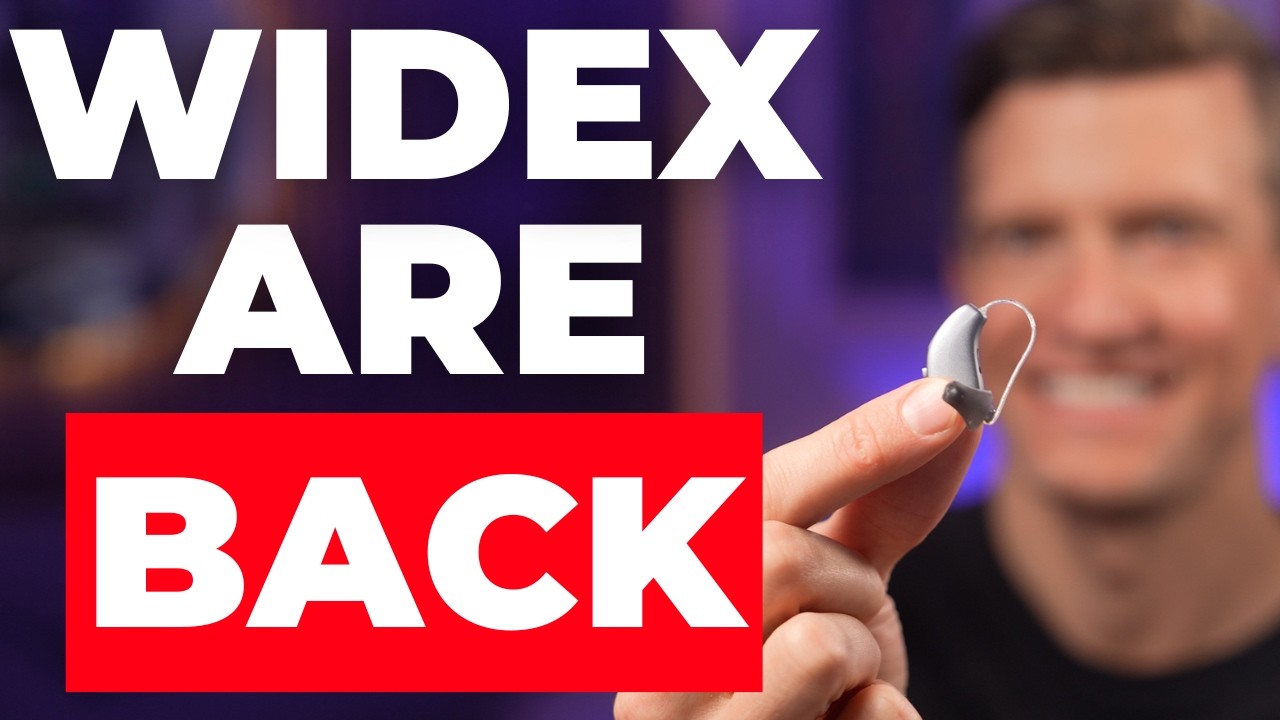
Widex is introducing two closely linked additions to its hearing aid ecosystem: Widex Allure AI RIC RD with Clarity Boost, a new receiver-in-canal (RIC) prescription hearing aid that brings AI directly into the sound-processing pathway, and Compass Cloud 2.0, an updated cloud-based fitting platform designed to help clinicians fit, fine-tune, and support Widex hearing aids more precisely.
The launch marks a major step for the Denmark-based company, which is part of the WS Audiology (WSA) group, which includes Signia and Rexton hearing aids. With Allure AI, Widex is adding a dedicated AI co-processor to improve speech understanding in noise. With Compass Cloud 2.0, it is also expanding the professional software tools that support first fits, follow-up care, personalization, and ongoing updates.
However, Widex is not positioning Allure AI as an “always-on” AI hearing aid. Instead, the company is preserving its longstanding emphasis on natural, low-delay sound for everyday listening while giving wearers access to AI-powered Clarity Boost when they need extra help in noisy environments. In that sense, the new hearing aid and fitting platform reflect the same broader strategy: maintain the Widex natural-sound identity, add AI only where it provides targeted benefit, and give clinicians more flexible tools to support the patient experience over time.
At a March media preview at WSA headquarters in Lynge, Denmark, WSA President and CEO Jan Mäkelä described it as “a big relaunch” of Widex offerings, while also recently introducing the Sound Preference initiative, which HearingTracker has detailed in a previous article.
But, without question, Allure AI is the headliner. “With Widex, our big focus is natural sound and near-zero time delay—it’s what Widex is famous for and the foundation that has made us a favorite among musicians and audiophiles,” Makela said. “But Allure AI now adds the ability to have the extra boost of clarity in a noisy environment, which is something you can choose as and when you want, and then go back to the low-delay, natural hearing the rest of the time.”
:format(webp))
Allure AI: Natural Sound First and AI When Needed
It should be noted that Widex Allure had already performed well in independent testing—even without a dedicated AI co-processor. In HearAdvisor lab testing, the Widex Allure RIC earned an A SoundGrade and a SoundScore of 4.6 out of 5, placing it among the top performers in the prescription hearing aid category, with particular strengths in speech clarity in quiet and noise. HearingTracker’s real-world testing similarly ranked Allure in the top 20% of prescription hearing aids tested.
Widex has used AI and machine learning before, but primarily in app-based personalization tools—first through SoundSense Learn and now in the Allure app through AI Sound Assistant and AI Quick Assistant. These tools help wearers fine-tune or compare preferred listening settings. With Allure AI, however, AI moves directly into the hearing aid’s sound-processing pathway through Clarity Boost.
“Widex Allure AI RIC resolves one of the most persistent challenges in hearing care: improving speech in noise without disrupting the natural sound quality that patients demand,” said Ngozi Amobi, Head of Widex. She says Widex is “preserving natural sound as the foundation and introducing AI processing only when it adds value.”
:format(webp))
Widex has long built its identity around a “less is more” approach to amplification and sound processing. The company argues—and is now providing evidence via its Sound Preference initiative—that while some users benefit from aggressive signal processing, others prefer a more natural, less manipulated signal. This can be especially true in everyday environments where music, environmental awareness, one’s own voice, and the general character of sound can impact user satisfaction as much as speech enhancement.
Sonie Harris, AuD, Widex Senior Commercial Audiology Manager, says many patients love the Widex sound, but still need more help in the relatively small percentage of situations where noise becomes especially difficult. The question, she said, had been whether the hearing provider should adjust the everyday sound to solve those occasional difficult moments—and risk changing what the patient most likes about Widex—or offer a separate tool for those specific environments.
“This is exactly why we created Allure AI RIC,” says Dr. Harris.
W1 Chip as the Foundation, Clarity Boost as the “Turbo Button” for Noise
Allure AI remains built around the W1 chip and Widex Precision Hearing Technology, which powers the device’s everyday sound processing. The new dedicated AI co-processor is reserved for Clarity Boost, the on-demand program users activate when they want additional noise management.
Widex says Clarity Boost delivers up to 6 dB higher output signal-to-noise ratio (SNR) compared with leading AI-based competitors at realistic noise levels. The company also reports that Allure AI performs as well as, or better than, leading AI-based competitors in speech intelligibility, with up to 26% better intelligibility for people with moderate-to-severe hearing loss and 14% for those with mild-to-moderate loss. In addition, Widex says 95% of wearers experienced improved speech in noise, and 97% described the sound as natural and clear.
:format(webp))
Mäkelä described Clarity Boost as “like the turbo button.” The hearing aid, he said, remains a full-purpose Widex device without it, but the wearer can choose Clarity Boost for the toughest noise environments. “It’s not turning itself on; you’re choosing to use it,” he said. Allure AI controls can be accessed via the hearing aid push-button, the Widex Allure app, the RC-DEX remote, or smartphone accessibility controls. Tap controls are reportedly coming this summer.
Allure AI employs a dual-chip architecture, similar to that of its competitors, Phonak Infinio and ReSound Vivia. The W1 chip handles the main Allure sound processing and connectivity functions, while the AI co-processor is used when Clarity Boost is activated. Dr. Harris said the co-processor is purpose-built for audio and was selected to balance noise reduction, sound quality, and all-day battery life. When Clarity Boost is engaged, the system uses dedicated beamforming and AI-based denoising before returning the signal to Widex’s traditional compression and hearing-loss compensation pathway.
Adam Westermann, PhD, Widex VP of Innovation, framed the engineering challenge in terms of what he called the “trinity of hearing aid development”: 1) noise reduction and directionality, 2) device size/power consumption, and 3) processing delay/sound quality. In his view, hearing aids with AI should not be judged only by how much noise they remove; they also have to fit inside a tiny device, preserve all-day battery life, and keep latency low enough to avoid artifacts and sound-quality problems.
:format(webp))
“These three constraints define everything that we do,” Westermann said, noting that a hearing aid generally has only about 10 milliseconds from the time sound hits the microphone to the time it leaves the receiver. That means engineers cannot simply send sound to a smartphone or cloud processor and back without violating one of the basic constraints of hearing aid design. Some AI approaches, he suggested, solve one part of the problem while compromising another—using smaller neural networks that mainly adjust hearing aid parameters, or prioritizing AI performance at the expense of size, power, or delay. Widex’s goal with Allure AI, he said, was to bring AI into the sound path “without violating the fundamentals of making hearing aids.”
The new device is efficient, integrating the AI hardware into the same size and form factor as the previous Allure RIC. It is designed to provide up to 32 hours of use, including 6 hours of AI use or streaming. Charging options include a standard charger, Charge & Clean charger, and Qi-enabled charging.


A key part of that efficiency stems from Widex’s use of a linear recurrent neural network (L-RNN), a type of deep neural network (DNN) designed to capture the time-based structure of sound while requiring fewer parameters than some earlier DNN approaches. As HearingTracker audiologist Matthew Allsop explains in the above video, "In simple English, it's artificial intelligence built to understand sound, not just process data."
Wireless connectivity features include Made for iPhone (MFi), ASHA, LE Audio, and hands-free communication. It is "Auracast-ready,” meaning Allure AI will require a firmware update to enable connecting with Auracast broadcasts, and it also employs a telecoil.
:format(webp))
Beyond the SNR Spec Sheet
Widex emphasized that Clarity Boost is not designed simply to remove as much background sound as possible. Harris described the approach as “balanced denoising,” meaning environmental sounds are preserved at a lower level rather than stripped away entirely. The goal is clearer speech without leaving wearers feeling cut off from nearby voices, footsteps, traffic, music, or the overall character of the environment.
From a more technical standpoint, the same point was made by Jens Brehm Bagger Nielsen, PhD, Global Head of WSA’s AI Center of Excellence. He said Widex could have focused only on maximizing SNR, but that would not necessarily have produced the best listening experience. “We could just have squeezed more SNR out of this if we wanted to,” he said, “but while that might look good on the spec sheet, it would not necessarily sound good to the wearer.”
Maarten Barmentlo, WSA Chief Marketing Officer and President OTC, said Widex has a unique way of processing sound, and that WSA continues to invest in the chip platforms and software required to support the differentiation between its brands. He also acknowledged that AI has become a ”marketing hype term,” and said WSA instead wants to use AI only when it provides a real benefit.
:format(webp))
I was given an opportunity to be fitted with and use Allure AI for a couple of days. I have mild-to-moderate hearing loss, and over the years I’ve come to think of Widex hearing aids as among the best for sound quality; however, while consistently good for speech-in-noise performance, they haven't always been my top pick in that area.
On my first outing at a noisy restaurant, I thought Allure AI performed well enough, but, frankly, I wasn’t wowed by it—only later to discover that I hadn’t properly connected the beta version of the app to my iPhone! In other words, I was listening to conversations fairly easily via Allure AI without the benefit of Clarity Boost and its AI co-processor. The next night, inside a packed, even louder jazz venue, I periodically alternated between Clarity Boost and the music mode and was very impressed. I thought its directionality and speech-in-noise performance were at least on par with the best DNN-driven hearing aids I’ve tried. I’m interested to see how these devices perform in the HearAdvisor lab (stay tuned for the results).
Compass Cloud 2.0: A More Flexible and Complete Cloud-Based Fitting Platform
Allure AI with Clarity Boost may be the headline product, but it launches alongside Compass Cloud 2.0, the latest version of Widex’s cloud-based fitting platform. If Allure AI brings on-demand AI into the Widex sound pathway, Compass Cloud 2.0 is the professional infrastructure designed to support it—helping clinicians fit, fine-tune, update, and refine the hearing journey over time. The new programming software adds tools for first fits, follow-up care, personalization, and ongoing performance updates, making it central not only to Allure AI but to future Widex hearing aids.
The updated 2.0 platform is also designed to improve fitting precision, consistency, and efficiency for hearing care professionals. It introduces a refined fitting rationale informed by thousands of real-world fittings, along with personalization tools intended to support stronger first-fit acceptance.
:format(webp))
Pioneering Hearing Aid Fitting Platforms
Karin Hougs, WSA Vice President for Digital Customer Workflow, said the original vision behind Compass Cloud was to “bring back time” to hearing care professionals. Clinics are dealing with more complexity than ever: multiple software systems, data transfers, reimbursement rules, varied office workflows, and the need to train new providers in a market where experienced professionals are in short supply.
Those pressures pushed Widex toward the industry’s first cloud-based fitting software. The initial version of Compass Cloud focused heavily on simplicity and first-fit efficiency, which helped clinicians who were seeking a faster workflow. But Hougs said Widex also heard from experienced users who wanted more fitting controls—and learned that it may have leaned “a little bit too much towards the simplicity” in the first release.
Compass Cloud 2.0 is the company’s answer to that feedback. Hougs said the platform is intended to serve both time-pressed clinicians who need efficient, high-quality fittings, as well as experienced providers who want deeper control and more personalization options. In other words, the goal is to preserve the speed and accessibility of the original cloud platform while restoring more of the professional flexibility that expert users expect.
:format(webp))
Dr. Harris said the update now feels more complete from an audiologist’s perspective: “I open the software and I don’t miss anything,” she said. With the newer version, she said, “I can go as deep into the fitting as I need to.”
Compass Cloud 2.0 adds an improved Adaptation Manager for smoother user onboarding, SmartSpeak for spoken status updates, expanded Data Logging, Sound Class Adjustments for follow-up care, and Transfer Settings to simplify configuration across fittings. Hougs highlighted Adaptation Manager as a frequently requested feature and pointed to Data Logging and Sound Class Adjustments as especially important because they help clinicians understand wear time, listening challenges, and the types of environments the hearing aid user encounters.
Continuous Updates and Allure AI Support
Because the platform operates in the cloud, new features and improvements are delivered automatically and continuously without interrupting workflow. Mäkelä said one reason Widex moved to Compass Cloud was that cloud-based software can be updated more quickly. Since launch, he said, Widex has added features every couple of months in response to customer feedback. With the ongoing refinements, the company says Compass Cloud now has a provider satisfaction rating of 4 out of 5, and members of the media event saw a timeline of more than 15 scheduled updates and new features.
Compass Cloud 2.0 is also directly tied to the launch of Allure AI RIC with Clarity Boost. Dr. Harris said the full benefits of Allure AI can only be unlocked through Compass Cloud 2.0. The software supports both quick, confident first fits and more precise personalized adjustments, including fitting Allure’s standard sound programs and Clarity Boost.
Ngozi Amobi, Global Head of WidexCompass Cloud 2.0, together with Allure AI RIC, expands what’s possible in hearing care by connecting a cloud-based fitting approach with a device designed around natural sound and on-demand AI support. It enables HCPs to deliver efficient, accurate first fits and refine them over time with greater precision, while ensuring patients experience natural sound for everyday listening and targeted clarity in noise when needed. Together, this defines a new standard in hearing care—uniting fitting accuracy with natural sound and on-demand clarity in noise.
Looking ahead, Hougs described opportunities around data-driven fine-tuning, AI-supported recommendations, better preparation for follow-up visits, and deeper integration between fitting software, apps, repairs, ordering, and office management systems. The long-term vision is not necessarily to replace the systems clinics already use, but to integrate with them so information moves more easily and providers spend less time navigating administrative complexity.
For clinics, there may still be a transition period. Compass Cloud 2.0 is designed for the Allure platform moving forward, while older Widex products will continue to require the previous Widex fitting software. But Widex is clearly positioning Compass Cloud as the future of its professional fitting ecosystem.
Taken together, Widex’s recent "big relaunches”—Allure AI, Compass Cloud 2.0, in combination with the new Sound Preference initiative—appear to represent a broader Widex strategy: preserve the brand’s natural-sound identity, gain a better understanding of patient preferences, add AI where it provides targeted benefit, and give clinicians a flexible fitting platform that can evolve more quickly over time.
For more details, please visit the Widex Allure AI RIC webpage or the Widex Compass Cloud 2.0 webpage. The company also offers information about its new Sound Preference initiative.
Karl Strom
Editor in ChiefKarl Strom is the editor-in-chief of HearingTracker. He was a founding editor of The Hearing Review and has covered the hearing aid industry for over 30 years.