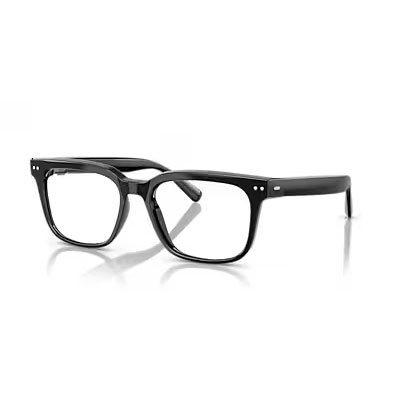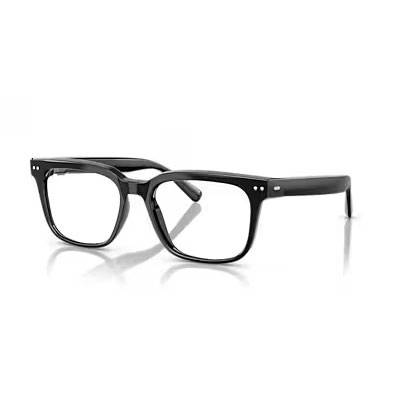
Nuance Audio Glasses are for adults with perceived mild to moderate hearing loss who want a midrange-priced (≈$1,200) over-the-counter (OTC) hearing solution. They may be particularly appealing for individuals seeking a convenient, rechargeable, invisible (open-ear with no earbud or earmold), and comfortable situational hearing solution. Because of their 8-hour battery life, they may not be the best choice for those seeking an all-day hearing aid.
Product Review
Nuance Audio Glasses: Lab Tested for Hearing Aid Performance, Real-life Use, and Value
)
Our expert team selects and tests products rigorously. We may earn commissions if you buy through our links. Here's how we keep reviews independent.
Buy at Nuance Audio
Dr. Steve Taddei details Nuance Audio Glasses and gives you a hands-on review.
Nuance Audio Glasses blend prescription-ready eyewear with discreet over-the-counter (OTC) hearing enhancement. We found these preset hearing glasses comfortable and customizable, thanks to a solid feature set within the mobile app. Nuance’s unique offering is particularly promising for those who need both vision correction and mild hearing support.
In HearAdvisor lab tests, Nuance Audio Glasses performed well above average on speech in quiet and above average on speech in noise, but scored below average on feedback (whistling). They had an overall score of 4.1 (out of 5) and earned an “A” SoundGrade from our lab. However, limitations like shorter battery life and the lack of audio streaming are important to consider before making a purchase.
Pricing
Verified seller for Nuance Audio Hearing Glasses.
Showing prices for Square. See all models and prices
Nuance Audio
Home Delivery
The Nuance Audio online shop offers a streamlined, customizable experience for purchasing prescription hearing glasses, with transparent pricing, lens upgrade options, and flexible shipping or in-store pickup. Customers can input their prescription manually and choose from a range of lens types, coatings, and thicknesses—all backed by a 30-day return policy.
- Customizable lenses with clear upgrade pricing
- Prescription entry with guided form support
- Free returns, even on prescription lenses
- In-store pickup or home delivery options
$1,200
/ pairNever miss a price drop
Get notified when prices drop for this product
Positives
Unique Hearing Glasses Design
Stylish, discreet combination of hearing aid and prescription glasses; allows hearing aids to "hide in plain sight.”Impressive Audio Processing
Devices can help make speech clearer with their highly directional microphones and app-controlled noise reduction features.Wireless App Control
Nuance Audio Glasses can be controlled wirelessly with the Nuance mobile app (covered below).Rechargeable
Nuance Audio Glasses are rechargeable and come with an easy-to-use charging base.Comfortable Open-ear Design
Unlike traditional hearing aids, Nuance Hearing Glasses do not plug your ears. They are also lightweight and comfortable.Multiple Styles Available
Nuance offers two frame styles for their Hearing Glasses: Square and Panthos. Both are available in multiple colors and with various lens options that can be fitted to your prescription at a vision center.
Limitations
Shorter Battery Life: Nuance claims that the batteries should last 8 hours under normal conditions, meaning they are not really an all-day solution and will need to be used situationally to conserve power. No Bluetooth Streaming: Nuance Hearing Glasses do not currently support Bluetooth audio streaming or hands-free calls. No Professional Care: Support is currently limited to technical assistance with no direct professional assistance from hearing care providers. Lower IP Rating: With an IPX4 rating, you will need to exercise care to keep Nuance Hearing Glasses safe from water, dust, and dirt. Limited Customization: Nuance Hearing Glasses are preset-based and not "self-fitting" OTC aids, meaning they are not programmed based on a hearing test for your unique hearing loss. Not Appropriate for Everyone: Hearing glasses are over-the-counter devices and therefore designed for less significant hearing needs. Our lab testing also showed that larger head sizes can reduce the gain you experience by increasing the distance between your ears and the built-in temple speakers. Limitations with Open-fit Design: The open-fit design can reduce speech benefits in noisy environments, cause feedback, and may result in an “echo” quality when you speak.
EssilorLuxottica, the largest eyewear company in the world, acquired Nuance Hearing in late 2022. Headquartered in Paris and Milan, EssilorLuxottica ranks 260th among the world’s largest companies, managing over 18,000 stores globally and boasting a vast retail network with access to more than 300,000 third-party stores. They hold exclusive rights to Ray-Ban, Oakley, and Persol, among others, while also producing and distributing luxury brands like Prada, Giorgio Armani, Bulgari, Burberry, Chanel, Ralph Lauren, Versace, and more. On the retail side, the company owns major outlets, including LensCrafters, Target Optical, Pearle Vision, Sunglass Hut, Ray-Ban, and Oakley.
You can buy Nuance Audio Glasses from the Nuance website and from EssilorLuxottica retail stores like LensCrafters, Pearl Vision, Target Optical, as well as the company's retail partners and authorized hearing care practices. When buying the aids, you will need at least one visit to an authorized distributor for fitting. Nuance offers an online store locator to help you find the nearest distributor.
Nuance Audio Glasses retail for $1,200 with prescription lenses, which places them in the mid-range of OTC hearing aid pricing. However, your lenses may be covered under your health plan, and some plans offer coverage for this type of hearing aid either via their hearing aid benefit or over-the-counter allowances. An authorized Nuance Audio Glasses seller can help you confirm coverage and network options.
Hands-On Review of Nuance Audio Hearing Glasses
Here's what we learned from testing Nuance Audio Glasses in the HearAdvisor lab and from my own experiences using the product.
What’s it like to use the device?
Nuance Audio Hearing Glasses are FDA-cleared preset OTC devices and are therefore designed for those with milder hearing losses and less complex hearing needs. You can purchase them online or through various online retailers for around $1200, putting them at the mid-to-higher end of OTC hearing aids.
At first glance, Nuance Audio Hearing Glasses look and feel like a standard pair of eyeglasses. They're lightweight, fit well, and come in a few classic styles that should suit most faces. We found them comfortable enough to wear all day, and if you already wear glasses, adding hearing help without an extra device in your ear is a big plus.
:format(webp))
In terms of performance, the glasses amplify sound clearly and subtly. I found that they do a respectable job boosting nearby voices in quiet to moderately loud environments. Nuance Hearing Glasses boast 6 internal microphones, and the added directional audio is noticeable in helping focus on what’s in front of you.
The open-fit design is also “freeing” to a certain extent, as your ears are not plugged like they are with traditional hearing aids. There is no physical sensation or discomfort from having a device in your ear.
However, there are various situations where the open-fit can be a drawback. For example, I found Nuance Hearing Glasses to have more feedback issues with general hand movements at or near the microphones. There is also a greater awareness of your own voice when speaking, which the app-based calibration can help improve slightly.
Noisy settings are another arena where you are likely to notice the open-fit of Nuance Hearing Glasses. Unlike traditional hearing aids, there is nothing plugging your ear to at least partially block loud and likely annoying ambient sounds.
:format(webp))
Bluetooth wireless controls
Nuance Audio Hearing Glasses connect wirelessly to both iOS and Android devices via Bluetooth Low Energy (BLE). This connection allows control and sound customization through the Nuance Audio app which we discuss below. However, it’s important to note that these glasses do not support Bluetooth audio streaming—meaning you can’t use them for phone calls, music, podcasts, or other media playback. The wireless connection is strictly for app control and hearing personalization.
:format(webp))
Pairing my Nuance Audio Hearing Glasses with my iPhone 12 was relatively quick and easy, although my devices required a firmware update that took roughly 30 minutes. Once completed, I found the wireless connection to be stable, and I didn’t encounter any issues like dropouts during normal use.
If you are looking primarily for hearing enhancement and app-based control, Nuance delivers a simple and effective wireless solution. However, the lack of full Bluetooth audio functionality places these glasses behind many modern hearables and hearing aids.
Using the Nuance Audio App
Pairing the glasses with the Nuance Audio app is straightforward and takes just a few minutes (unless your devices need an update like mine).
Once connected, the app guides you through a quick onboarding and has you complete a calibration, which only takes a few minutes. You will hear a brief “static” sound and be asked to count aloud from 1 to 20 as the Nuance software analyzes your voice.
Be sure to complete these steps in a quiet room, as this will help improve the audio quality of your experience.
:format(webp))
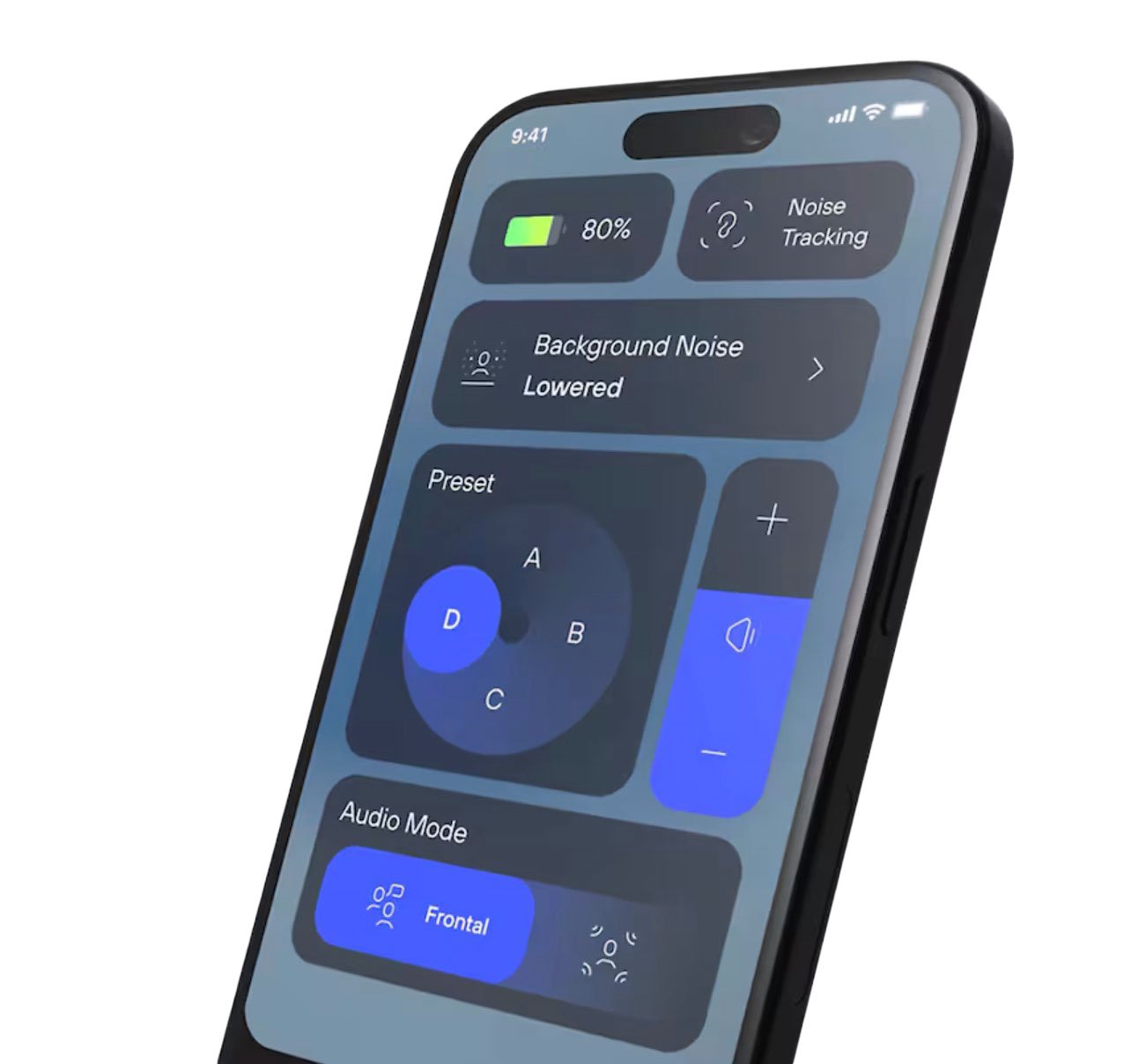
The Nuance App provides access to a small yet meaningful set of customization features. I found it easy to use and intuitive, as all major adjustments are in the same tab.
The four presets correspond to different hearing losses and are arguably the most important setting to dial-in as a user, as it will dictate the pattern of gain (frequency-specific amplification) that the Nuance Hearing Glasses offer you:
- Program A: Flat mild hearing loss
- Program B: Sloping mild hearing loss
- Program C: Sloping moderate hearing loss
- Program D: Flat moderate hearing loss
You'll need to play around some with these programs to listen and determine which one suits you best. Although it's always better to get your hearing tested by a professional, some good online hearing tests exist that can give you an approximate audiogram and/or an idea about the degree and shape of your hearing loss should you want more guidance on program selection.
You will also find controls for Background Noise and Audio Mode, the latter of which adjusts the microphone mode of your Nuance Glasses between highly directional (Frontal) and omnidirectional (All-around). While there’s no in-app hearing test or full personalization like you’d get with many other hearing aids, the app gives enough flexibility for users with milder hearing loss needs. Another non-essential feature Nuance included was Noise Tracking, which measures the environmental sound levels to which you are exposed.
Overall, the Nuance Audio app does a good job of keeping things simple while giving users control over how their glasses sound. It’s not packed with advanced features, but for the target audience, the balance between usability and functionality works well.
Yes. Once programmed, the glasses retain settings and can be used without the app. However, the app is required for initial customization and fine-tuning features like volume and program selection.
Power & Rechargeability of Nuance Audio Glasses
Nuance Audio Hearing Glasses have a battery life of 6 to 8 hours under normal use, which is enough for a typical day out or attending social events. However, they will fall short for full-day wearers. Nuance acknowledges the shorter battery life and recommends turning your glasses off when hearing amplification is not needed to extend the battery life.
This concept of “situational” hearing use was fairly popular a few years ago and may be a good workaround for people with milder losses who only need occasional hearing help. While the glasses function as traditional eyewear when powered down, once the battery dies, all hearing enhancement benefits are lost. Therefore, the shorter runtime will likely be a key consideration in determining if this is the right device for you.
:format(webp))
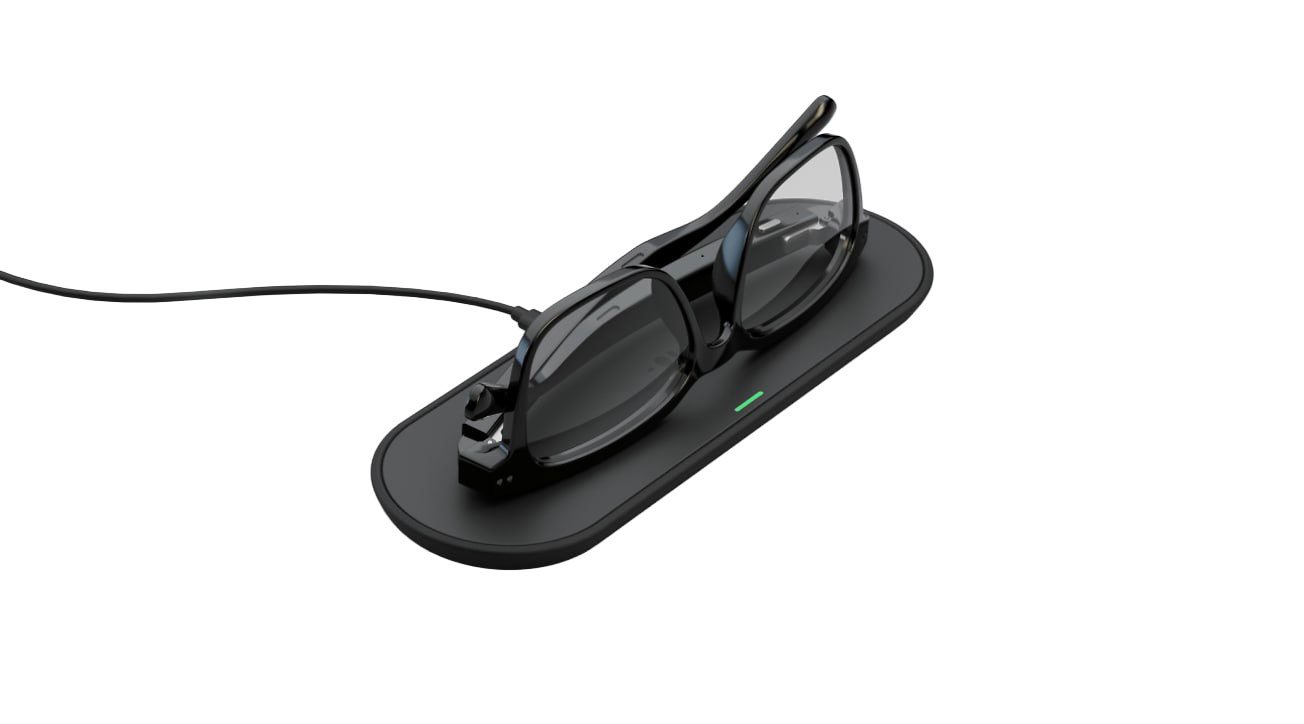
When it comes time to charge, simply place your Nuance Hearing Glasses on top of the included tabletop charging pad. It is important to place them top-down, with the nose bridge and top bar towards the pad. You will feel a slight magnetic lock and see an LED indicate the internal rechargeable battery status.
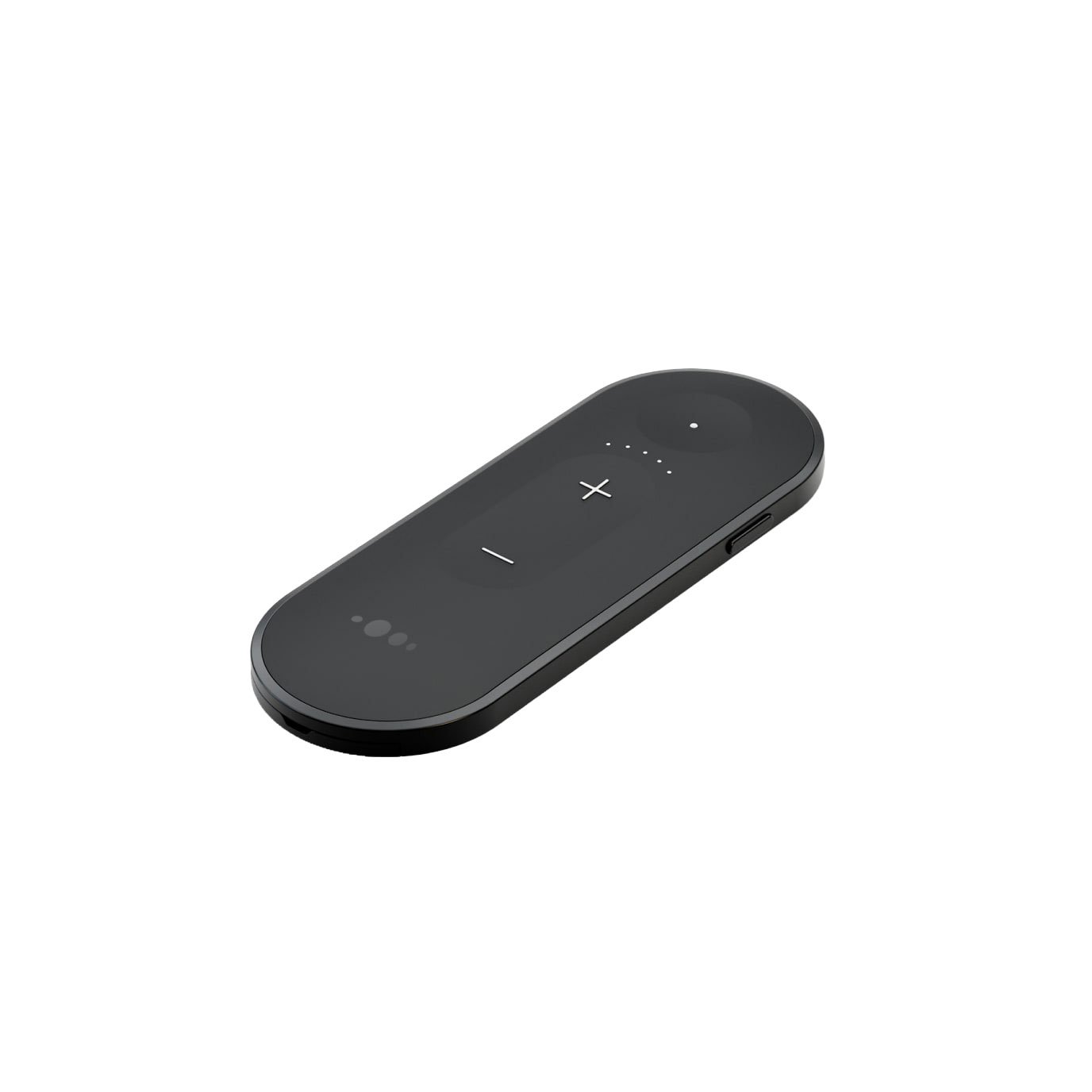
Recharging is relatively quick, with a full top-off taking about 3 hours. It is worth noting that the charging pad is not portable, and must be plugged into a wall outlet with the included USB-C to USB-C cable (you will need a USB-C wall plug or adapter). Nuance Audio has also included a nice collapsible case for safe storage of your glasses.
Wireless Accessories
Nuance does not offer wireless accessories for its Hearing Glasses at this time.
Lab Performance of Nuance Audio Glasses
I tested Nuance Audio Glasses in the HearAdvisor audio lab using 3D spatial audio through an 8-speaker array with a KEMAR manikin and following our standardized test protocol.
:format(webp))
As noted above, Nuance Audio hearing glasses achieved a SoundGrade of A. It ranked in the top 25% of devices in the OTC category and in the top 30% of all devices tested to date (prescription, OTC, and others), earning it a HearAdvisor Expert Choice Award. In our tests, Nuance Audio glasses performed well above average in speech in quiet, above average in speech in noise, well below average in feedback handling (e.g., whistling when placing your hand next to the microphones), and well above average in occlusion results.
Overall SoundScore: 4.1 | Score (out of 5) | Above/below Avg |
|---|---|---|
Speech in quiet | 4.3 | +0.9 |
Speech in noise | 2.1 | +0.7 |
In terms of listening performance, Nuance scored very well in the lab compared to all hearing aids tested to date.
This device does not feature audio streaming. Additionally, since it's a preset device with no adjustable frequency-specific amplification (except through its four programs via the app), an audiologist will be unable to assist you significantly with the acoustic settings. At the Nuance Audio Glasses launch event during April 2025, the company said future iterations of Nuance Audio Glasses may include, among several possibilities, making them “self-fit” hearing aids so they can be more finely tuned for unique hearing loss profiles and audiograms.
Hot tip: One interesting thing I found was that the speaker (receiver) location on the templates (arms) of the glasses can make a difference, as shown in the short video below. For audio nerds, this means the "Inverse Square Law" applies: the intensity of sound decreases as the square of the distance from the source increases. In other words, the farther the receiver/speaker is from your ear canal, the softer the sound will be. If you have a large head, you might consider this information when sizing and getting your glasses fitted at an authorized Nuance Audio distributor.
Although Nuance scored high (4.1) in our lab's acoustic tests and earned a HearAdvisor Expert Choice Award, its overall HearingTracker Score was lower (3.2) due to its shorter battery life and lack of Bluetooth streaming and pro support (see ratings below).

Dr. Steve Taddei explains why the speaker (receiver) location on Nuance Audio glasses' templates (arms) might make a difference in listening performance.
Watch Matthew Allsop’s Analysis of NAL Study on Nuance
In the video below, HearingTracker audiologist Matthew Allsop provides an analysis of a recent study from one of the world’s most respected hearing aid research centers, the National Acoustic Laboratories in Australia.

Matthew Allsop, a partner and clinician in one of London's largest hearing care practices, provides his take on a recent scientific evaluation of Nuance Audio glasses.
The Online Ordering Process
Ordering Nuance Audio Glasses online is a straightforward, step-by-step process that allows you to customize both the frames and lenses to suit your needs. You start by selecting your frame style—such as the Panthos 48, which is priced at $1,200—and choosing from multiple color options. From there, you can opt to use vision insurance and input your prescription manually, including sphere, cylinder, axis, and pupillary distance values. You’ll also choose whether you need single vision lenses (for distance, near, or intermediate), progressive lenses (for multiple vision fields), or frame-only with no prescription.
:format(webp))
Lens customization includes several upgrade options. Standard clear lenses are included in the base price, while blue-violet light filtering lenses add $189 and photochromic Transitions® lenses are also $189. For thickness, standard lenses are included, thin lenses add $36, and extra-thin lenses cost $120. You can also select a premium lens coating for $44, which includes anti-smudge and hydrophobic properties, or stick with the included anti-reflective coating.
At checkout, shipping options include free “responsible shipping” (12–14 business days for prescription orders), $19 express shipping (8–10 business days), or free in-store pickup at participating locations. All orders come with a 30-day return policy, even for prescription lenses, providing flexibility if your purchase doesn’t meet your expectations.
Final Verdict
Nuance Audio Hearing Glasses are a compelling option for adults with mild to moderate hearing difficulties who also wear—or plan to wear—prescription glasses. If you're looking for a discreet way to enhance your hearing without committing to traditional hearing aids, these glasses offer a clever 2-in-1 solution that integrates hearing help into everyday eyewear.
The biggest pro is their seamless blend of form and function: you get basic hearing support without the stigma or extra hardware often associated with hearing aids. Nuance also deserves credit for delivering a simple, user-friendly mobile app with a helpful array of customization tools.
That said, the biggest “con” is the lack of Bluetooth audio streaming. Unlike many modern hearables, you can’t take calls or listen to music through the glasses. Battery life is also shorter than that of most OTC hearing aids, so heavy users may need to recharge during the day.
Overall, Nuance Hearing Glasses make the most sense for people who prioritize style and discretion, are comfortable using a smartphone app, and are looking for mild, situational hearing support rather than a full-featured hearing aid. If that sounds like you, they could be a smart and stylish solution.
No, Nuance glasses use Bluetooth Low Energy (BLE) for app connectivity only. They do not support Bluetooth audio streaming for music, phone calls, or other media.
Yes. Nuance glasses come with demo lenses and are designed to be fitted with prescription lenses by an optician.
Battery life is rated at around 8 hours on a full charge, depending on usage. This is shorter than many prescription and OTC hearing aids.
What other products might I consider?
As a true OTC hearing aid incorporated into an eyeglasses form factor, Nuance Audio Hearing Glasses stand in a category of their own; they are the only 2-in-1 FDA-cleared open-ear hearing and vision solution currently on the market for people with mild-to-moderate hearing loss. We’ll note that there are other types of hearing glasses, such as bone-conduction, traditional hearing aid glasses, and real-time captioning glasses, but these differ significantly in design and function from Nuance.
However, Meta has partnered with EssilorLuxottica to produce Ray-Ban Meta (Gen 2) smart glasses with Conversation Focus that uses AI-driven processing and a microphone array to enhance hearing. Importantly, Ray-Ban Meta was not designed as an OTC hearing aid, but HearAdvisor testing indicates it can improve hearing in both quiet and noisy conditions (though not with quite the same effectiveness as Nuance). Importantly, Ray-Ban Meta—unlike Nuance—offers audio streaming for phone calls, music, podcasts, etc., as well as several AI-driven features like video recording, voice commands, and language translation. Our opinion is Ray-Ban Meta with Conversation Focus may be an attractive alternative for people with milder hearing losses looking for a situational / occasional hearing solution that includes wireless streaming and some other cool AI features. We provide some comparisons between these two products on our Hearing Glasses page.
If you’re open to more traditional hearing aid styles, the broader prescription and OTC hearing aid market offers a variety of options with stronger audio features and streaming support. We have published a guide to the best hearing aids that considers several different categories (e.g., prescription, OTC, rechargeability, invisibility, value, tinnitus relief programs, etc.).
For example, if AI integration piques your interest, you may want to consider Phonak’s latest flagship hearing aid, Audeo Sphere Infinio. Sphere arguably offers some of the industry’s best speech enhancement, thanks to its new DEEPSONIC chip and AI-powered denoising. You can expect a host of mobile app features, customization options, and wireless accessories tailored to your needs—along with various health-tracking features. HearingTracker has published a full hands-on review of Phonak Audeo Sphere.
:format(webp))
If you’re looking for a lower-cost alternative, Elehear Beyond is available online for around $399 per pair. These rechargeable, preset-based hearing aids offer Bluetooth connectivity and surprisingly good audio processing for the price. However, they have a lower build quality (IPX5 rating) and a larger, less discreet design. While not as refined as some other OTC options, Elehear Beyond provides considerable value for budget-conscious buyers.
Dr Steve Taddei
Doctor of AudiologySteve Taddei, Au.D., merges his audio engineering degree from Columbia College Chicago with his doctorate in audiology from Northern Illinois University to advance hearing technologies and raise hearing loss awareness as the Lab Director at HearAdvisor. He also contributes consumer-focused hearing aid and earplug reviews at HearingTracker.com, and inspires future professionals through his adjunct faculty roles at several colleges, encouraging the next generation to discover and pursue their passions.