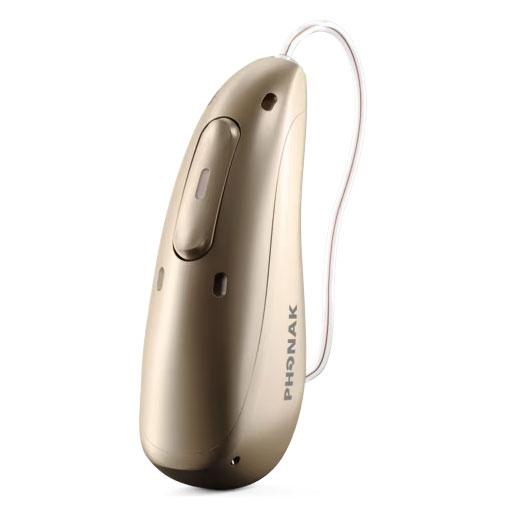
"Open-fit" hearing aids are hearing aids that leave your ear canal open. All of the prescription devices tested to date by HearAdvisor are considered open-fit hearing aids. "Closed-fit" hearing aids are those that seal off your ear canal with either a tight custom mold or rubber / silicone ear tip that lets little to no air in or out. Devices such as the Sony CRE-C10, Jabra Enhance Plus, and Apple AirPods Pro 2 are considered closed-fit devices.
The open-fit configuration has several implications for sound quality, benefit with hearing aids, sound localization, and hearing in noise:
1. Sound Quality: In the real world, open-fit hearing aids generally provide a more natural sound quality because they do not block the ear canal. By combining natural and amplified sound, open-fit hearing aids create a more balanced listening experience.
2. The Occlusion Effect: Open-fit hearing aids prevent the occlusion effect, which is the sensation of hearing your own voice as if speaking into a barrel.
3. Benefit with Hearing Aids: Open-fit hearing aids are particularly beneficial for individuals with mild to moderate high-frequency hearing loss. This is because they can amplify high-frequency sounds while still allowing low-frequency sounds to enter the ear naturally. This configuration helps users maintain a sense of spatial awareness and natural sound quality, making the transition to using hearing aids easier.
4. Sound Localization: Sound localization is the ability to determine the source and direction of a sound. Open-fit hearing aids allow for a better sense of sound localization compared to traditional behind-the-ear (BTE) hearing aids because they do not block the ear canal. By allowing natural sound to enter the ear, users can better utilize their residual hearing and spatial cues to localize sounds.
5. Hearing in Noise: Open-fit hearing aids can struggle in noisy environments because they allow background noise to enter the ear along with the amplified signal. To address this issue, many open-fit hearing aids incorporate advanced features like directional microphones and AI noise removal to improve speech understanding in noisy situations. While these technologies can help, users with more severe hearing loss or those who struggle in very noisy environments may find traditional BTE or in-the-ear (ITE) hearing aids with a closed fit more beneficial.
6. Wireless streaming: Open-fit hearing aids allow sound to escape from the ear canal due to their open design. This can result in a decrease in overall sound quality, particularly at higher volumes or with bass-heavy audio content. Closed-fit hearing aids provide better sound isolation, which can lead to richer and fuller sound quality during streaming. However, keep in mind that situational awareness will suffer with closed-fit hearing aids as they will more effectively block outside sounds.
While open-fit hearing aids offer several advantages over closed-fit hearing aids, they may not be the best choice for everyone, especially those with severe hearing loss or who need better performance in noisy environments. We recommend working closely with an audiologist to determine the most appropriate hearing aid style and features for your individual needs.
:format(webp))
:format(webp))
)
)
:format(webp))
:format(webp))