Produktbewertung
)

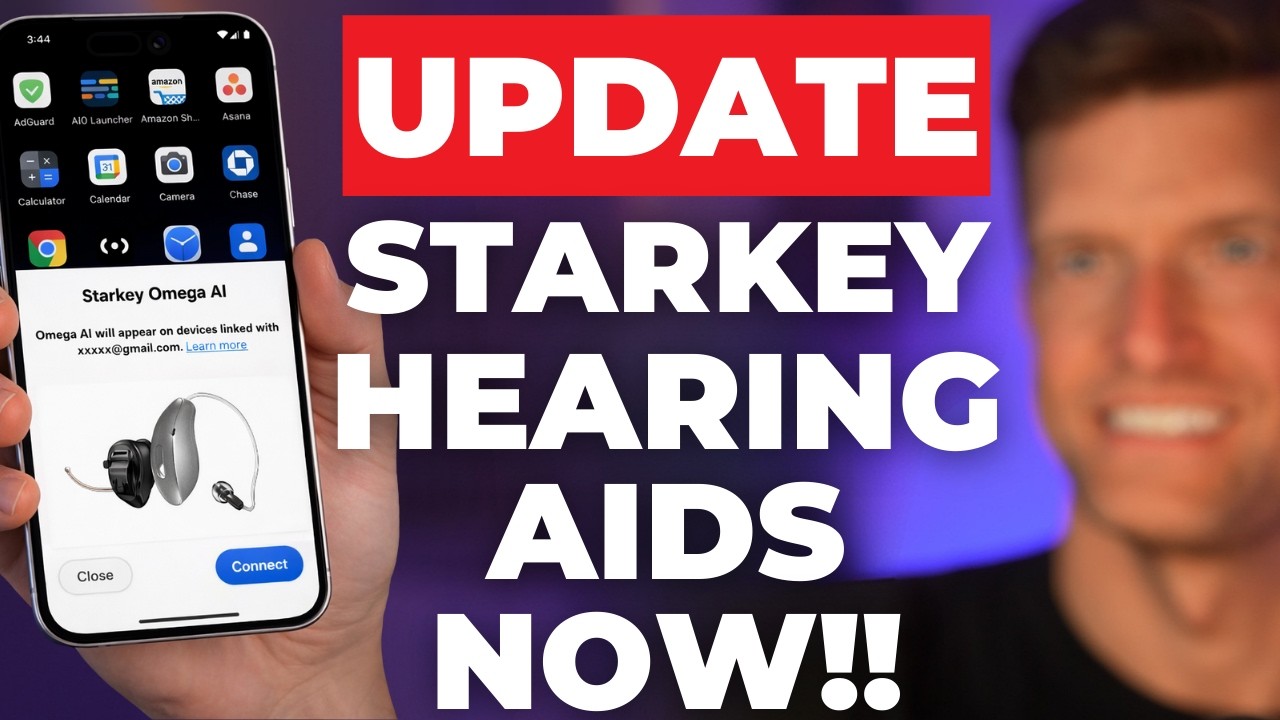
In this video, Dr. Steve Taddei, AuD, reviews his Omega AI test findings from the HearAdvisor lab.
Key Findings
Overall, I really like Starkey Omega AI, and it’s clear from our testing that the company has made some thoughtful improvements—from updated sound processing and expanded app features to smaller but meaningful touches like the new LED indicators and respiratory rate monitor—over Starkey's previous Edge AI tech. In testing, we found small but significant gains in predicted speech performance in noise. Not everything is groundbreaking, but it shows that Starkey is listening to feedback and continuing to move the needle forward.
:format(webp))
What did our tests show? Our HearAdvisor sound lab and real-world HearingTracker testing indicate Starkey Omega AI is one of the top prescription hearing aids available, surpassing Edge AI in overall performance. HearAdvisor testing revealed impressive results for Omega AI with a Tuned (audiologist-optimized) SoundScore of 4.6 out of 5. This earned it a 2025 Expert Choice Award, placing it in the top 15% of all devices we've tested to date. Our real-world testing—including build quality, battery life, app features, comfort, design, handling, and value—yielded a HearingTracker Score of 4.4 out of 5, also placing it in the top 15% of all products. However, because of its higher price tag, Omega AI scored lower on value.
What's special about Omega AI? The standout feature in Omega AI is its DNN 360 system, which uses a Deep Neural Network (DNN) to improve speech clarity in noisy environments while preserving spatial cues for a more natural listening experience. This hearing aid also has one of the best full-featured apps available, offering options such as sending fall alerts to caregivers, monitoring your respiratory rate, and translating languages. Although its predecessor, Starkey Edge AI, also had exceptional durability, Starkey has further beefed up its waterproofing and impact resistance with Omega AI.
What options are there and how much does it cost? Omega AI offers models suitable for all types of hearing loss, from mild to profound. They’re available in three tech/price levels (16, 20, and 24) in both rechargeable and battery-powered receiver-in-canal (RIC) models, rechargeable custom in-the-ear (ITE) and in-the-canal (ITC) models, and a tiny completely-in-canal (CIC) model with a replaceable battery. Our database indicates Omega AI prices range from $4,000 to $7,000 per pair, depending on the model, tech level, clinic/office, and your hearing needs. The average price is $4,798. Of course, if you have insurance coverage that helps pay for hearing aids, you may pay significantly less.
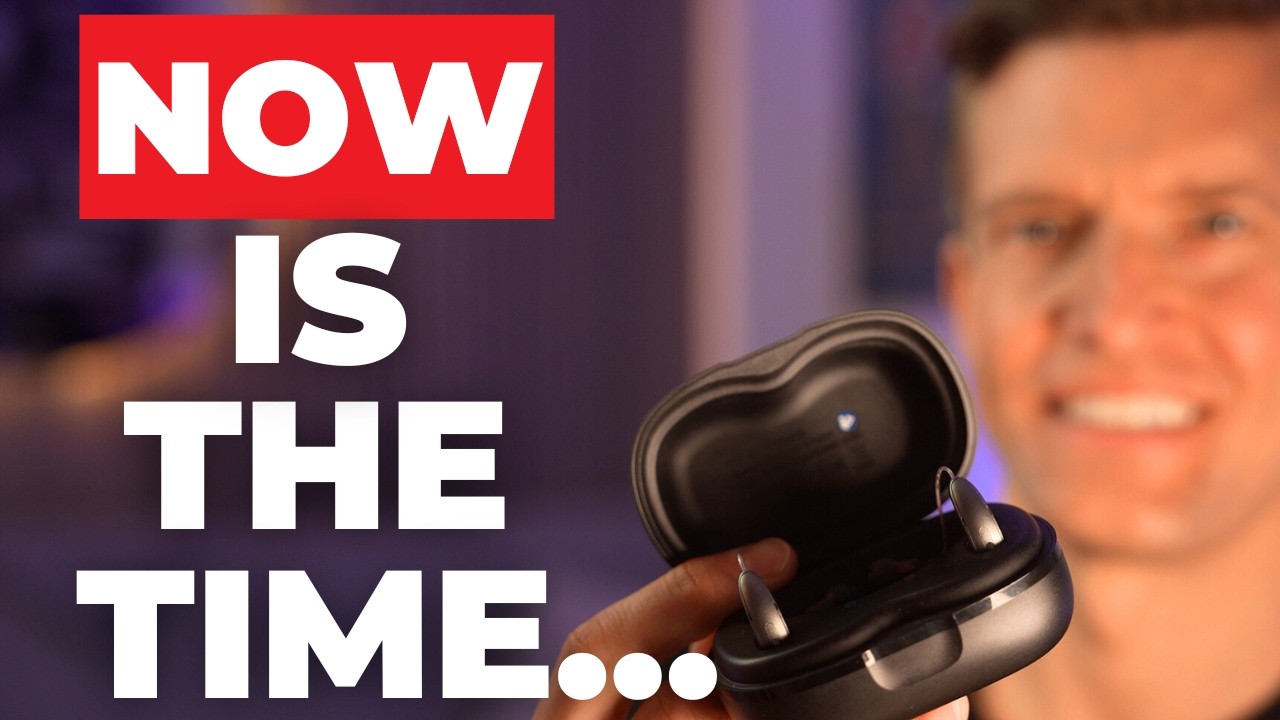
Watch HearingTracker and London-based Audiologist Matthew Allsop who provides an overview of the Starkey Omega AI in this YouTube video.
What Is Starkey Omega AI?
Omega AI is the flagship hearing aid launched in October 2025 by Starkey, a Minneapolis-headquartered company and one of the five largest hearing aid makers in the world. Starkey's previous premier hearing aid, Edge AI (launched in October 2024), is still available and remains a good option, and we'll offer some comparisons later in this article.
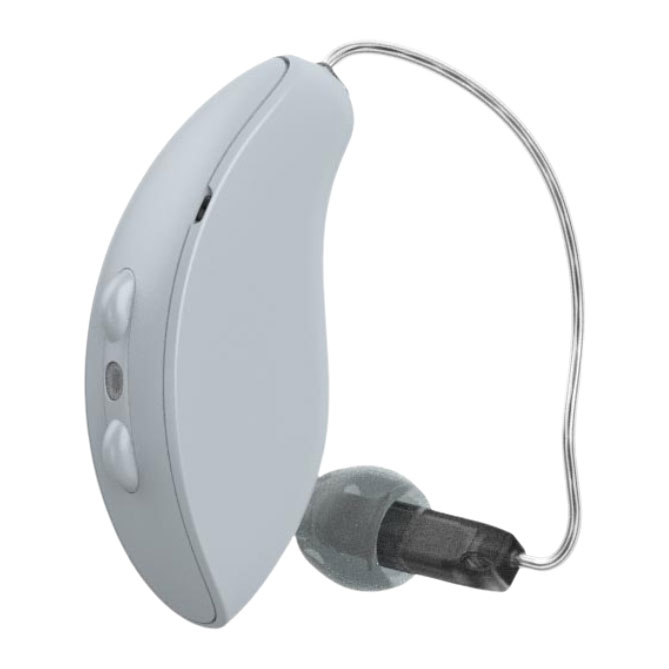
Physically, OmegaAI looks identical to EdgeAI, with the same sleek design. And, like previous Starkey products, Omega AI offers:
- AI-driven speech-in-noise performance
- Hands-free calling
- Up to 51 hours of rechargeable battery life
- Customization via the My Starkey app for iOS and Android
- An unrivaled holistic health monitoring ecosystem
- The highest IP68 rating for water and dust resistance
:format(webp))
Testing and Real-World Experiences with Omega AI
Any time a manufacturer introduces a new flagship—especially one positioned above an already strong model—the natural question is: How good is it, and is it worth upgrading to? If you're wearing Edge AI, Genesis AI, or even another premium brand like Phonak or Oticon, it’s fair to wonder whether this leap in cost translates to a leap in performance.
In this review, I’ll walk you through the Omega AI experience from start to finish: what it’s like to unbox and wear, how the My Starkey app works, how Omega AI performed in HearAdvisor lab tests, and the ways it compares to Edge AI and other competitors. I’ll also share some real-world impressions from using Omega AI in everyday environments—and a few quirks you may want to know before booking an appointment.
Here are some of the key Pros and Cons for Omega AI:
What I loved about Omega AI...
Always-On Advanced Dual-Network AI Engine
In situations like busy family gatherings or restaurants, users report clearer speech without the “tunnel effect” sometimes created by aggressive directional systems; Starkey’s DNN 360 directionality and spatial-awareness processing provides measurable improvements in speech intelligibility and listening comfort.Lab-Verified Speech Performance
In HearAdvisor’s independent testing, Omega AI earned an “A” SoundGrade with above-average scores for both speech in noise and speech in quiet.Built Tough for Durability Combined with an IP68 rating and an upgraded hydrophobic coating on the shell, these hearing aids are built for wear in humid, sweaty, or dusty environments.
Lab Results from HearAdvisor
So, does Omega AI really offer more than EdgeAI, and how does it stack up against other hearing aids? This is where it’s great to have an objective lab like HearAdvisor, where we can test every hearing aid on a level playing field using validated metrics that help predict real-world performance, including speech understanding in noise.
:format(webp))
In our HearAdvisor test lab, we evaluated the Omega AI mRIC R (tech level 24). The Tuned (audiologist-optimized) SoundScore was 4.6 out of 5, and overall, it had a HearAdvisor SoundScore of 4.3. This earned Omega AI an "A" SoundGrade and a 2025 HearAdvisor Expert Choice Award.
The table below reflects what we found in our lab testing of Starkey Omega AI, compared with the overall average of 98 other hearing aids (both prescription and over-the-counter) that we’ve tested in the lab to date.
HearAdvisor Lab Test | Score | vs. Average |
|---|---|---|
Speech in Quiet | 3.65 | +0.61 |
Speech in Noise | 2.55 | +1.03 |
Own Voice | 2.70 | +0.19 |


Speech in Noise: Omega AI scored significantly above average and showed measurable improvement over Edge AI. It wasn’t a dramatic jump, but enough to suggest the DNN 360 system is useful—particularly in complex listening environments.
Speech in Quiet: Strong performance in relation to other hearing aids and slightly elevated compared to previous models.
Own Voice: Consistent with other Starkey devices—balanced and not overly processed.
Feedback Control: Excellent. Omega AI’s feedback system earned one of the highest scores we’ve measured.
Streaming Music: Nearly identical to Edge AI, and just under the average for premium hearing aids. Streaming clarity was generally good, and dynamic range felt natural.
Listen to actual recordings of the Omega AI in different situations in the section labeled "Sound Performance Lab Results" at the bottom of this page.
HearingTracker Real-Life Use Ratings
As shown above, the HearAdvisor lab tests five important sound parameters, but, of course, there are many more facets to wearing and being satisfied with a hearing aid. That's where the HearingTracker score comes in: we rate other factors—including build quality, battery life, Bluetooth streaming, app features, comfort, etc.—in addition to acoustic performance. In overall testing, Omega AI had a HearingTracker Score of 4.4 out of 5—almost a full point above the average (3.5) of all hearing aids we’ve tested to date, as shown in the graph below.
:format(webp))
To put these scores in perspective, Starkey Omega AI generally outscored all other hearing aids by at least 0.7 points or about 14% in almost all categories. (These results are also summarized in the "HearingTracker Score" section at the bottom of this page.)
What Are Real Users of Starkey Omega AI Saying?
At this writing, there isn't much consumer feedback on Omega AI because it’s so new. We’ll keep looking on our HearingTracker Forum and elsewhere as we update this page. However, here are a couple examples:
From a post in Reddit: My Omega [is] phenomenal. 50+ years of loss, profound [hearing loss]. I was starting to feel isolated because I couldn't understand. I hear nothing over 2500 Hz. These gave me my hearing back, and now I'll go to a gathering, a restaurant, a football game, etc, and enjoy it. I've heard good things about Oticon but also heard connection issues.
From a post in Reddit: The sound in the Omega versus the Edge is definitely an improvement … and the Edge was leaps and bounds over my previous without DNN. The edge program that zooms in on the voice and makes restaurants and other noisy situations easy enough to be able to carry on an easy conversation with two other people across from me and those next to me. That program has not changed at all from the edge to the Omega. The regular programs now have AI and DNN scanning around you 360 degrees to identify and focus on speech. It also improved the clarity. I used to walk up to a small group at a party. Couldn't understand the person and couldn't figure out what they were saying… But this situation [restaurants and family gatherings] with everything changing every few minutes you want a little more. And with the Omega I got it. Crisp clear sounds. I not only heard the people in the groups, but I could face away and still get the same clear voice coming through.
A new hearing aid user of the HearingTracker Hearing Aid Forum commented on answering phone calls via the tap button. She wanted to answer phone calls when the phone was across the room. It appears that the orientation and guidance she received from her audiologist were not helpful. She eventually discovered that, when a call comes in, you simply “short-press the button on either hearing aid to answer the call; if you want to decline or end a call, press and hold the button for three seconds.” This relates to the feature-rich, but somewhat complex-to-navigate, My Starkey app, which I'll cover below.
What’s New in Starkey's Omega AI?
If you’ve ever handled Edge AI, Omega AI will look familiar at first glance. The devices share a similar slim, modern design with subtle curves, and they fit comfortably even on smaller ears. Starkey didn’t reinvent the exterior, but they did update the finish. The new waterproof coating gives the shell a slicker feel. It looks great, but interestingly, that slick coating also means the buttons can feel a bit harder to press—something I noticed immediately during testing.
Where things really change is inside the device. Omega AI runs on Starkey’s latest G3 Gen AI Neuro Processor, which gives the system more available processing power than anything the company has released before. That matters because Omega AI’s biggest headline feature—DNN 360—relies on computational muscle.
:format(webp))
DNN 360: Starkey’s most advanced directional system ever
DNN stands for Deep Neural Network, and you can think of it as the AI component of the hearing aid that mimics how your brain hears. Starkey’s DNN 360 is the listening engine designed to improve speech clarity in noise while preserving spatial cues. Traditional directional microphones often “lock on” to the front and suppress everything else. It works for speech clarity, but its effectiveness largely depends on the direction you're facing, and you can lose awareness of what’s happening around you.
Omega AI tries to fix that. Instead of simply narrowing or widening microphone beams, DNN 360 analyzes the full 360-degree sound scene, patterns of noise, and the listener’s expected orientation in space. The goal is to separate meaningful speech from background noise without making the environment feel flat or artificial. According to Starkey, the G3 chip enables Omega AI to anticipate rather than react, resulting in up to a 28% improvement in speech intelligibility and a 6.5 dB gain in speech reception thresholds compared with previous Starkey models.
In real use, Omega AI felt natural—definitely among the most spatially “believable” Starkey devices I’ve tested. It doesn’t eliminate noise in crowded places (no hearing aid does), but voices are easier to pick out without the weird “tunnel effect” some directional systems create.
:format(webp))
Water Resistance and Build Quality
Omega AI carries IP68 water- and dust-resistance—the highest possible Ingress Protection (IP) rating possible for hearing aids. Technically, this means they are essentially dustproof and can withstand submersion in water, typically up to 3 meters (almost 10 feet), without damage (although we don't recommend trying this!). Although Starkey hearing aids have been IP68-rated for several generations, with Omega, the company added a new hydrophobic coating to the exterior shell. This should further help ensure durability, sweat resistance, and day-to-day reliability.
I did notice that the coating makes the surface feel slicker, which again ties back to the buttons being slightly harder to engage. It’s not a deal-breaker—just something to be aware of if you rely heavily on manual controls.
Battery Life and Recharging
Starkey continues to offer some of the best battery life in the industry. Omega AI reaches up to 51 hours of runtime depending on streaming and usage settings. Even with heavy streaming, most people will make it through a full day easily.
The charger is compact, well-designed, and includes a strong magnetic lock that feels secure. The version included with my test kit provided three full additional charges, meaning frequent travelers won’t have battery-drain anxiety for quite a while.
:format(webp))
Unboxing & Handling: Small Buttons, Solid Case
Unboxing Omega AI feels similar to other premium Starkey devices. The package you get from your hearing care professional during the fitting includes the hearing aids, the charger, cable, domes, ear tips, documentation, and a small cleaning kit. Everything is neatly arranged and easy to get started with.
As noted above, Starkey continues to make design improvements on what was already one of the better moisture- and dirt-resistant hearing aids, Edge AI. However, the physical buttons on Omega AI are small and require more pressure than you might expect. I suspect the new coating contributes to that slightly “slippery” feel. If you have dexterity challenges or prefer to use buttons over the app, this is one thing to test during your fitting.

Dr. Taddei shows you how to set up the Starkey Omega AI hearing aids.
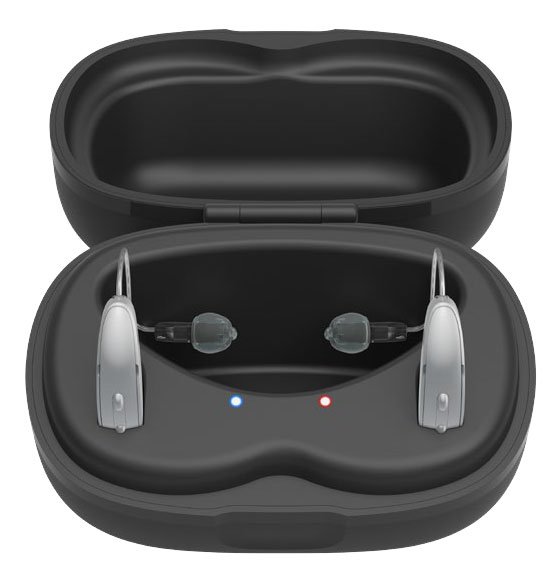
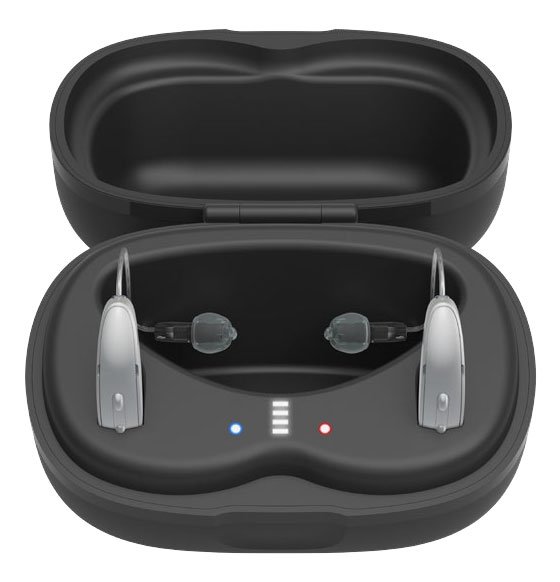
The LED indicators are new and helpful, giving clear visual feedback about connection, charging status, and power—something Starkey hadn’t prioritized as much in earlier models. These indicators are also BRIGHT! Both the red and green lights can be activated in the "Find My Hearing Aids” menu to assist in your search.
Wireless Features & The MyStarkey App
The MyStarkey app is where Omega AI’s personality really shines. Starkey has leaned heavily into usability and wellness features, and the app remains one of the most comprehensive in the industry.
When you open the app, the Home screen gives you access to volume, programs, battery indicators, and Edge Mode+, which remains one of Starkey’s standout features. Press the Edge Mode+ button, and the hearing aids immediately analyze your surroundings and adjust processing—something like a real-time “scene optimizer.” After analyzing the environment, you can choose between Best Sound, Enhance Speech, Reduce Noise, or save your own preset.
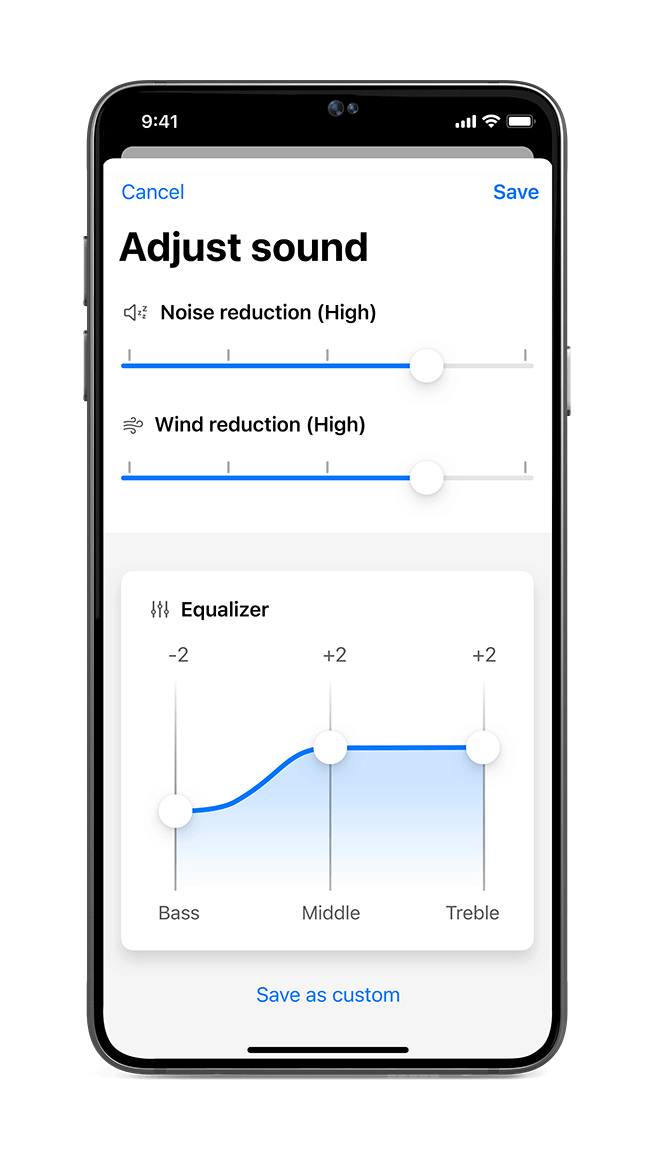
If you want more hands-on control, tapping the three-dot icon opens the Adjust Sound section, where you’ll find a three-band equalizer along with comfort and environment controls. I’d still love to see these placed on the Home screen for faster access, but once you know where to find them, they’re not hard to use.
The Health tab is where Starkey separates itself from every other hearing-aid manufacturers. Notably, Omega AI includes:
- Daily activity tracking
- Fall alerts, Balance assessments, and a “Balance Builder” with guided exercises
- Respiratory rate monitoring
- Reminders that can be programmed to include prescriptions, meetings, etc.
These aren’t gimmicks; many adults with hearing loss benefit from added support around fall safety and physical activity. My only complaint is that some features in the app could look more polished or engaging. A little animation or video guidance could go a long way.
But to their credit, Starkey has pushed to make hearing aids not just smart but more responsive and easier to use by integrating two Generative AI modules for real-time user assistance and troubleshooting:
- TeleHear AI offers 24/7 conversational support, helping users describe listening issues and instantly adjust settings.
- The Gen AI Assistant enables natural-language interaction: users can double-tap their ear or open the app to ask questions, manage streaming, or modify sound preferences.
The latter lets you adjust settings hands-free, ask questions about maintenance, or get help navigating the app. It’s surprisingly intuitive and feels a bit like having a mini-Jarvis from the Marvel movies: a smart assistant that’s built into the hearing aids.
:format(webp))
Overall, the My Starkey app is packed with features. Even though some screens could be easier to find and use, it remains one of the most powerful hearing aid apps available today.
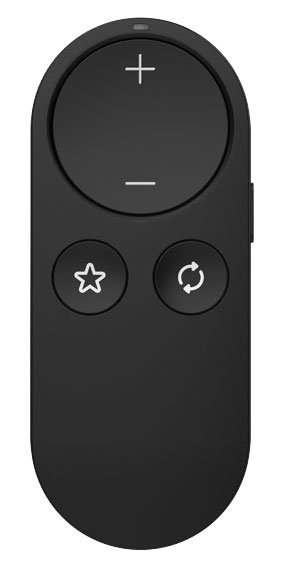
For those who aren't particularly fond of apps, Starkey Omega AI also offers flexible manual control options. You can make quick adjustments through the onboard rocker switch for volume and program changes, or by tap controls, which your hearing care provider can set up in a variety of ways.
:format(webp))
Bluetooth Audio Streaming
Omega AI supports the latest Bluetooth® Low Energy (LE) Audio standard, enabling improved connectivity and audio streaming on compatible iOS and Android devices. Unlike previous protocols such as Made for iPhone (MFi) and Android Streaming for Hearing Aid (ASHA), LE Audio is standardized across devices and should ease your pairing experience.
With its recent firmware update in January 2026, Starkey has introduced an Auracast assistant, meaning any smartphone running the My Starkey app can tune into an Auracast broadcast directly to Omega AI and Edge AI hearing aids, start and stop the broadcast, adjust the streaming or hearing aid microphone volume, and select a different language to stream, if needed. Because Auracast is not yet widely available, the RIC RT and some larger ITE models include a telecoil that allows you to receive broadcasts from venues that feature induction loop systems.
With this latest update, the My Starkey app also supports Google Fast Pair, allowing compatible Android users to pair their hearing aids to their phone with a single tap. Additionally, a new "Push to Talk” feature enables a person wearing Omega AI 24 hearing technology to send a voice message directly to another Omega AI 24 wearer.
Before buying the Omega AI, check with your provider to ensure it's compatible with your smartphone, tablet, and Apple Watch models.
Matthew Allsop provides information about the new Google Fast Pair feature in the My Starkey app that allows you to quickly connect Android devices.
Lots of Choices: Availability, Styles, Tech Levels, and Color Options
Starkey Omega AI and other Starkey hearing aids are prescription devices available through clinics and hearing care offices, including the company's Audibel network.
Omega AI comes in various form factors, including RIC RT (rechargeable receiver-in-canal with telecoil), mRIC R (mini rechargeable RIC), and custom in-the-ear styles like ITE R, ITC R, and CIC (completely-in-canal). There’s also a RIC version with a replaceable 312 battery, which along with the RIC RT, is also CROS compatible, meaning it can be used for people with unilateral hearing loss or single-sided deafness.
Style | Audio Streaming/App | Rechargeable | LED | Telecoil Option |
|---|---|---|---|---|
mRIC |
All these styles use the same core Omega AI technology, so whether you pick the mRIC or a custom canal model, you get the same DNN-360 AI platform. However, some of the smallest in-ear aids (e.g., CICs) might not have Bluetooth, app, or tap controls.
Omega AI is offered in three technology tiers, giving patients options based on their budgets and lifestyle needs.
- Omega AI 24 is the full-featured flagship with maximum noise reduction, the most aggressive machine-noise and transient-noise controls, full DNN spatial features, and the most advanced customization through the app.
- Omega AI 20 keeps most of the premium processing but dials back some reductions and environmental controls, making it a strong middle-ground for active users.
- Omega AI 16 is the most affordable tier. It still includes core AI features and app support, but with reduced access to the most advanced noise-reduction levels and personalization tools.
All three tiers look the same on the outside; the differences are in processing depth and customization. Most people who spend a lot of time in unpredictable listening environments (restaurants, group conversations, challenging workplaces) benefit from the 24 level, while quieter lifestyles may do just fine with the 20 or even the 16.
Omega AI is available in a wide range of colors depending on style, including white, tech black, graphite gray, silver, caramel, chestnut, and beige. For custom products, Starkey offers clear, pink, light brown, blue/red, and black shells, plus multiple faceplate tones. In other words, if appearance matters to you, you have plenty of flexibility.
Accessories
When you buy a Starkey Omega AI, you also have a good selection of accessories to choose from (sold separately). The TV Streamer provides excellent low-latency audio to both ears directly from your television. The Table Microphone is handy for meetings or group dinners and helps pick up speech around a table. The Remote Microphone offers focused one-on-one speech enhancement, which can be especially useful in classrooms, cars, or restaurants.
:format(webp))
There’s also a Remote Control for users who prefer tactile buttons over the app, as well as multiple chargers that support portable, at-home, and custom-earmold configurations.
So… Is Omega AI Worth It?
After testing Omega AI both in the lab and in real-world environments, I walked away impressed. Starkey has clearly listened to feedback and focused on refining areas that matter most: spatial awareness, speech clarity in noise, wellness features, and ease of use. Omega AI doesn’t reinvent the hearing aid, but it does make meaningful improvements over Edge AI—and in some cases, those improvements add up quickly.
If you want:
- Good sound processing
- A natural sense of space and direction
- Strong performance in noise
- Long battery life
- Hands-free calling and modern Bluetooth
- A robust wellness ecosystem
- And a device that’s easy to use day-to-day
…it’s hard to go wrong with Omega AI.
If you’re already on Edge AI, the upgrade is noticeable but not dramatic—so your decision may come down to your environments and how often you struggle with noise. But if you’re coming from an older generation (Livio, Evolv AI, or anything pre-2020), Omega AI will feel like a major leap forward.
Starkey didn’t chase flashy gimmicks here—they built a thoughtful, well-rounded hearing aid that feels like a natural progression of their tech. It’s a solid flagship that I expect many users will be happy with.