The Best Hearing Aids for Seniors in 2026 (Lab Tested)

Clearer conversations, health-conscious features, and easy-to-use tech that helps you stay active at any age.
Updated on Jun 25, 2026·How we test

Our expert team selects and tests products rigorously. We may earn commissions if you buy through our links. Here's how we keep reviews independent.

Why trust us?
295+Hours of audio recordings
95Hearing aid models tested
5Industry leading audiologists
13Years independently owned & operated

2026 Guide Includes:
6 models benchmarked in our lab + 1 other reviewed products.

How we test
Quick Verdict

The 2026 Shortlist

Updated 202695+ Models Tested

Premium prescription hearing aid with best-in-class noise performance and IP68+ durability.

Expert Rating
4.4/5
$4,598 per pair

Compact prescription RIC with fall detection, 51-hour battery, and Bluetooth LE Audio.

Expert Rating
4.4/5
$3,398 per pair
Professional care recommended

See an audiologist first if you have severe or profound hearing loss, asymmetric hearing, or sudden hearing loss. OTC aids on this list won't cover those needs, and self-fitting carries real risks.

1

Hearing loss severity gates your options: Taking a hearing test before shopping isn't optional, it determines whether you need a prescription hearing aid or can get away with an over-the-counter (OTC) device. OTC hearing aids on this list suit independent, tech-comfortable users with simple age-related mild-to-moderate loss only. Seniors with moderate-to-severe loss or dexterity challenges benefit most from prescription aids fitted by an audiologist using real-ear measurement.

2

Maintenance is an often underestimated burden: Receiver-in-canal (RIC) hearing aids require regular cleaning, wax guard replacement, and receiver upkeep. Seniors with limited vision or dexterity may need caregiver help or more frequent audiologist visits. The deeper a device sits in the ear canal, the more maintenance it typically demands.

3

Senior-specific features add real safety value: Fall detection, balance assessment, caregiver alerts, and health monitoring are no longer niche add-ons, they're meaningful reasons to choose one hearing aid over another for older adults aging in place.

Professionally tested

We tested most hearing aids featured here in a custom-built acoustic lab using calibrated speakers and spatially accurate recordings from real-world environments, including busy restaurants and offices.

Real-world usage

Our audiologists wore each device for at least a week, rating build quality, battery life, Bluetooth stability, comfort, handling, app features, and value alongside lab results.

Expert selection

We filtered for needs common in older adults: fall detection, ease of use, rechargeability, support for severe to profound hearing loss, and affordable options at multiple price tiers.

Our Recommendations

Top PickBest for Active Lifestyles
From $4,598 per pair|Read full review
Phonak Audéo Infinio Ultra
4.4/5

The Phonak Audéo Infinio Ultra Sphere is a premium prescription receiver-in-canal (RIC) hearing aid with dual-chip DNN processing, Spheric Speech Clarity 2.0, up to 56 hours battery, IP68+ durability, universal Bluetooth, and hands-free calling. Best for active seniors who need top-tier noise performance.

Why we picked it
  • Excellent all-around speech clarity, particularly in background noise
  • IP68+ durability for active seniors
  • Universal Bluetooth connectivity, plus a comprehensive selection of accessories
Tradeoff: No Telecoil and Auracast support is pending a firmware update.
Best Safety Features
From $3,398 per pair|Read full review
Starkey Omega AI
4.4/5

The Starkey Omega AI is a rechargeable prescription RIC powered by DNN 360 processing. It delivers up to 51 hours battery, IP68+ durability, Bluetooth LE Audio, hands-free calling, and a health suite including fall detection and respiratory rate tracking.

Why we picked it
  • Fall detection with caregiver alerts
  • Respiratory rate monitoring (industry first)
  • Balance assessment and guided exercises
Tradeoff: Small, slightly stiff buttons can be difficult to press, particularly for users with dexterity challenges.
Best Affordable OTC
From $649 per pair|Read full review
Elehear Beyond Pro
4.4/5

The Elehear Beyond Pro is a self-fitting over-the-counter (OTC) RIC hearing aid. It offers Bluetooth 5.3 streaming, hands-free calling, up to 24 hours battery, AI noise reduction, a feature-rich app, and remote care by licensed audiologists, accessible via the Elehear app.

Why we picked it
  • Strong speech-in-noise performance
  • Rechargeable with 24-hour battery life
  • Remote audiologist support via ElePro in the Elehear app
Tradeoff: No physical remote control; all adjustments require the smartphone app or small onboard buttons, which can be a barrier for seniors with limited dexterity.

Comparing the Best Hearing Aids for Seniors

Product
Top Pick
Phonak Audéo Infinio Ultra

Phonak Audéo Infinio Ultra

Visit Site
Starkey Omega AI

Starkey Omega AI

Visit Site
Elehear Beyond Pro

Elehear Beyond Pro

Visit Site
Lexie B3 Powered by Bose

Lexie B3 Powered by Bose

Visit Site
Signia Motion X

Signia Motion X

Visit Site
Apple AirPods Pro 3

Apple AirPods Pro 3

Visit Site
Cearvol Wave

Cearvol Wave

Visit Site
Our Rating4.4/54.4/54.4/54.5/5N/A4.1/54.4/5
VerdictBest for Active LifestylesBest Safety FeaturesBest Affordable OTCBest Amazon (and Walmart) OTC Hearing Aid Best for Severe to Profound Hearing LossBest for Occasional Use by Tech-Savvy Seniors (OTC)Best for Occasional Use on Android
Price$4,598$3,398$649From $999 / pair$4,598$240$397
Hands-Free Calling
Rechargeable
iPhone Streaming
Android Streaming
Telecoil

Prices and availability are subject to change. We independently review each item we recommend and appreciate your trust and support. When you buy through our links, we may earn a commission.

No matter your age or type of hearing loss, when selecting a hearing aid, your top priority should be how effectively it improves hearing—particularly in boosting speech clarity and reducing background noise. Older adults, however, often struggle with tasks that require good dexterity or technology that comes with a steep learning curve. To pick the best hearing aids for seniors, we combined our understanding of common challenges faced by the elderly with our lab results and hands-on testing.

We'll note here that prescription hearing aids from trained hearing care providers are the "gold standard" in hearing healthcare. The OTC hearing aids on this list are intended only for adults with mild-to-moderate hearing loss; for more severe losses, OTC aids will be of limited use. It's always best to get your hearing checked by a professional, but there are also some good online hearing tests available.

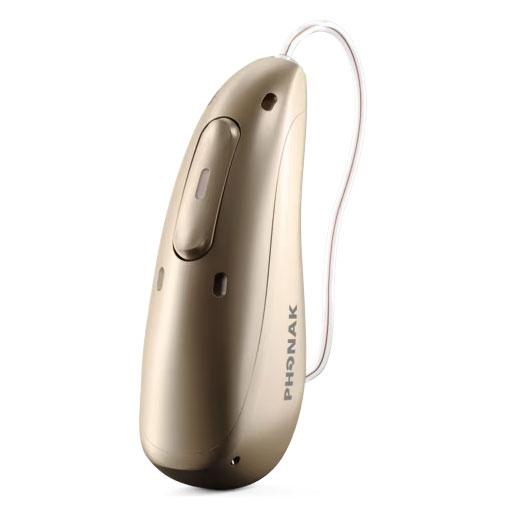
The Phonak Audéo Infinio Ultra Sphere is a premium prescription receiver-in-canal (RIC) hearing aid with dual-chip DNN processing, Spheric Speech Clarity 2.0, up to 56 hours battery, IP68+ durability, universal Bluetooth, and hands-free calling. Best for active seniors who need top-tier noise performance.

Expert Review

The Phonak Audéo Sphere Infinio is one of the best hearing aids on the market with exceptional hearing in noise capabilities. It's a prescription hearing aid, meaning you'll receive in-person care, which is a must for everyone who needs additional help with setup, cleaning, and maintenance. Like all the hearing aids on this list (except the most powerful ones for severe-to-profound hearing loss), it's rechargeable, so you won't have to replace batteries. With an ingress protection (IP) rating of 68+, the Sphere Infinio is highly dust and water resistant, making it more durable than models with a lower rating and a great fit for an active lifestyle.

Side view of a man wearing the Phonak Audéo Sphere Infinio hearing aid in his left ear.
The Phonak Audéo Sphere Infinio is a receiver-in-canal (RIC) hearing aid, which can be difficult to handle for people with limited dexterity.

Since it uses Bluetooth 5.3, you can pair the Sphere Infinio with up to eight devices and stay connected to two of them at the same time. In case your entertainment system doesn't support Bluetooth, or if you'd like to simplify controlling your hearing aids, Phonak offers a wide range of accessories. With the TV connector you can stream audio wirelessly from your TV or stereo system straight to your hearing aids. And the remote control makes it easy to adjust settings, in case you struggle with the volume rockers or the mobile app.

Keep in mind that the Phonak Sphere Infinio is a receiver-in-canal (RIC) hearing aid, which is slightly more difficult to handle than a behind-the-ear (BTE) style aid. Within Phonak's lineup, the Naída Lumity BTEs are a good alternative to the company's RIC models. They're suitable for people with severe to profound hearing loss. We discuss the different hearing aid types seniors should consider in more detail below.

Score
4.4
Starkey Omega AI

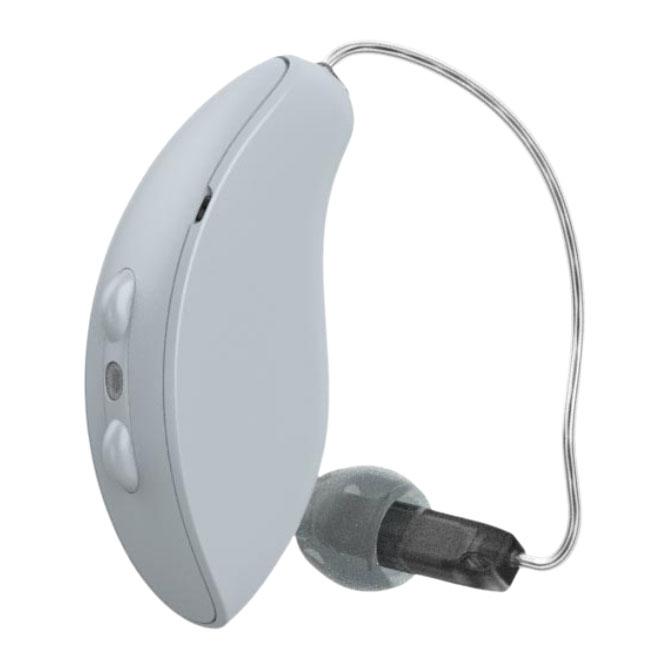
The Starkey Omega AI is a rechargeable prescription RIC powered by DNN 360 processing. It delivers up to 51 hours battery, IP68+ durability, Bluetooth LE Audio, hands-free calling, and a health suite including fall detection and respiratory rate tracking.

Expert Review

The Starkey Omega AI microRIC hearing aid is a small, rechargeable, AI-powered hearing aid packed with features that provide exceptional hearing performance with the added benefit of helping you feel safer in your home. It is the first hearing aid to monitor respiratory rate, a passive health monitor that can flag early signs of emerging health issues.

Omega AI adopted many features from its predecessor, Edge AI. Employing motion sensors and AI, Omega AI also offers fall detection. If you choose to enable the fall detection function, you can select up to three contacts who are notified when the device detects a fall. Similar to its fall detection, this hearing aid can help you quickly notify a caregiver. The hearing professional can assign a manual alert option that allows you to press and hold the hearing aid button to send the message (again, to pre-selected contacts) for a fall or non-fall related event.

Finally, the hearing aid features a balance assessment, customizable audio reminders (e.g., for medications, appointments, etc.), a step counter, and a gauge for tracking social engagement, which can be shared with whomever you wish. Although you may find some of these features intrusive, remember that they're optional and can be turned on or off.

Side view of a man wearing the Starkey Edge AI mRIC hearing aid in his left ear.
Starkey Omega AI mRIC is noticeably smaller than the Phonak Sphere, which can make it even more of a concern for people with dexterity problems or movement restrictions (although Omega AI is also available in slightly larger models).

HearingTracker gives Omega AI an overall score of 4.4 (out of 5), and HearAdvisor testing was impressive enough that it earned an Expert Choice Award from the lab.

Omega AI uses Bluetooth LE Audio, which means it supports multi-point pairing, and it's fully Auracast-enabled as of firmware version 10.3.1. Like Phonak, Starkey also offers a wide range of accessories and provides hands-free calling.

Score
4.4
Elehear Beyond Pro

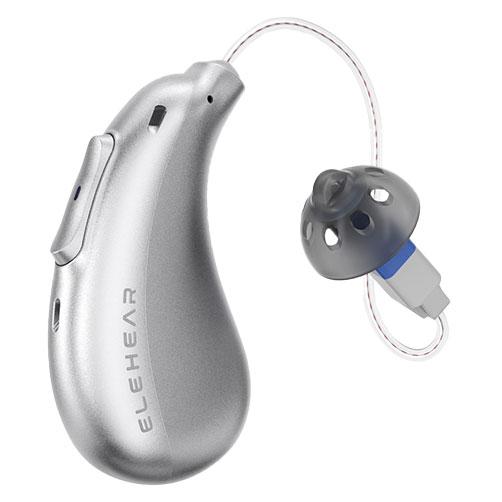
The Elehear Beyond Pro is a self-fitting over-the-counter (OTC) RIC hearing aid. It offers Bluetooth 5.3 streaming, hands-free calling, up to 24 hours battery, AI noise reduction, a feature-rich app, and remote care by licensed audiologists, accessible via the Elehear app.

Expert Review

The Elehear Beyond Pro is a budget-friendly over-the-counter (OTC) hearing aid, designed for adults with mild to moderate hearing loss. Although it's priced at only $649, it offers speech-in-quiet performance that approaches prescription hearing aids like the Sphere Infinio, as well as great speech-in-noise benefits, making it an incredibly good deal. Like any OTC hearing aid, however, the Beyond won't be quite as well customized to your hearing loss as a prescription hearing aid with in-person care.

The Beyond is rechargeable, offering a battery life of up to 24 hours and includes premium features like AI-powered noise reduction and Bluetooth 5.3 streaming. Its smartphone app is packed with features, like customizable sound profiles, tinnitus maskers, goal tracking, translation tools, and a remote microphone function. While those features appeal to tech-savvy users, they may pose a learning curve for seniors who aren’t comfortable using mobile apps or navigating device settings on their own. Unfortunately, Elehear doesn't offer a physical remote control for the Beyond, meaning volume and program adjustments must be made either through small onboard buttons or via the smartphone app. This can be a barrier for seniors with limited dexterity.

Elehear Beyond hearing aid fitted on a test head in the Hearing Tracker lab.
The Elehear Beyond has a slightly bulkier body than other RIC hearing aids, which can make them challenging with glasses or uncomfortable for smaller ears.

Elehear doesn’t provide in-person fittings, but it does offer free remote support from licensed audiologists (Monday through Friday, by appointment via the app), along with customer service via phone and email. This is a valuable resource, but may not fully replace the hands-on help some seniors need for setup, troubleshooting, or fine-tuning. The devices are also somewhat bulky at 4.8 grams and a larger form factor than other receiver-in-the-ear (RITE) models, which could be uncomfortable for users with smaller ears or those wearing glasses.

Overall, the Elehear Beyond offers excellent value for tech-comfortable users who can manage its features independently. But for seniors who prefer hands-on support, minimal setup, and a truly plug-and-play experience, this model might feel overwhelming without additional help from a caregiver or family member.

ADVERTISEMENTad for Oticon

Budget-conscious seniors should also consider the Elehear Beyond, the company's 2023 model, which offers similar features and is priced at only $399. In the lab, it didn't perform quite as well as the Pro, with slightly weaker speech clarity, but it's still one of the best OTC hearing aids on the market.

Score
4.5
Lexie B3 Powered by Bose

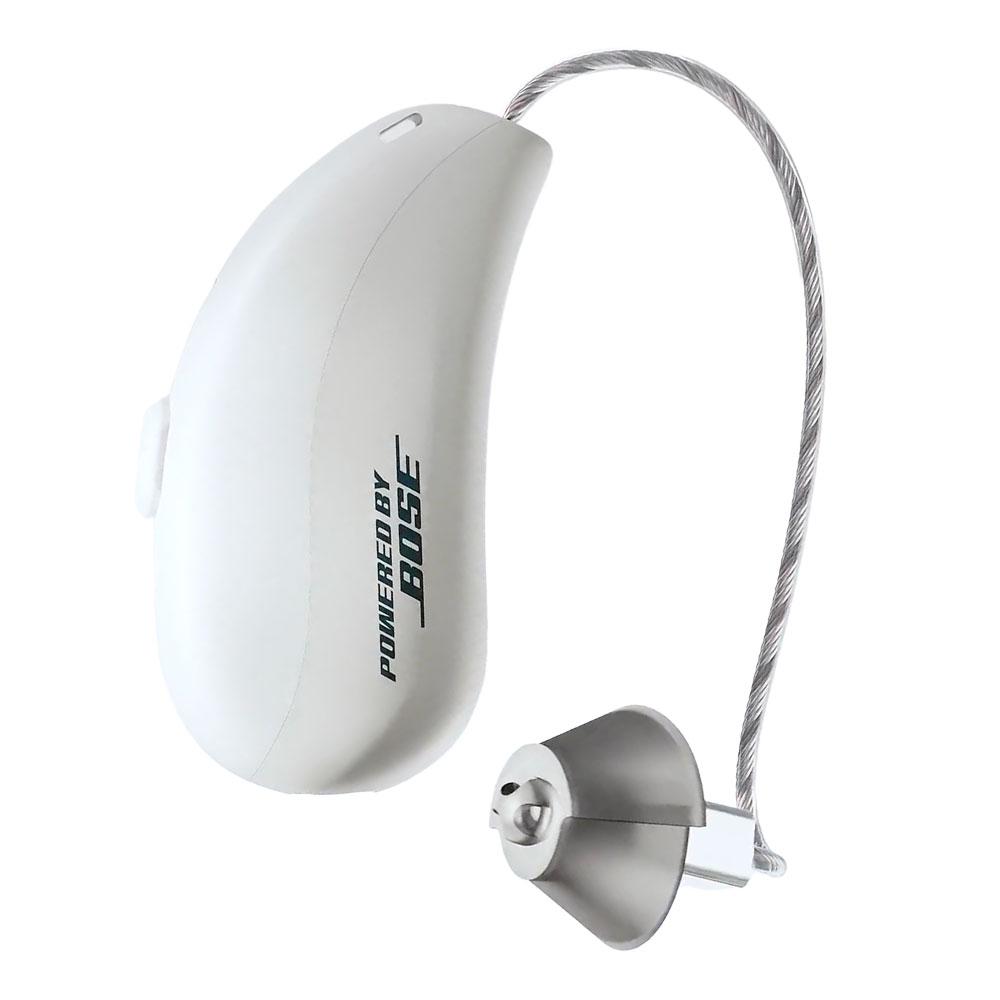
The Lexie B3 Powered by Bose is a rechargeable OTC RIC with a 4.48 HearAdvisor SoundScore, Bluetooth 5.3 streaming for iOS and Android, IP68 durability, and 7-day-a-week remote support from Lexie hearing experts.

Expert Review

The Lexie B3 Powered by Bose is a rechargeable receiver-in-canal OTC hearing aid designed for adults with mild-to-moderate hearing loss who want strong performance without a clinic visit. In HearAdvisor’s independent lab testing, it earned a SoundScore of 4.48 out of 5, placing it in the top three among currently available OTC hearing aids. Speech clarity in quiet and in noise were both well above OTC norms, which matters most in the situations seniors encounter daily: one-on-one conversations, family dinners, and TV listening.

Beyond sound performance, the B3 covers the practical bases that seniors tend to prioritize. It’s rechargeable with up to 32 hours of use per charge and a portable case that adds three more full charges, so battery management is rarely an issue. Bluetooth 5.3 supports streaming from both iOS and Android for calls, music, and video. IP68 dust and water resistance handles everyday moisture without worry. For seniors who prefer to shop in person or need easy return options, the B3 is available at Amazon, Walmart, Costco, Sam’s Club, Walgreens, and CVS.

The Lexie B3 Powered by Bose is an excellent choice for tech-savvy seniors with mild-to-moderate hearing loss.

Where the B3 earns particular points for a senior audience is its support model. Lexie includes 7-day-a-week remote support from licensed hearing experts for the life of the device, a meaningful backstop for users navigating self-fitting for the first time. The Lexie app guides users through an in-app hearing test, creates a personalized sound profile, and unlocks four listening programs and frequency controls. The interface is straightforward, though seniors with limited smartphone experience or dexterity challenges will benefit most from caregiver assistance during setup.

Seniors on a tighter budget should consider the Lexie B2 Plus Powered by Bose, the predecessor to the B3. While its list price of $999 is identical to the B3, it's frequently discounted to $899 or less. The B2 Plus's speech clarity scores in HearAdvisor lab testing are comparable to the B3, and it carries the same 7-day-a-week lifetime remote support and wide retail availability at Amazon, Walmart, Best Buy, and major pharmacies. The main trade-offs versus the B3 are a weaker streaming score, an IP57 rather than IP68 water resistance rating, and 18 hours of battery life per charge rather than 32.

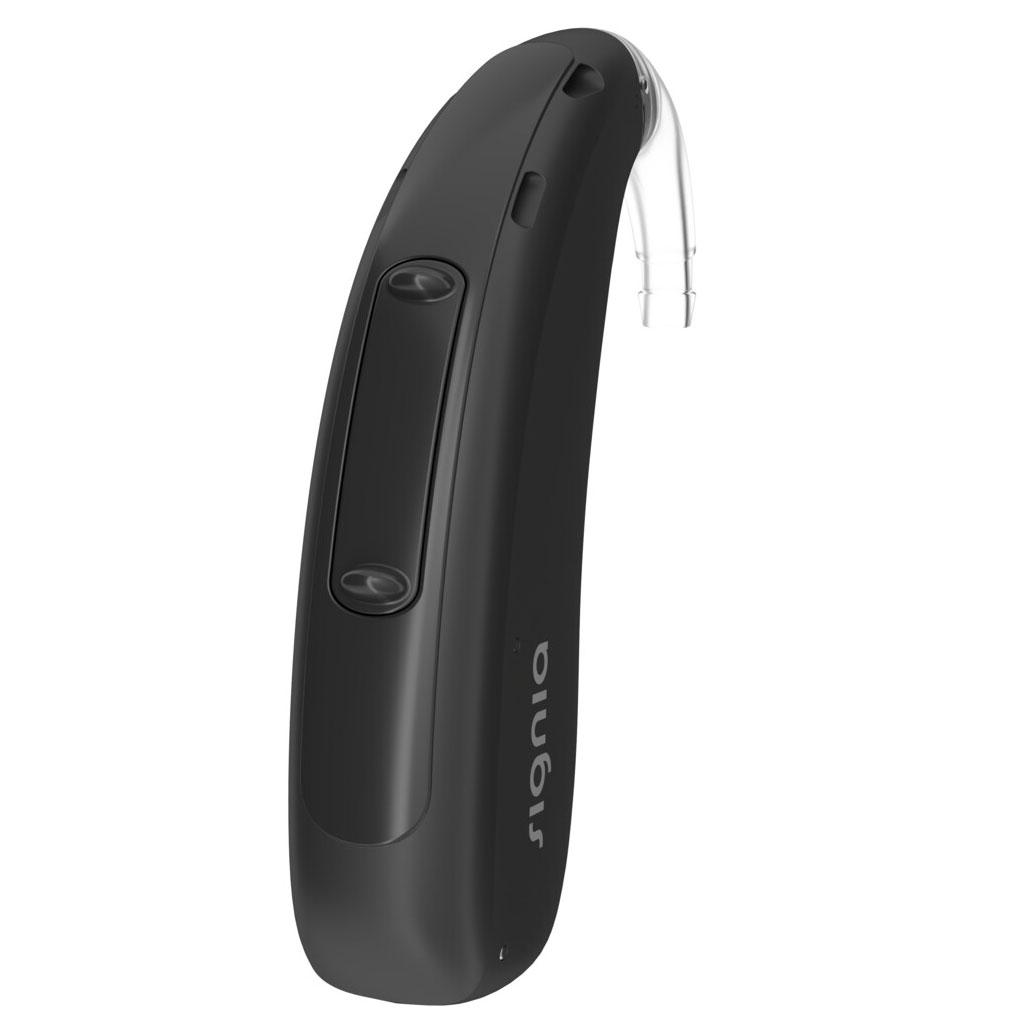
The Signia Motion X Charge&Go SP X is a prescription behind-the-ear (BTE) for severe to profound hearing loss, built on Signia's Xperience platform with Dynamic Soundscape Processing, Own Voice Processing, rechargeable batteries, and Bluetooth streaming.

Seniors with severe to profound hearing loss have fewer options and most of them run on technology that's a couple of generations behind. All of them are prescription only, as this level of hearing loss requires custom care.

The Phonak Naída Lumity is the most up-to-date line of hearing aids suitable for severe to profound hearing loss. The behind-the-ear (BTE) models in this line offer Bluetooth streaming from iOS and Android and they fit almost any losses. The Naída L-SP suits mild to severe hearing loss, the L-PR is ideal for a moderately severe loss, and the L-UP is best for severe to profound hearing loss. Only the L-PR is rechargeable, while the other two contain a Telecoil.

ADVERTISEMENTad for Phonak

The Signia Motion X Charge&Go SP X is a good rechargeable alternative if you're dealing with severe to profound hearing loss. It's an older model, but you might be able to get it at a discount.

Disclaimer: We haven't lab-tested the hearing aids mentioned in this section, but we do have hands-on experience and relied on recommendations from licensed audiologists.

Score
4.1
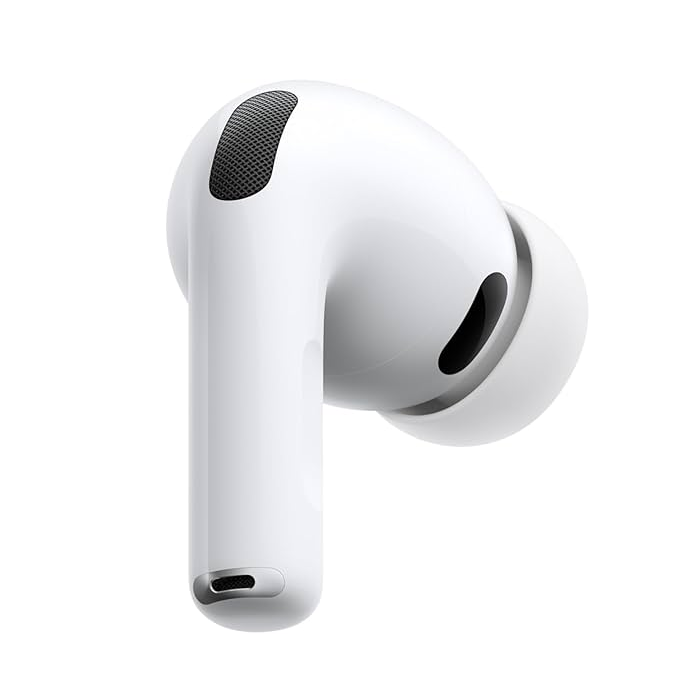
Apple AirPods Pro 3

The Apple AirPods Pro 3 are iOS-native wireless earbuds with FDA-cleared OTC hearing aid functionality. They offer audiogram-based tuning, Conversation Boost, hands-free calling, active noise cancellation, spatial audio, and up to 10 hours battery per charge.

Ideal for

Expert Review

iPhone users with mild-to-moderate hearing loss might find that the AirPods Pro 3 are good enough for occasional speech amplification. As a first-time hearing aid user, you'll appreciate the low barrier to entry: The AirPods Pro 3 are easy to set up and offer respectable hearing benefits for a consumer earbud. What's more, they're more affordable than any other option on this list.

Apple's Hearing Aid Feature, which is built into iOS and compatible with the AirPods Pro 3, was the first FDA-approved OTC hearing aid software feature.

Using Android? While the AirPods Pro 2 and 3 are compatible with Android, you'll need an iOS device to set up and control the hearing aid feature.

Alternative for Android users: The Audien Atom X ($389) supports hands-free calling and audio streaming to both iOS and Android. Seniors who struggle with smartphone apps and dexterity can fully control the Atom X via the touch display on its charging case. On the downside, the Atom X provides weaker benefits in quiet than the AirPods Pro 3, and almost no benefits in noisy environments.

Score
4.4
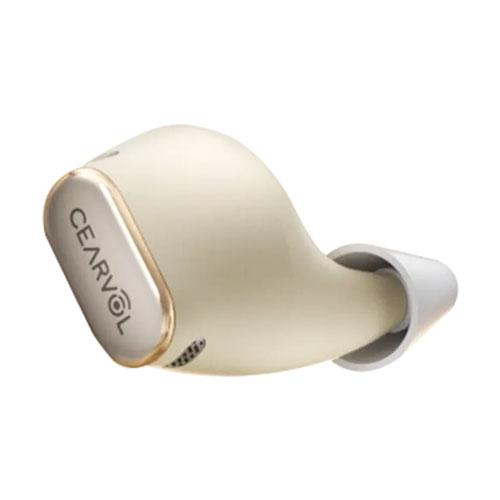
Cearvol Wave

The Cearvol Wave is a budget OTC hearing aid with lab-verified speech-in-noise performance, Bluetooth streaming for iOS and Android, and a touchscreen charging case that doubles as a remote control and remote mic. Priced at $399 a pair.

Ideal for

Expert Review

The Cearvol Wave is an earbud-style OTC hearing aid priced at $399 a pair, and its main credential for this list is performance in noise: in independent HearAdvisor lab testing, it earned a SoundScore of 4.32 out of 5 and placed in the top 5 of all OTC devices tested for speech in noise, scoring 2 percentage points above the OTC category average. That’s a result that matters in the social situations seniors most commonly struggle with, including restaurants, family gatherings, and busy indoor spaces.

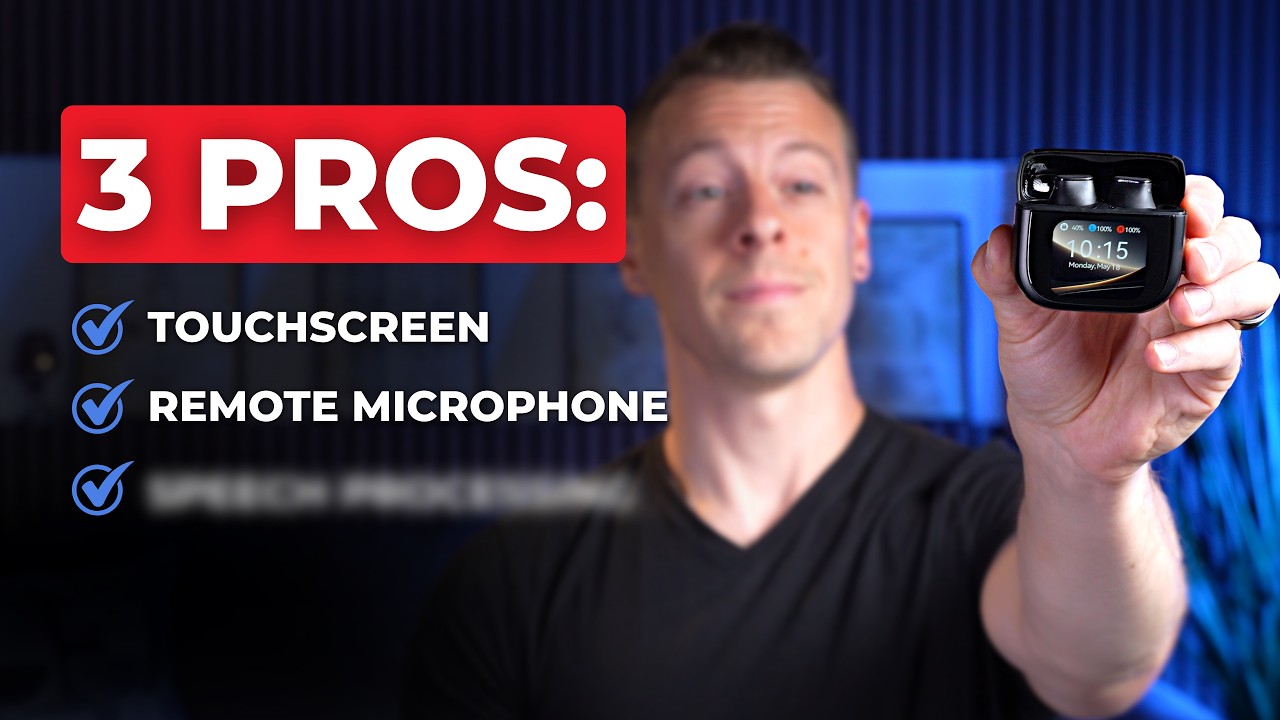
Where the Wave earns its spot as an AirPods Pro 3 alternative is platform openness. Unlike the AirPods, which require an iPhone to activate and configure the hearing aid functionality, the Wave’s app supports both iOS and Android, so Android users get the full self-fitting and customization experience from the start. Its touchscreen charging case doubles as a wireless remote control and remote microphone, letting users adjust the hearing aids without opening an app, a genuine usability advantage for seniors who are comfortable with tech but prefer not to navigate a smartphone for routine adjustments. The app itself offers multiple programs and sound customization with large numbers and icons, which is a practical design choice for older users.

Steve Taddei reviews the Cearvol Wave, demonstrating the app, the charging case's touch controls, and the charging case's remote microphone feature.

A few limitations are worth flagging for seniors specifically. The Wave’s IPx5 water resistance rating is lower than most other devices on this list, so it needs more care around moisture. Battery life tops out at 10 hours, less than the all-day run time most dedicated hearing aids offer, though a 15-minute quick charge adds 3 hours of use. The in-ear fit can make the user’s own voice sound hollow or boomy, a known trade-off with earbud style hearing aids. Moreover, the visible, earbud-like design is noticeable, which some seniors may prefer to avoid. For Android users who want a low-cost, tech-forward OTC option with solid noise performance, the Wave makes a reasonable case; for those wanting all-day reliability or a more discreet fit, look further up this list.

How did we pick the best hearing aids for seniors?

To identify the best hearing aids for seniors, our team of expert audiologists defined common needs of older users, including fall detection, affordability, ease of use, and support for severe to profound hearing loss.

ADVERTISEMENTad for Signia

We prioritized rechargeable hearing aids because replacing batteries can be a challenge. However, rechargeable batteries may not offer enough power for users with severe or profound hearing loss, which is why we included two models with disposable batteries.

Some hearing aids lack a HearingTracker score because we weren’t able to fully test them in our lab. We selected the best models for each of those use cases based on our testing, community feedback, and clinical experiences.

How much do hearing aids for seniors cost?

Prescription hearing aids purchased without insurance average $3,432 per pair in 2026, though prices range widely from $2,150 for entry-level devices to $5,225 for premium technology. This is the result of HearingTracker's 2026 survey on the cost of hearing aids.

The good news: Seniors have multiple ways to reduce these costs significantly. Insurance coverage saves an average of $1,694 (32%) on premium devices and even more—$2,048 (51%)—on mid-range technology, bringing insured costs down to around $2,567 per pair. Costco offers the most dramatic savings at $1,674 per pair, providing advanced hearing aids from major manufacturers like Philips, Jabra, Rexton, and Sennheiser at roughly 65% below traditional clinic prices. Traditional audiology clinics average $3,601 per pair, while hospital and university clinics tend to be most expensive at $3,941.

Man facing camera with stretched out arms, holding a hearing aid in his right hand and dollar bills in his left hand.
We asked 1,100 hearing aid purchasers how much they spent on their hearing aids. Our results show that the average price for hearing aids dropped from $4,672 per pair in 2018 (our last survey) to $2,694 per pair in 2025. This reduction in price is largely driven by the availability of affordable over-the-counter hearing aids, as the price for prescription hearing aids at traditional clinics hasn't changed much since 2018.

The channel you choose matters less for satisfaction than you might expect: Traditional clinics, Costco, and the VA all report similar outcomes, with roughly 77-82% of users satisfied with their devices. What differs is value perception: 85% of Costco buyers rated their purchase as good value compared to just 59% at traditional clinics without insurance.

While over-the-counter devices average only $502 per pair and may work for mild hearing loss, seniors with moderate-to-severe loss typically need the custom programming and professional support that prescription devices provide.

The key is maximizing your investment through insurance benefits, considering Costco or other value-focused retailers, and ensuring your provider performs proper fitting with Real Ear Measurements—since quality programming matters more than premium technology levels.

How to pick the best hearing aids for seniors

Picking the right hearing aid requires balancing hearing needs, ease of use, and lifestyle preferences. Your budget might further limit your options. But before you settle on a device category, find out what type of hearing loss you're dealing with.

1. Take a hearing test

The results of a hearing test can guide you to the right type of hearing aid and service level for you.

If you have mild-to-moderate hearing loss, an over-the-counter hearing aid might be a good fit. In that case, the hearing test may even help you with self-fitting the device.

If the test reveals that you have asymmetric hearing or a severe to profound hearing loss, you'll want to work with an audiologist as you may need a custom-fit prescription hearing aid.

2. Consider fit, comfort, and ease of use

Each type of hearing aid comes with its own challenges.

Receiver-in-canal (RIC) hearing aids can be difficult to insert and, similar to behind-the-ear (BTE) models, the position of the main body behind the ear can interfere with glasses or create discomfort for those with smaller ears. Hearing aids that sit in the ear canal, including earbud-style hearing aids and invisible models, can also be difficult to insert or remove. Many of the smallest and most discrete models use disposable batteries, which are particularly challenging for people with poor vision or hand coordination.

Models with large buttons, clearly-marked left/right units, simple controls, and easy charging solutions can create a smoother experience.

Different hearing aid styles, including RIC, BTE, earbud, ITE, ITC, and IIC.
Hearing aid types from left to right and top to bottom: RIC, BTE, earbud-style, CIC (completely-in-canal), ITC (in-the-canal), and ITE (in-the-ear)

3. Take maintenance into account

All hearing aids require regular cleaning and maintenance to function properly, but some take more effort than others. Models placed deeper in the ear canal, for example, are more exposed to earwax and moisture, increasing the need for frequent cleaning and repairs (e.g., receiver replacement). People with limited vision or dexterity may need help from a caregiver or more frequent visits to an audiologist to clean or replace parts.

ADVERTISEMENTad for Yeasound

If you're considering a rechargeable device and plan to use it throughout the day, be sure to check its battery life. Also, most internal lithium-ion rechargeable hearing aid batteries should give about a 5-year life inside the device, although, like your cell phone, you'll note a gradual decline in efficiency. Some experienced prescription hearing aid users request a battery replacement just before the expiration of the manufacturer's warranty (there is usually a fee for this refurbishment) to further extend the hearing aid's service life beyond 5 years.

If upkeep is going to be a challenge, we strongly recommend opting for a prescription hearing aid with in-person care. Also, keep in mind that your hearing changes over time, and regular adjustments help you keep your hearing at its best.

A senior holding a tool used for cleaning a receiver-in-canal (RIC) hearing aid.
Cleaning a hearing aid requires good dexterity.

4. Narrow down desired features

Many modern hearing aids come packed with cutting-edge technology.

As a tech-savvy senior, you should make sure the hearing aid you choose is compatible with your smartphone and home entertainment system or offers accessories, like a TV streamer, that make pairing easy.

Those who are less comfortable with technology should prioritize manual controls, the availability of remote controls, and possibly models that don't require a smartphone at all.

Other features you should consider:

  • Rechargeability, so you don't have to deal with impossible to open battery packages
  • High IP rating, ideally IP68, so your aids are better protected from dust and moisture
  • Telecoil, to access hearing loops in public spaces
  • A "Find My Hearing Aid" option
  • Fall detection, so a caregiver is alerted

5. Select your care and support level

In-person care will always get you better results than remote care.

If your hearing loss is more complex, or if you need someone to help you select and show you how to use your device, or if you'll need help with cleaning and maintenance, an audiologist can ensure you get the best value out of your aids and keep them well-adjusted to your hearing for many years. In particular, hearing aids fitted by audiologists and hearing aid specialists who adhere to best practices (e.g., in a sound booth with specialized testing and services) offer significant advantages compared to over-the-counter (OTC) hearing aids.

Only opt for an OTC hearing aid if your hearing loss permits it and if you're comfortable with doing your own maintenance.

Real-ear-measurements (REM) help with fine-tuning prescription hearing aids.
A prescription hearing aid fit by a professional who uses best practices like real-ear measurement (shown here) will give you better results than a pre-set or self-fit OTC model.

6. Check for ways to stay within your budget

Prescription hearing aids can be prohibitively expensive. However, rather than picking an under-fit OTC hearing aid, consider ways to make a premium model more affordable:

7. Consider accessories and no-cost captioned telephones

Today's hearing aids are extremely effective, but for people who still struggle to hear, there are some great options in accessories that make a great match with many hearing sids. For those having difficulty with TV listening, a TV streamer can be well worth the money, allowing the user to wirelessly connect to the TV and not blast housemates (or neighbors!) with unnecessarily high volume sound. If phone conversations are a problem, a no-cost captioned telephone can supply text on a screen in near-real-time as part of an FCC-administered program.

Medicare Advantage plans offer hearing aid benefits, including partial or full coverage of hearing aids (often with copays), routine hearing exams, and access to a network of providers. Coverage varies by plan and location.

While the Original Medicare (Parts A & B) doesn't cover hearing aids, it may cover your diagnostic hearing exam, if ordered by a doctor to determine a medical condition.

Medicaid coverage varies by state. Some states cover hearing aids for adults, including seniors. Others limit coverage to children or have strict eligibility rules. If you’re dually eligible for Medicare and Medicaid, you may receive more robust coverage. Check your state Medicaid office for details.

Veterans enrolled in VA healthcare may qualify for free hearing aids. To qualify, you must have a documented hearing loss connected to service or you must have a clinical need. VA also covers hearing aid repair, replacements, and in-person support for the duration of your eligibility.

Tricare for Life generally doesn't cover hearing aids for military retirees or their dependents. Coverage is primarily available for active-duty service members and their families who meet specific hearing loss criteria.

Private insurances or retiree plans through Blue Cross Blue Shield, Humana, employer-sponsored retiree health plans, or Medigap plans may include hearing aid benefits. You may find that your plan offers a discount program, rather than covering devices directly. Check with your insurer to see what benefits, if any, they offer.

  • Tina Sieber, PhD

    Tina Sieber, PhD

    Health Writer

    Tina Sieber is a technology journalist with over 10 years of experience and a PhD in Biochemistry. Following an episode of sudden one-sided hearing loss, she was diagnosed with a benign brain tumor in 2018. She has since started writing about hearing loss and reviewing hearing aids for major tech publications.

  • Abram Bailey, AuD

    Abram Bailey, AuD

    Founder and President

    Dr. Bailey is a leading expert on consumer technology in the audiology industry. He is a staunch advocate for patient-centered hearing care and audiological best practices, and welcomes any technological innovation that improves access to quality hearing outcomes. Dr. Bailey holds an Au.D. from Vanderbilt University Medical Center.