The Best Hearing Aids for Tinnitus in 2026

Hearing aids are the most popular choice for tinnitus relief. Amplifying everyday sounds can mask tinnitus and help retrain your auditory system for normal function over time.
Updated on Mar 19, 2026·How we test

Our expert team selects and tests products rigorously. We may earn commissions if you buy through our links. Here's how we keep reviews independent.

Why trust us?
295+Hours of audio recordings
95Hearing aid models tested
5Industry leading audiologists
13Years independently owned & operated

2026 Guide Includes:
7 models benchmarked in our lab.

How we test
Quick Verdict

The 2026 Shortlist

Updated 202695+ Models Tested

Prescription aid with DEEPSONIC dual-chip processing and IP68+ waterproofing.

Expert Rating
4.4/5
From $3,998 / pair

Prescription aid in an earbud-style instant-fit design with 34-hour battery life.

Expert Rating
4.5/5
$2,348 per pair
Tinnitus relief scoring

We tested the tinnitus relief features described below, but tinnitus-related performance does not impact the overall score.

1

Amplification comes first: Every device here was selected as a strong-performing hearing aid, ranked by HearingTracker score, before its tinnitus features were considered. For many people, a well-fit hearing aid reduces tinnitus on its own by filling the auditory void left by hearing loss. Dedicated masking features are a second layer, not a starting point.

2

Tinnitus features vary widely by approach: Hearing aids on this list take fundamentally different approaches to tinnitus relief, from Widex's randomized fractal tones and Signia's inaudible Notch Therapy to ReSound's fully adjustable sound generator. Hence, the right pick depends on which mechanism your audiologist thinks suits your tinnitus type.

3

App control separates good tinnitus management from great: ReSound Smart, Oticon ON, and Starkey My Starkey stand out for letting users adjust both masker intensity and pitch independently, giving wearers real-time, personalized control over their relief. Phonak's app allows volume adjustments only, making it the least flexible on this list for active tinnitus management.

4

Nighttime tinnitus needs a different solution: Standard hearing aids aren't practical to wear overnight as they can fall out, cause discomfort, or need recharging. We recommend dedicated sound machines or Bluetooth speakers programmed with masking sounds as an alternative. The one exception is Phonak Lyric, a deep-canal device worn continuously for months at a time.

Lab tested

All hearing aids featured here were tested in our custom acoustic lab using a calibrated KEMAR manikin. We've captured 295+ hours of audio across 95+ models.

Hands-on testing

Every hearing aid on this list was worn for at least a week in real environments like restaurants, offices, and outdoors by an audiologist on our team.

Transparent selection

We selected the flagship hearing aids from brands that offer a tinnitus relief feature. We ranked matching hearing aid models based on their HearingTracker score.

Our Recommendations

Top PickBest overall hearing aid for tinnitus
From $3,998 per pair|Read full review
Phonak Audéo Infinio Ultra
4.4/5

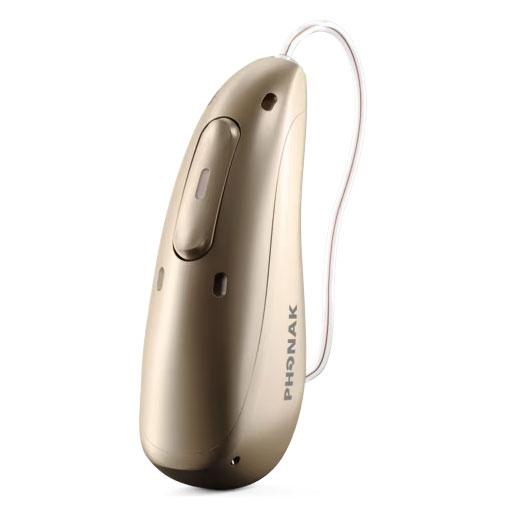
Phonak Infinio Ultra Sphere is a premium prescription receiver-in-canal (RIC) hearing aid with a dual-chip architecture, top-tier speech clarity in noise via DEEPSONIC processing, universal Bluetooth streaming, IP68+ water resistance, and improved battery life following the late-2025 Ultra firmware update.

Why we picked it
  • Top 5% speech-in-noise score from HearAdvisor
  • Tinnitus Balance with hearing-loss-matched broadband masking
  • Highly customizable EQ for fine-tuning masking tone
Tradeoff: The two-chip architecture makes it bulkier than most RICs, and battery life shortens noticeably when running in active Sphere mode.
Best earbud-style prescription hearing aid for tinnitus
From $2,348 per pair|Read full review
Signia Active Pro IX
4.5/5

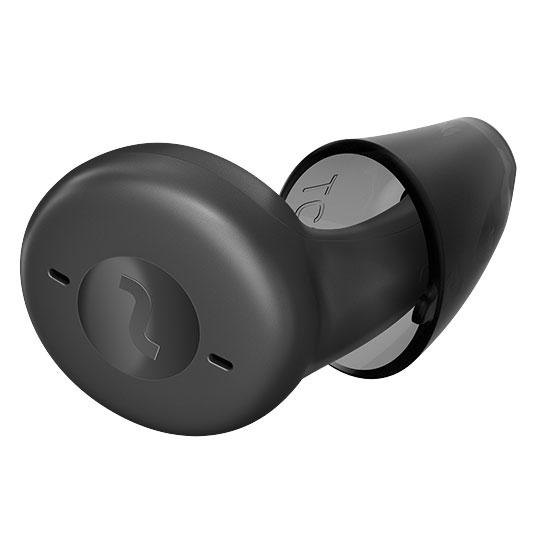
Signia Active Pro IX puts prescription hearing aid performance into an earbud-like instant-fit design, with IX multi-stream processing, 34-hour battery, hands-free calling for iOS, and app-based remote care.

Why we picked it
  • Top 5% overall HearAdvisor score across all devices tested
  • Notch Therapy targets the specific tinnitus frequency for habituation rather than masking
  • Highest HearingTracker score on this list at 4.5/5
Tradeoff: The instant-fit design scored below average on feedback handling in lab testing, and there is no telecoil option for looped venues.
Best SoundScore for treating tinnitus
From $4,898 per pair|Read full review
Oticon Intent
4.4/5

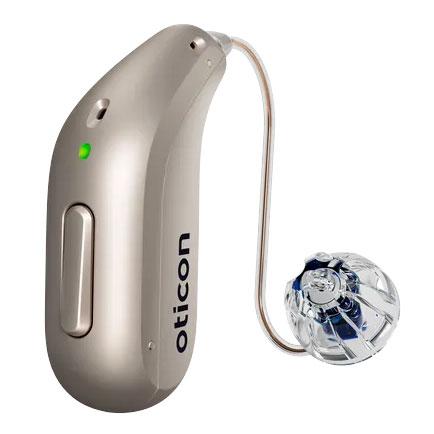
Oticon Intent is a compact prescription RIC with DNN 2.0, 4D sensor-driven adaptive sound, Auracast-ready Bluetooth LE Audio, fast charging, and above-average music streaming performance in HearAdvisor lab testing.

Why we picked it
  • Highest SoundScore of any prescription hearing aid tested by HearAdvisor to date (4.7/5)
  • Tinnitus Sound Support with audiogram-shaped masking tailored to the wearer's hearing loss
  • Configurable programs allow microphones to be fully muted for sound-only masking sessions
Tradeoff: The bulkier profile can be uncomfortable for glasses wearers, and the single-button design offers less ear-level control than previous Oticon models.

Compare the Best Hearing Aids for Tinnitus

Product
Top Pick
Phonak Audéo Infinio Ultra

Phonak Audéo Infinio Ultra

Visit Site
Signia Active Pro IX

Signia Active Pro IX

Visit Site
Oticon Intent

Oticon Intent

Visit Site
Starkey Omega AI

Starkey Omega AI

Visit Site
Elehear Beyond Pro

Elehear Beyond Pro

Visit Site
Widex MOMENT

Widex MOMENT

Visit Site
ReSound Vivia

ReSound Vivia

Visit Site
Our Rating4.4/54.5/54.4/54.4/54.4/54.4/54.2/5
VerdictBest overall hearing aid for tinnitusBest earbud-style prescription hearing aid for tinnitusBest SoundScore for treating tinnitusBest hearing aid for seniors with tinnitusBest OTC hearing aid for tinnitusBest for treating tinnitus with fractal soundsBest for Auracast support
PriceFrom $3,998 / pair$2,348$4,898$3,398$649$3,398$3,798
Hands-Free Calling
Rechargeable
iPhone Streaming
Android Streaming
Telecoil

Prices and availability are subject to change. We independently review each item we recommend and appreciate your trust and support. When you buy through our links, we may earn a commission.

Hearing aids are the #1 most popular and effective tool for tinnitus relief. That's because tinnitus is a common symptom of hearing loss. And when you have hearing loss, making everyday sounds audible through amplification can mask tinnitus sounds and, over time, retrain your auditory system to function more normally again.

For those with severe tinnitus that doesn't resolve naturally with regular hearing aid use, I would suggest exploring specialized tinnitus relief features, like customizable tinnitus masking sounds, which are included in many of today's popular hearing aid models. So, if you're an experienced hearing aid user suffering from persistent tinnitus, read on for an overview of the top models with advanced tinnitus relief features.

Audiologist and tinnitus expert Matthew Allsop, who suffers from tinnitus himself, reviews all of the tinnitus-relief sounds offered by every major hearing aid manufacturer, including Phonak, Oticon, ReSound, Starkey, Widex, and Signia. Closed captions are available on this video.

The Best Hearing Aids for Tinnitus Relief

Wearing a well-fit hearing aid could be enough to tame your tinnitus. If amplification alone doesn’t do the trick, many modern hearing aids offer sound masking features that provide additional assistance. Each hearing aid manufacturer takes a slightly unique approach. Here is how my top-rated hearing aids help you to overcome your tinnitus with sound enrichment therapy.

Phonak Audéo Infinio with Tinnitus Balance

At the top of my list are Phonak Infinio and Phonak Lumity hearing aids. Both of these support Phonak's Tinnitus Balance feature. However, the Infinio Ultra Sphere is the current flagship and a top performer in multiple categories, making it the best hearing aid overall. The Infinio Sphere particularly excels in background noise, offers state-of-the-art technology for streaming music, and it's arguably the most water resistant hearing aid available right now.

Phonak Infinio Ultra Sphere is a premium prescription receiver-in-canal (RIC) hearing aid with a dual-chip architecture, top-tier speech clarity in noise via DEEPSONIC processing, universal Bluetooth streaming, IP68+ water resistance, and improved battery life following the late-2025 Ultra firmware update.

Expert Review

Phonak Tinnitus Balance

Phonak takes a similar approach to tinnitus treatment as Oticon, but with fewer alternatives and a little more freedom. Tinnitus Balance is the name of Phonak's tinnitus feature, and it can be enabled by your hearing care provider using the Phonak Target hearing aid software.

While the hearing aid program will estimate the correct level for your hearing loss, you have the option to increase or reduce it further. If you're going to utilize this strategy to try to get rid of your tinnitus, I'd recommend having it just on the verge of becoming audible. Taking it a step further, Phonak's frequency response may be further customized using the graphic equalizer to add more bass, mids, or treble, depending on your preferences.

I'd also be remiss if I didn't mention Phonak Lyric, the industry's only 24/7 hearing aid placed deep in your ears for several months. As I've noted in a short video, this is an excellent option for people who are good candidates for the device, want a 24-hour-a-day option, and may have trouble sleeping due to tinnitus.

Signia Active Pro IX with Notch Therapy

Almost all of Signia's latest products, including its flagship Signia Active Pro IX, but also the Signia Pure Charge&Go IX, Silk IX, and the Signia AX line of products, support Notch Therapy, the company's tinnitus relief solution. The Active Pro IX is one of the best performing hearing aids tested in the HearingTracker and HearAdvisor labs.

Signia Active Pro IX puts prescription hearing aid performance into an earbud-like instant-fit design, with IX multi-stream processing, 34-hour battery, hands-free calling for iOS, and app-based remote care.

Expert Review

Signia Notch Therapy

Signia's tinnitus therapy, like that of several of the other manufacturers featured above, is available in various styles and technology levels and must be customized using their Connexx software by your hearing provider.

Signia offers three different sound enrichment settings, depending on your needs:

  • Static noise therapy
  • Ocean wave therapy
  • Signia's unique tinnitus Notch Therapy

To begin, they provide Static Noise tinnitus therapy, which allows you to select from five different noise signals. You can also tailor the sound to your individual requirements.

You can choose from:

  • White noise
  • Pink noise
  • Speech noise
  • High-tone noise
  • Brownian noise

These share the same characteristics of the various types of noises discussed earlier.

Second, they offer four different ocean wave therapy signals that are supposed to sound like the ocean. These nature sounds include the following:

  • Boulder beach
  • Rocky beach
  • Pebble beach
  • Paradise beach

Each one has different characteristics, and some of them are more likely to have a more significant impact on your tinnitus than others. One of the things that I liked about these different ocean-like sounds is that they don't have too much of a pattern to them, so I tend to find them more relaxing and less annoying than some of the standard white noise sounds out there.

Finally, Signia has the Signia Tinnitus Notch Therapy, explicitly designed for those experiencing tonal tinnitus. Such as ringing, buzzing, or whistling. This approach is very different from using a masking sound, and Signia claims that the concept behind notch therapy is not to drown out the tinnitus but to teach the brain how to ignore it completely.

Signia claims that your tinnitus frequency is targeted, and amplification of the sound is turned down and relegated to background noise, making it easier for your brain to ignore. In theory, this way, you don't waste your energy on your tinnitus, and your stress level should reduce as you are not actively trying to shut out the sound. Unlike the ocean wave and static noise sound therapies, this method is inaudible. So you might not even realize that you're going through tinnitus sound therapy.

This setup process for Notch Therapy is unique to the Signia range and similar to the diagnostic tools used regularly in clinics called Tinnitus Match and Mask. First, there is a test designed to identify the frequency or pitch of your tinnitus. It works by presenting you with two different signals of which you have to choose from the closest match to your tinnitus.

This process is then repeated until it's narrowed down to the closest sound of your tinnitus. This information is then used for the configuration of the tinnitus therapy to target that Notch Therapy. By combining amplification to compensate for hearing loss, while suppressing tinnitus-associated neural hyperactivity, Notch Therapy attacks tinnitus from multiple angles.

Oticon Intent with Tinnitus Sound Support

Tinnitus Sound Support functions are available in various Oticon hearing aid models and technology levels. We recommend the Oticon Intent because the company's current flagship excelled in the HearAdvisor lab's acoustic evaluation, achieving a SoundScore of 4.7 (of 5), the highest score recorded for any prescription hearing aid, to date.

Score
4.4
Oticon Intent

Oticon Intent is a compact prescription RIC with DNN 2.0, 4D sensor-driven adaptive sound, Auracast-ready Bluetooth LE Audio, fast charging, and above-average music streaming performance in HearAdvisor lab testing.

Expert Review

Oticon Tinnitus Sound Support

Audiologists use Oticon's Genie 2 programming software to configure and enable all tinnitus capabilities in the hearing aids. The software contains two categories of tinnitus relief: broadband and nature sounds. Four broadband sounds can be selected.

The shaped sound, for example, is tailored to follow the pattern of your hearing test findings and to exactly replace the voids left by your hearing loss. In my experience, patients respond extremely well to this form of noise as a masker out of all the noises available. Oticon also has white noise, pink noise, or red noise to choose from. It really is down to you to choose which is the most effective for your tinnitus relief and has the greatest impact on reducing your tinnitus.

Working with your hearing provider to determine the masking sound that has the best positive effect on your unique tinnitus is critical. The level of masking can also be modified to suit your needs, and specific programs can be set up so that the hearing aid can either take up environmental sounds or the microphones can be entirely muffled. You can even have a specialized program with distinct masking noises if you want.

Starkey Edge AI with Multiflex Tinnitus

Starkey offers personalized tinnitus relief with all its hearing aids through its Multiflex Tinnitus function.

The company's current flagship, Starkey Omega AI, is one of the best hearing aids for seniors because it offers comprehensive health and safety features, like fall detection, respiratory monitoring, and a built-in balance assessment. With a battery life of up to 51 hours, Omega AI is also one of the best rechargeable hearing aids.

Score
4.4
Starkey Omega AI

Starkey Omega AI is a premium prescription RIC with DNN 360 processing, up to 51 hours of battery life, IP68+ durability, and a best-in-class wellness app featuring fall detection, balance assessment, respiratory monitoring, and a generative-AI support assistant.

Expert Review

Starkey Multiflex Tinnitus Feature

Starkey's Multiflex Tinnitus function is available in all its hearing aid models, and some of the more advanced features, like Stimulus and Audiogram-shaped customization, were recently made available in lower technology tiers. Starkey Pro Fit and Inspire X fitting software are needed to program the tinnitus features Evolv AI, Genesis AI, and Edge AI, respectively.

Matthew Allsop examines the Starkey Hearing Aid Multiflex Tinnitus Relief features, which are available in the company's Edge AI, Genesis, and Evolv AI hearing aids.

Starkey offers personalized tinnitus relief solutions with all its product models and technology levels. The company's Multiflex Tinnitus Technology, adjustable via the My Starkey and Thrive smartphone apps, generates tinnitus masking sounds that the user can customize to bring relief from ringing and other noises in the head. With Starkey Multiflex Tinnitus, you can choose from three different tinnitus maskers:

  • White noise: Based on your pure-tone frequency/pitch average from your audiogram, this distributes tinnitus masking sounds evenly across the hearing spectrum.
  • Audiogram-shaped noise: Because not everyone's audiogram is the same, this algorithm sets the level of each individual noise band in relation to your unique hearing configuration—and not to an overall pure-tone average as most programs do (e.g., see "White noise" above).
  • Stimulus personalization tool: This expands on audiogram-shaped noise with a more customized spectral shape for the tinnitus masker with the aim of placing the masking noise in the best frequency (pitch) bands, based on real-time automatic measurements by the hearing aids.

The patient's particular hearing thresholds are what’s used in the Audiogram-shaped signal. This helps to accommodate the loss of low-frequency sounds from acoustic leakage by reducing the risk of the signal being excessively loud or too soft in specific frequency ranges.

ADVERTISEMENTad for Oticon

The White Noise signal is based on your pure-tone average and distributes energy evenly across the frequency range. If you don't have a perfectly flat hearing loss, the difficulty with white noise from any hearing aid manufacturer is that a flat response can occasionally result in parts of the stimulus being too loud or too soft. That's one of the things I appreciate about this system: you can alter the individual bands of noise and adjust the modulation to your liking. And Starkey takes this idea a step further with their Customized Signal stimulus, enabling even more precise tailoring.

Setting the minimum detection threshold for masking is part of the setup process. You're looking for a level where the masking sound is no longer audible. After that, the identical noises are amplified to determine the lowest masking level when you can no longer hear your tinnitus.

The hearing aid is programmed with your hearing thresholds vs. the tinnitus masking level, and a masking sound is created that is tailored to your unique tinnitus.

According to patient feedback, this personalized strategy has a better impact on assisting patients in putting their tinnitus to the back of their minds.

Elehear Beyond Pro with Tinnitus Masking

Not many over-the-counter (OTC) hearing aids feature tinnitus relief solutions, but the Elehear Beyond Pro does. It's also the best OTC hearing aid, achieving one of the highest SoundScores measured in the HearAdvisor lab (4.78/5), putting it ahead of all prescription hearing aids tested so far (for typical mild-to-moderate age-related hearing loss).

Score
4.4
Elehear Beyond Pro

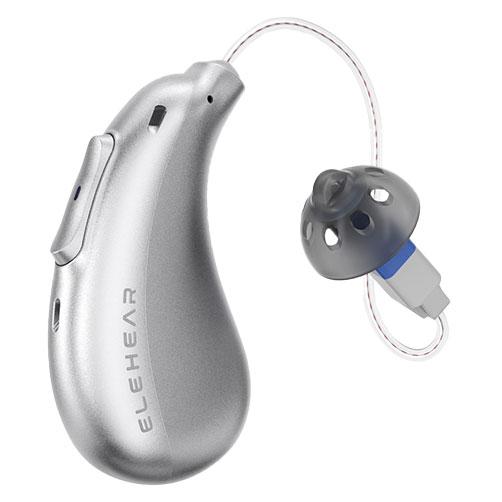
Elehear Beyond Pro is a self-fitting over-the-counter (OTC) receiver-in-canal hearing aid, with Bluetooth 5.3 for iOS and Android streaming, hands-free calling, a 24-hour rechargeable battery, and a feature-rich app with sound customization and translation tools.

Expert Review

Elehear Beyond Tinnitus Masking

The Elehear Beyond and Beyond Pro hearing aids feature a customizable tinnitus masking feature. Through the Elehear mobile app, you can select from 20 natural masking sounds, including ocean waves, rainfall, and birdsong, or create personalized soundscapes by combining elements from 16 environments and 4 noise types. This flexibility allows you to craft calming audio scenes that can make the tinnitus masker more soothing and meaningful than standard noise or tone-based maskers.

The app also provides volume sliders for each sound component, enabling precise adjustments to tailor the masking sounds to individual preferences. This level of personalization aims to reduce stress and enhance overall well-being without compromising the ability to communicate.

Two side-by-side screenshots of the Elehear app showing the Tinnitus tab and volume levels for selected natural sounds.
From the Tinnitus tab within the Elehear app, you can create unique Soundscapes by combining natural sounds (left) and adjusting their volumes (right).

Widex Moment with Zen Therapy

Widex has been a pioneer in the realm of tinnitus therapy since the creation of its Zen Tinnitus Management Program in 2012. Widex Zen Therapy is the company's state-of-the-art tinnitus solution. Unfortunately, the Widex Allure, Widex's current flagship and one of the best hearing aids on the market, currently doesn't support the company's tinnitus solutions. However, the Widex Moment remains a competitive hearing aid in terms of its acoustic performance, as measured in the HearAdvisor lab.

Score
4.4
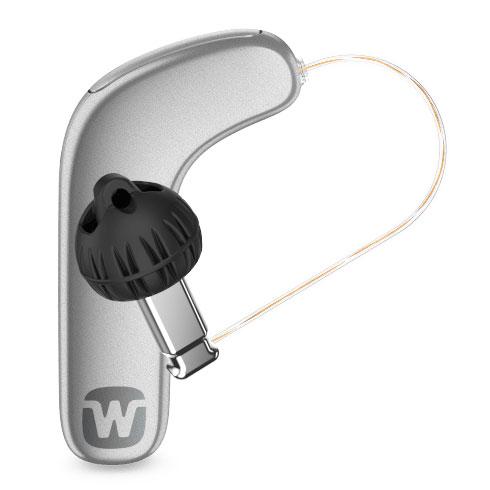
Widex MOMENT

Widex MOMENT SmartRIC is a prescription RIC with PureSound and ZeroDelay processing for natural sound, an L-shaped design for improved directionality, 29-hour rechargeable battery, and strong music streaming performance.

Expert Review

Widex Zen Therapy

Widex is recognized for its Zen programs, which must all be activated in the COMPASS GPS hearing aid software by your audiologist. The use of sounds known as fractal tones is used in this Zen therapy approach, exclusive to Widex. Widex hearing aids with tinnitus characteristics are available in various styles and technology levels in the Widex Moment and Evoke hearing aid lines.

Fractal tones are harmonic and melodic tones that sound like wind chimes and are presented in a completely random manner, which is one of the reasons they're so effective. Because the sounds are random, the brain will not correlate them with any other traditional music that the patient has previously heard. Passive listening is utilized to create this unpredictability, which is necessary for habituation and alleviating the harmful effects of your tinnitus.

Jumping into the COMPASS GPS software reveals the various Zen therapies you can choose from:

  • Zen aqua
  • Zen coral
  • Zen green
  • Zen lavender
  • Zen sand
ADVERTISEMENTad for Phonak

They also have their Zen noise which is pretty standard compared with the other maskers that Widex provides.

HearingTracker Audiologist reviews the Widex Zen and SoundRelax tinnitus relief system.

The musical sounds of the fractal tones are meaningful compared to some of the other noises out there, and I've found that tinnitus sufferers respond positively to them. Widex takes it a step further by allowing for more control over Zen therapy's pace, pitch, and volume. And, once again, working closely with your audiologist to identify the best appropriate treatment for you is essential.

ReSound Vivia microRIE with Tinnitus Sound Generator

With the Vivia, you gain access to ReSound's Tinnitus Sound Generator, a comprehensive tinnitus program compatible with several other ReSound hearing aids.

We recommend the ReSound Vivia because it's also one of the best Bluetooth hearing aids. The Vivia supports audio streaming from Android and iOS, and it's one of the first hearing aids to employ Auracast broadcast technology.

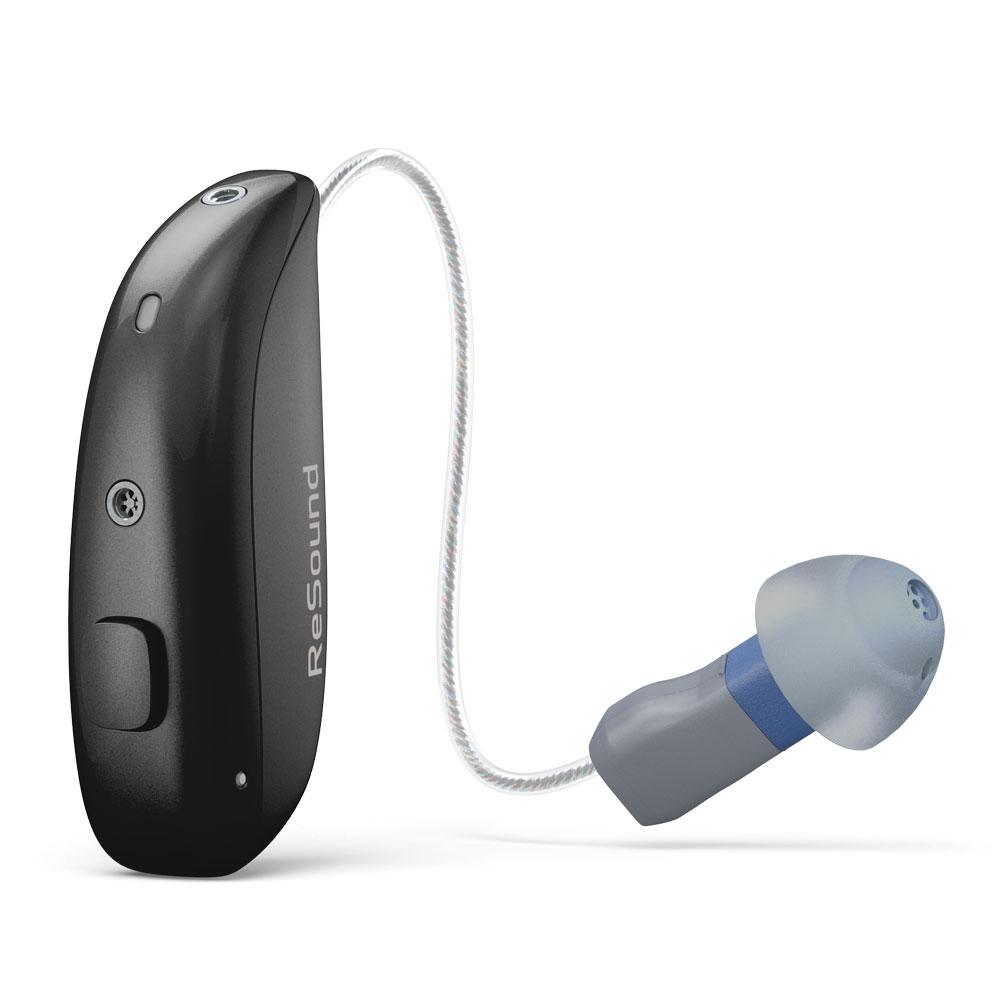
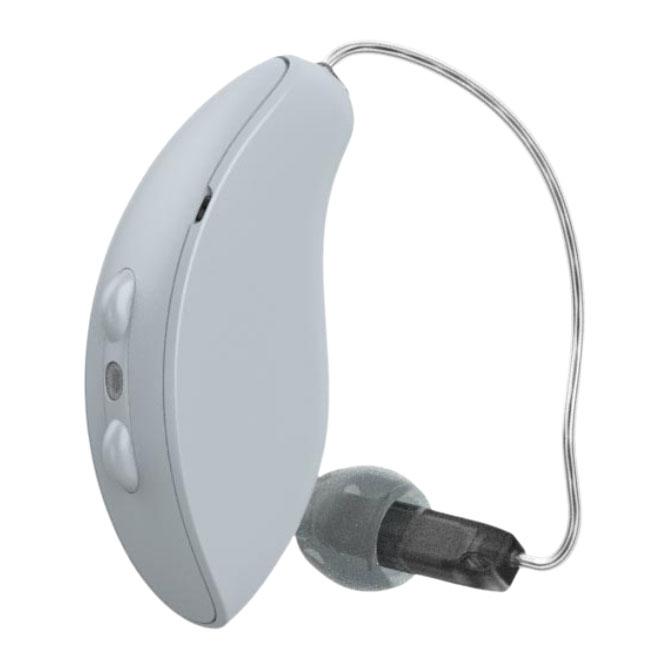
ReSound Vivia is among the smallest AI-powered prescription hearing aids available, with DNN-driven Intelligent Focus, Bluetooth LE Audio, 24-hour battery life with 10-minute quick charging, tap controls, and both rechargeable and disposable battery options.

Expert Review

ReSound Tinnitus Sound Generator

This is one of the most versatile tinnitus programs available, providing more freedom and control to both you and the audiologist than any of the other programs I'll be discussing today. It can be triggered through ReSound's Smart Fit hearing aid fitting software and is available in various styles and technology levels. It's available in ReSound Vivia, ReSound Nexia, ReSound Omnia, and ReSound Enzo Q lines of hearing aids.

Matthew Allsop details the ReSound Vivia hearing aid product line.

ReSound has two categories of masking sounds.

Firstly, their broadband sounds with four types of noise to choose from including:

  • High frequency noise
  • White noise
  • Speech noise
  • Pink noise
ADVERTISEMENTad for Signia

They also offer a great deal of freedom, allowing you and the audiologist to customize the amplitude modulation, modulation speed, and even the spectrum of pitches included in the noise. All of this is done to customize things for you manually. It's not a fully configurable procedure like Signia or Starkey. Using the manual handles, though, this technique can be just as effective in customizing the perfect sounds for you.

ReSound also provides a selection of natural sounds, which are, again, different types of ocean waves. Similar to that of Oticon and Signia. There are six in total:

  • Breaking waves
  • Water creak
  • Calming waves
  • Beach surf
  • Ocean
  • Shoreline

Rather than the nature sounds that we've seen from other hearing aid makers, Phonak focuses on broadband noises. And you have three options from which to choose. The first choice on the list is a masking sound tailored to your hearing loss, which works similarly to Oticon's Shaped Tinnitus feature in that it adapts to your unique hearing loss. As I previously stated, I have found that patients prefer this option over the others. Phonak also offers white and pink noise.

According to studies, up to 15% of Americans suffer from tinnitus—that’s 50 million people. Twenty million suffer from persistent chronic tinnitus, and 2 million have severe and disabling cases. In the United Kingdom, one in every eight people suffer from tinnitus, with one in ten reporting that it substantially impedes their daily lives.

Tinnitus is more common in people with hearing loss, although it can also be present in those with normal hearing.

Here are the seven most common tinnitus sounds, according to the American Tinnitus Association:

  • Tonal tinnitus (the type I personally suffer from)
  • Tea kettle sounds
  • Buzzing
  • Static
  • Screeching
  • Electric
  • Roaring

How Hearing Aids Help With Tinnitus

What role do hearing aids play in the treatment of tinnitus? Is there a way to get rid of tinnitus with them? Well, not quite. Tinnitus is a condition for which there is no recognized cure. Hearing aids, on the other hand, can significantly reduce tinnitus in two ways: by ‘filling in the gaps’ created by hearing loss and by using integrated sound maskers to regulate the symptoms of tinnitus.

Hearing Aids Work to “Fill the Void”

Although research is still needed, hearing aids appear to be the #1 most effective relief for tinnitus, probably because they "reinsert" or "fill in" the sounds that your auditory system is missing while reducing the annoying feeling that sounds and voices are being masked by tinnitus.

If you experience tinnitus and haven't yet had a hearing test, the first thing you should do is make an appointment with an audiologist. They'll be able to examine your ears thoroughly, test your hearing, and determine whether you have any hearing loss. If they discover any temporary causes of hearing loss, they should be able to assist you or recommend you to the appropriate professional to address the problem causing your tinnitus. If your hearing loss is due to permanent hearing damage, the best thing you can do is start wearing hearing aids.

Using hearing aids to manage your hearing loss can fill the sound void that you're experiencing with hearing loss. According to a poll of healthcare experts conducted in 2007, around 60% of their tinnitus patients indicated that wearing hearing aids provided at least some alleviation. Appr

The Role of Sound Maskers

The second main treatment for tinnitus with hearing aids is something called sound enrichment therapy, otherwise known as sound masking. This can provide you with a temporary relief from your tinnitus by playing another sound on top of your tinnitus to hide or mask the sound of it.

This is known to provide relief when the sound is present. In addition, there is also a phenomenon known as residual inhibition, which means that even after the masking sound is switched off, your tinnitus may appear lower, if not completely gone. This doesn't work for everyone, but studies suggest that if you're one of the lucky ones, the alleviation can last anywhere from a few minutes to several hours.

Every major hearing aid maker now has a tinnitus sound enrichment program built in. To conceal your tinnitus, they all employ different sorts of noise. In this context, noise refers to a combination of different frequencies and sounds. And the amount of energy in various frequencies varies depending on the type of noise.

Popular hearing aids from ReSound, Oticon, Starkey, and provide tinnitus features in their smartphone apps.

It's typical for the predominant tone of tinnitus to correlate with the area of hearing loss with the most damage if there's a hearing loss present. As a result, using a masking sound with more intensity in that area is more likely to provide you with greater relief from your tinnitus.

Can you wear hearing aids at night to get to sleep with tinnitus?

Technically, you can wear your hearing aids at night, but it's not practical because they may fall off, become uncomfortable, get damaged, or start to feedback (whistle). Additionally, if they're rechargeable hearing aids, you'll need to find a way to recharge them other than when you sleep.

ADVERTISEMENTad for Yeasound

"You could [wear hearing aids at night], but why when there are other more comfortable and effective alternatives?” notes Audiologist Harriet Jacobster, AuD. “The cons would be discomfort, injury to your ears, and the possibility of breaking or losing the aids. A better alternative for sound therapy would be any of the specifically designed [sound generating and tinnitus masking] machines that you can play in the background all night. Examples are sound pillows, Bluetooth speakers pre-programmed with tinnitus and calming sounds, even an Alexis device or an app on your cell phone, etc.”

In addition to sound generators, some people gain tinnitus relief from a burbling aquarium or fan. The Phonak Lyric hearing aid is also a 24/7 solution that fits deep in the ear canal and may help those with tinnitus.

The Best Apps for Tinnitus

The majority of the hearing aids I've talked about today include Bluetooth capabilities, allowing you to connect your hearing aid to your smartphone. This means that each hearing aid comes with an app that allows you to customize the sounds coming from the hearing aids and the tinnitus features.

The ReSound Smart app, Oticon ON app, and Starkey Thrive/My Starkey apps, in my opinion, are the best apps for this job. They not only let you change the tinnitus masker's intensity compared to the microphones' sensitivity, but they also let you change the tinnitus masker settings.

With Oticon and ReSound, you can even modify the pitch of the masking and, in a way, create the tinnitus program that works best for you.

The Oticon ON app
The Oticon ON app

Widex and Signia both offer some versatility in adjusting the balance between environmental microphones and masking sounds.

The Widex MOMENT™ app

Phonak is the least adaptable, enabling you to modify the level of the masker or volume but not the two separately.

Although not part of the Phonak Tinnitus Balance feature set, I should mention that Phonak's parent company, Sonova, recently introduced SilentCloud, a self-paced subscription-based medical app designed to empower patients to manage their tinnitus. The new app can be used at home and the service includes trained hearing care experts for guidance.

Design as a powerful tool for self-paced tinnitus management, Sonova's SilentCloud app offers a combination of therapies.

Choosing the Right Hearing Aid for You

All of the hearing aids discussed here provide not just the required power to help you overcome your hearing loss, but also a broad spectrum of masking noises to help you deal with tinnitus. As a result, you shouldn't just choose a hearing aid based on its capacity to control your tinnitus; you should also consider the features of the hearing aids to ensure that they can cope with your daily hearing issues and your audiological profile.

I recently posted a video that covers the best hearing aids of 2024—which are by far the most popular style—and all of their characteristics. If you're looking for hearing aids right now, I'd recommend looking at that as well. And I sincerely hope it aids you in your search for the best hearing aids for you.

When to Seek Medical Advice for Tinnitus

If you experience any of the following, it's best to speak to your doctor:

  • Pulsatile tinnitus (tinnitus that follows your heartbeat).
  • Tinnitus that's just in one ear.
  • Tinnitus that's changed in nature over a very short period.
  • Tinnitus that is stopping you from sleeping or contributing to anxiety or depression.

Also, if you develop a sudden sensorineural hearing loss, either with or without tinnitus, then you need to get yourself to an emergency room or an urgent care ENT clinic as soon as possible to investigate the cause of hearing loss for immediate treatment. This is one of the few real "emergencies of the ear" when you should get medical assistance right away.

Other Tinnitus Treatment Pathways

While they remain the most tried-and-true way to reduce tinnitus symptoms, hearing aids are not the only means for treatment of tinnitus. Cognitive behavioral therapy (CBT), relaxation techniques, and other treatment pathways exist (see the video at the top of this page). Additionally, many new tinnitus reduction systems are emerging, some with very promising results.

Neuromod Lenire

For example, people who are in serious need of a tinnitus solution may benefit greatly from the new FDA-approved Lenire device from Neuromod. While this system looks very odd—it combines traditional sound therapy with a Tonguetip that applies electrical stimulation to, yes, your tongue—it has proven quite effective for reducing tinnitus in clinical studies. I've reviewed this device in the video below.

Audiologist Matthew Allsop provides an overview of the Neuromod Lenire tinnitus system.

Tinearity

Similarly, Tinearity G1 is a compact sound generator developed by Swedish MedTech startup Duearity that received FDA clearance in June 2023. Specifically designed for people with normal hearing or mild hearing loss, it generates tinnitus masking noise that is transmitted directly to the inner ear via bone conduction, offering a unique approach to tinnitus treatment. I've reviewed this system in the video below.

Here's a video review of the Tinearity G1 sound generator by Duearity, a device that received FDA clearance in mid-2023.

My key point here is that, for those people who are suffering from tinnitus, help is available now, and more options are coming. We're seeing greater awareness about how tinnitus negatively impacts people's lives and many new hearing aids, medical devices, pharmaceuticals, apps, and other treatment strategies are being developed. Please bookmark this page and HearingTracker will continue to update it so you keep abreast of some of the best hearing aids for tinnitus.

  • Best Lists
  • Matthew Allsop

    Matthew Allsop

    Audiologist

    Matthew Allsop is the Video Content Manager at HearingTracker.  He has nearly two decades' experience in audiology, and has practiced in both the NHS and the private sector. He is accepting new patients at Harley Street Hearing in London.

  • Abram Bailey, AuD

    Abram Bailey, AuD

    Founder and President

    Dr. Bailey is a leading expert on consumer technology in the audiology industry. He is a staunch advocate for patient-centered hearing care and audiological best practices, and welcomes any technological innovation that improves access to quality hearing outcomes. Dr. Bailey holds an Au.D. from Vanderbilt University Medical Center.