)
)
)
)
)
Bluetooth is a non-ionizing form of radiation, similar to radio waves. The amount of Bluetooth radiation emitted by hearing aids is way below the FDA's safety limit. Hence, experts say that Bluetooth hearing aids are safe to wear all day.
Editorial
Best Bluetooth Hearing Aids of 2026 (Audiologist Tested)
We tested 95+ Bluetooth hearing aids for call quality, streaming, and Auracast support. See our top picks for iPhone and Android, starting at $239.Our expert team selects and tests products rigorously. We may earn commissions if you buy through our links. Here's how we keep reviews independent.
Quick Verdict
Our 2026 Shortlist
Updated 2026 • 95+ Models Tested
Flagship aid with dual-chip AI, universal Bluetooth, and top speech-in-noise scores.
Expert Rating
4.4/5
Flagship aid with DNN 2.0, 4D sensors, Auracast support, and fast charging.
Expert Rating
4.4/5
Ultra-compact prescription aid with DNN AI, LE Audio, live Auracast, and 30-hour battery.
Expert Rating
4.2/5
Auracast Support
Look for Auracast-enabled hearing aids. Auracast-ready devices require a firmware update to enable the functionality, once it's available. Note that iOS and older or mid-range Android devices don't natively support Auracast.
1
Bluetooth standards matter: Not all Bluetooth is equal. Universal streaming (Bluetooth Classic) and LE Audio, with or without Auracast, each offer different tradeoffs between device compatibility, future-proofing, and hearing aid size.
2
Auracast vs. telecoil: These are two different solutions for public venue audio access. Telecoil connects to induction loop systems already installed in many theaters, houses of worship, and airports. Auracast is the emerging broadcast standard, and while select Android flagships support it natively (Android 14+), iOS does not yet. Only a few devices on this list support both technologies.
3
Android users face more friction: Hands-free calling still depends on whether your specific phone supports the ASHA (Audio Streaming for Hearing Aids) protocol or HFP (Hands-Free Protocol), and compatibility varies by manufacturer and carrier. Phonak and Signia BCT's universal Bluetooth Classic is the most reliable solution for Android users today; the former will also support Auracast.
Lab tested
Our acoustic lab uses calibrated speakers and spatially accurate recordings from real-world environments. Most devices on this list were tested with over 295 hours of audio recordings captured across multiple listening conditions.
Real-world tested
Our review team wore each hearing aid for at least a week, evaluating build quality, battery performance, Bluetooth stability, comfort, and handling across everyday environments including restaurants, offices, and outdoor spaces.
Expert selection
We filtered for hearing aids that stream to both iPhone and Android, support hands-free calling, and are Auracast-enabled or -ready. Devices meeting all three criteria were ranked by HearingTracker Score.
Our Recommendations
Top PickBest Overall Bluetooth Hearing Aid
)
4.4/5
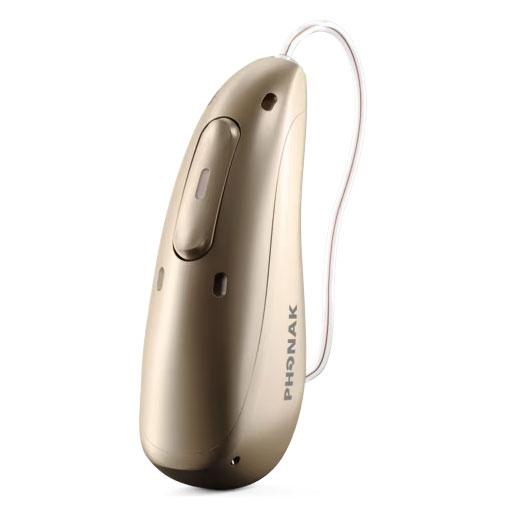
Phonak's Infinio Ultra Sphere is a premium prescription receiver-in-canal (RIC) hearing aid built around a dual-chip AI architecture and its DEEPSONIC processor. It delivers exceptional speech clarity in noise, universal Bluetooth streaming, up to 11 hours in Sphere mode, and IP68 protection.
Why we picked it
- Best speech-in-noise score tested
- Universal Bluetooth, pairs up to 8 devices
- Wireless accessories can fill connectivity gaps
Tradeoff: While it doesn't feature a Telecoil, the Infinio Ultra Sphere is Auracast-ready.
)
4.4/5
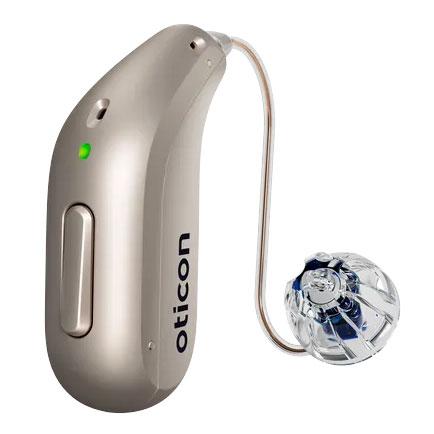
Oticon Intent is a rechargeable miniRITE (receiver-in-the-ear) prescription hearing aid powered by the Sirius chip and DNN 2.0. Its 4D sensor technology adapts in real time to movement and environment. It streams to iOS and Android and offers up to 23 hours of battery life.
Why we picked it
- DNN 2.0 + 4D sensors for adaptive noise processing
- Fully Auracast-enabled
- Fast charging: 15 min = 4 hours of use
Tradeoff: Single-button design limits onboard control flexibility, and Bluetooth multipoint isn't supported.
)
4.2/5
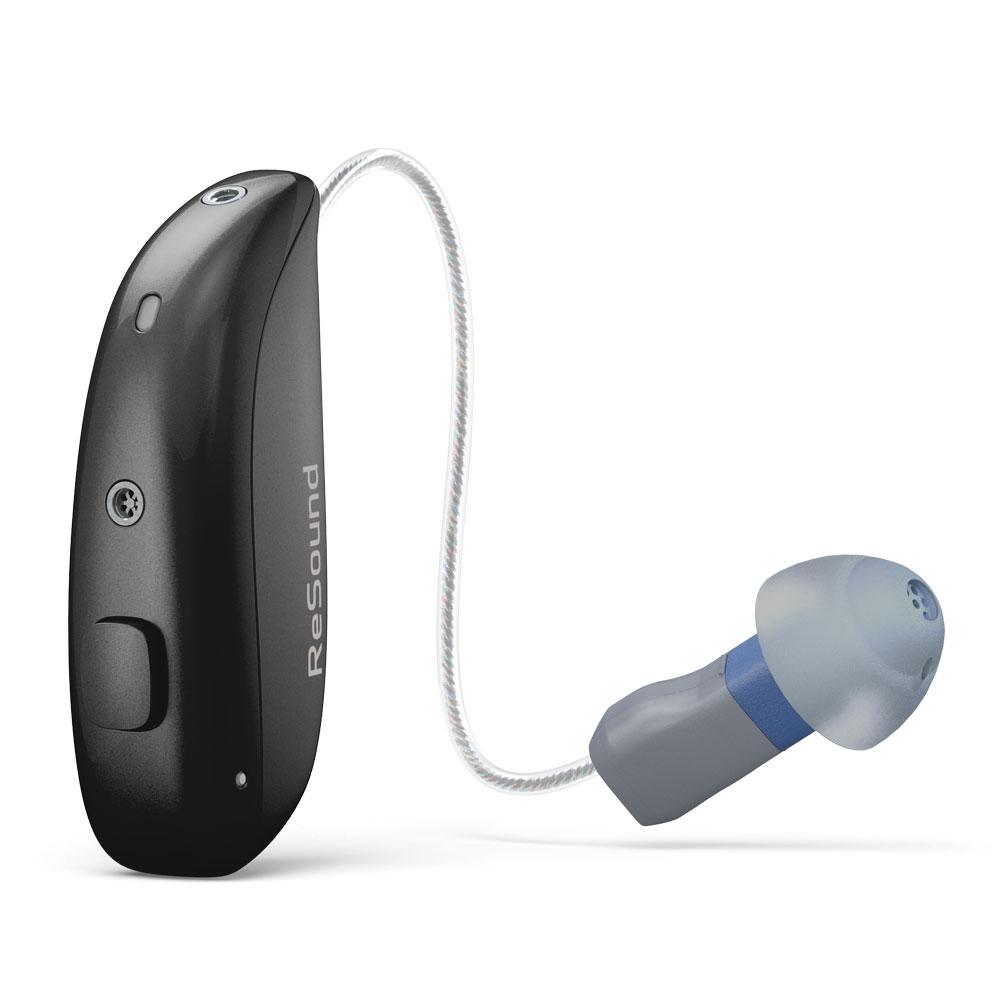
ReSound Vivia is a prescription microRIE (receiver-in-ear) and one of the smallest AI-powered hearing aids available. It uses a dual-chip DNN architecture, streams to iOS and Android via LE Audio, and is Auracast-enabled now. Battery life runs up to 30 hours per charge.
Why we picked it
- Fully Auracast-enabled
- Smallest AI-powered RIC on the market
- Tap controls and 30-hour battery life
Tradeoff: No multipoint support, and speech-in-noise scores trail the top prescription performers.
Comparing the Best Bluetooth Hearing Aids
| Product | Top Pick | |||||||
|---|---|---|---|---|---|---|---|---|
| Our Rating | 4.4/5 | 4.4/5 | 4.2/5 | 4.1/5 | 4.1/5 | 4.4/5 | 4.3/5 | 4.3/5 |
| Verdict | Best Overall Bluetooth Hearing Aid | Best Runner-up Bluetooth Hearing Aid | Best Bluetooth Hearing Aid for Auracast | Best OTC Bluetooth Hearing Aid | Best Budget Bluetooth OTC Hearing Aid | — | — | — |
| Price | From $3,998 / pair | $4,898 | $3,798 | $1,995 | $240 | $3,398 | $4,398 | $3,298 |
| Hands-Free Calling | — | |||||||
| Rechargeable | — | |||||||
| iPhone Streaming | — | |||||||
| Android Streaming | — | |||||||
| Telecoil | — |
Prices and availability are subject to change. We independently review each item we recommend and appreciate your trust and support. When you buy through our links, we may earn a commission.
Bluetooth hearing aids bridge the gap between your hearing aids and other digital devices. Bluetooth lets you stream audio from Spotify or Netflix directly to your hearing aids, take phone calls and hear them through both aids, control digital assistants like Siri or your smart home through voice commands, and connect to Auracast-powered audio broadcasts in public spaces.
The best Bluetooth hearing aids work with both the iPhone and Android devices. Find our top picks below and learn which Bluetooth standards support the features you desire.

In this video, HearingTracker Audiologist Matthew Allsop explains the different types of Bluetooth connectivity available in hearing aids—including Made For iPhone (MFi), Audio Streaming for Hearing Aids (ASHA) for Android, Bluetooth Classic, and Bluetooth LE—the pros and cons of each including Auracast, as well as his favorite Bluetooth-compatible hearing aid models.
Best Overall: Phonak Audéo Infinio (Ultra) Sphere
Phonak is only one of two hearing aid manufacturers to use classic Bluetooth, which means their hearing aids are compatible with the widest range of Bluetooth devices. The Phonak Audéo Infinio (Ultra) Sphere RIC (receiver-in-canal) delivers universal Bluetooth connectivity with groundbreaking AI-driven speech separation from noise.
Along with the Audéo Lumity, the Audéo Infinio hearing aids remain some of the most versatile Bluetooth streaming aids, offering two active Bluetooth connections and pairing capabilities for up to eight different devices of your choice. The Infinio line is Auracast-ready, pending a firmware update. In October 2025, Phonak released its Ultra enhancements, which include one-step pairing with smartphones, tablets, and the myPhonak app—reducing setup time and obstacles for new users.
From $4,598per pair
Phonak's Infinio Ultra Sphere is a premium prescription receiver-in-canal (RIC) hearing aid built around a dual-chip AI architecture and its DEEPSONIC processor. It delivers exceptional speech clarity in noise, universal Bluetooth streaming, up to 11 hours in Sphere mode, and IP68 protection.
Expert Review
Like its predecessors Lumity, Marvel, and Paradise, Infinio aids feature tap control (in 90 and 70 technology tiers), allowing you to accept/end a phone call, pause/resume streaming, and access voice assistants such as Apple’s Siri®.
Bluetooth is also available in the Audéo Infinio R and CROS Infinio RICs, and a full range of Infinio Virto R rechargeable in-the-ear (ITE) models.
For devices that lack Bluetooth connectivity, Phonak has an array of wireless accessories, including streamers, remote microphones, and a TV audio transmitter. We also recommend reading up on Roger, Phonak’s suite of wireless remote microphones for those who need extra help hearing in background noise.
In addition to being the best Bluetooth hearing aid and the best hearing aid for music, the Phonak Audéo Infinio (Ultra) Sphere currently is the best hearing aid period.
Pros
Bluetooth 5.3 for pairing up to 8 devices and connecting to 2 simultaneously
Hands-free calling and tap controls for managing audio streams
Best wireless accessories on the market and Auracast-ready
Top "speech in noise" scores, according to HearAdvisor's lab tests
IP68+ water and dust resistance
Cons
Initial Bluetooth pairing may be challenging
Auracast activation will require firmware upgrade
Battery life of only 16 hours max, or much less, depending on the required noise processing
Bulky behind-the-ear unit due to larger noise processing chip

HearingTracker Audiologist Matthew Allsop provides you with an overview of Phonak Audéo Infinio Sphere.
Runner-up: Oticon Intent
The Intent family of hearing aids uses Oticon's new Sirius chip platform. Intent builds upon the advanced features of its predecessor Oticon Real, such as Bluetooth audio streaming, access to Oticon's deep neural network (DNN) technology, and water resistance. Like Real, Oticon Intent is compatible with both Apple and Android devices for wireless streaming and two-way hands-free calling, and it's now future-proof with LE Audio and Auracast technology. On Android, the Audio Streaming for Hearing Aid (ASHA) protocol, which is available on Android 11 and up, facilitates Bluetooth connections.
For those who want to stream audio from other Bluetooth devices or access hands-free calling for incompatible Apple or Android devices, Oticon's ConnectLine and Streamer Pro deliver a solution. These connect to most TVs and other audio devices using standard cables. With the TV Adapter, stereo sound can stream directly into your hearing aids from a range of up to 45 feet. The Oticon ON app is designed to make it easy to manage Bluetooth connections.
From $4,898per pair
Oticon Intent is a rechargeable miniRITE (receiver-in-the-ear) prescription hearing aid powered by the Sirius chip and DNN 2.0. Its 4D sensor technology adapts in real time to movement and environment. It streams to iOS and Android and offers up to 23 hours of battery life.
Ideal for
Expert Review
With Intent, Oticon introduced DNN 2.0, which enhances speech clarity in noisy environments by learning from an even more diverse range of sound inputs than its predecessor. The hearing aid features groundbreaking 4D Sensor technology, allowing it to adapt its settings based on the wearer's head and body movements, conversational activity, and acoustic environment. This promises to enhance speech comprehension by 15% in dynamic settings like restaurants.
Oticon also offers one of the best tinnitus relief solutions.
Pros
Features Bluetooth LE Audio with multi-point connections to select iOS and Android devices (via ASHA) and is Auracast-enabled (as of firmware version 1.3.0)
Up to 23 hours of battery life and quick-charge feature
Second generation deep neural network (DNN 2.0) features advanced AI technology to deliver excellent speech in noise performance
4D motion sensors power adaptive sound settings to enhance speech comprehension
IP68 moisture and dust resistant
Cons
Bluetooth streaming only available for select Android and iOS devices
Accessories required for non-smartphone Bluetooth connections
Bulkier design than previous models
Single button design reduces flexibility
Offsite service required for battery replacement

HearingTracker Audiologist introduces you to Oticon Intent hearing aids.
Note: The Philips HearLink 9050, available at Costco, features similar technology as the Oticon Intent at a significantly lower price point. However, despite featuring Bluetooth LE Audio, it doesn't support multipoint connections, i.e. connecting to two devices simultaneously.
Best for Auracast: ReSound Vivia
The ReSound Vivia features Bluetooth LE Audio (Bluetooth 5.2), and it is ReSound's second hearing aid (after Nexia) to employ Auracast broadcast technology; we discuss this important large-area transmission technology in more detail below. So far, only a handful of hearing aids, including Vivia, Nexia, Jabra Enhance Pro 30, and Oticon Zeal, are Auracast-enabled, meaning they can already connect to Auracast broadcasts. Meanwhile, hearing aids labeled "Auracast-ready" require a firmware update to actually utilize Auracast.
From $3,798per pair
ReSound Vivia is a prescription microRIE (receiver-in-ear) and one of the smallest AI-powered hearing aids available. It uses a dual-chip DNN architecture, streams to iOS and Android via LE Audio, and is Auracast-enabled now. Battery life runs up to 30 hours per charge.
Ideal for
Expert Review
Introduced in early February 2025, Vivia is ReSound's first hearing aid to employ Deep Neural Network (DNN) artificial intelligence. It is designed to deliver exceptional speech-in-noise performance while maintaining a discreet design and long-lasting battery life.
While you can pair a Vivia hearing aid with up to eight devices, it only supports one connection at a time. Streaming from Android is accomplished using the ASHA protocol, which is available with most newer Android devices (Android 11 and up). Hands-free calling is available for the iPhone 11 and up, as well as select Android phones; check ReSound's compatibility page for more details.
For incompatible Bluetooth devices, ReSound offers a variety of accessories that connect its hearing aids with high-quality audio. The ReSound Phone Clip+ streams calls or audio from your Bluetooth-enabled phone. ReSound Mics can be placed on a podium, on a speaker's lapel, or on a conference table to pick up voices and stream them to your hearing aids.
And the ReSound Bluetooth TV streamer attached to the back of your TV delivers audio directly to your hearing aids. TV-Steamer+, launched with Nexia, uses Auracast to give you immediate speech clarity at preferred TV volumes through your hearing aids without disturbing anyone else in the room. Additionally, the ReSound Remote Control 2 makes it easy to adjust the volume, change programs, or switch between streaming accessories.
Pros
Features Bluetooth 5.2 LE Audio and can receive Auracast broadcasts now
Supports audio streaming for iOS and Android 11+ (via ASHA), as well as hands-free calling for iPhone 11+ and select Android phones
Smallest AI-driven RIC/RIE on the market
New tap controls for handling audio and phone calls on the micro RIE model
Great selection of wireless accessories for devices that lack Bluetooth
Cons
Doesn't support Bluetooth multipoint, i.e. simultaneous device connections
Auracast broadcasts aren't widely available yet

Learn more about ReSound Vivia hearing aids in this video by audiologist Matthew Allsop.
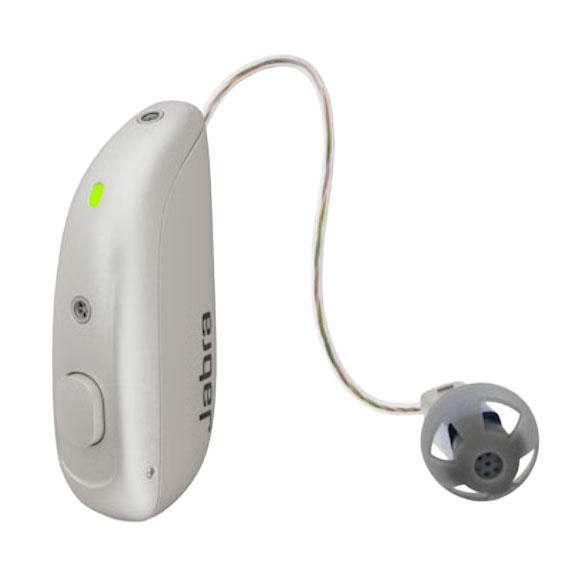
Best OTC: Jabra Enhance Select 700
The Jabra Enhance Select 700 offers excellent wireless connectivity through Bluetooth LE Audio. Audio streaming and hands-free calling is available on select iOS (via MFi on iOS/iPadOS 14.0+) and Android (via ASHA on Android 14+ or One UI 6.0+) devices (please check compatibility with Jabra). The hearing aid is Auracast-enabled.
From $1,995$1,795per pair
Jabra Enhance Select 700 is a self-fit OTC hearing aid built on the same platform as ReSound Vivia. It features SoundScape AI, LE Audio, Auracast, hands-free calling for iOS and Android, up to 24 hours of battery life, IP68, and three years of remote audiologist support.
Expert Review
For people with mild-to-moderate hearing loss, self-fitted over-the-counter (OTC) hearing aids are an affordable alternative to prescription hearing aids. The Jabra Enhance Select 700 also offers dependable speech in noise benefits and an excellent battery life of up to 24 hours per charge. These hearing aids also come with some of the best professional OTC hearing aid support on the market.
Pros
Auracast-enabled Bluetooth LE Audio with wireless streaming and hands-free calling on select iOS and Android devices
Good sound quality and speech in noise performance
Up to 24 hours of battery life per charge
IP68 ingress rating for protection against moisture and dust
Professionally administered telehealth support
Up to 3 years of warranty and loss & damage protection
Cons
Limited Bluetooth and app compatibility, but Jabra offers a straight-forward compatibility check
No Bluetooth multipoint support, i.e. only connects to one device at a time
Telecare services may be slow to respond
More expensive than most OTC hearing aids
Best Budget OTC: AirPods Pro 3
Consider the AirPods Pro 3 your best option when hearing aid features aren't your top priority. While they do offer valuable hearing health benefits, they should primarily serve you as wireless earbuds. As such, they offer excellent streaming features and sound quality.
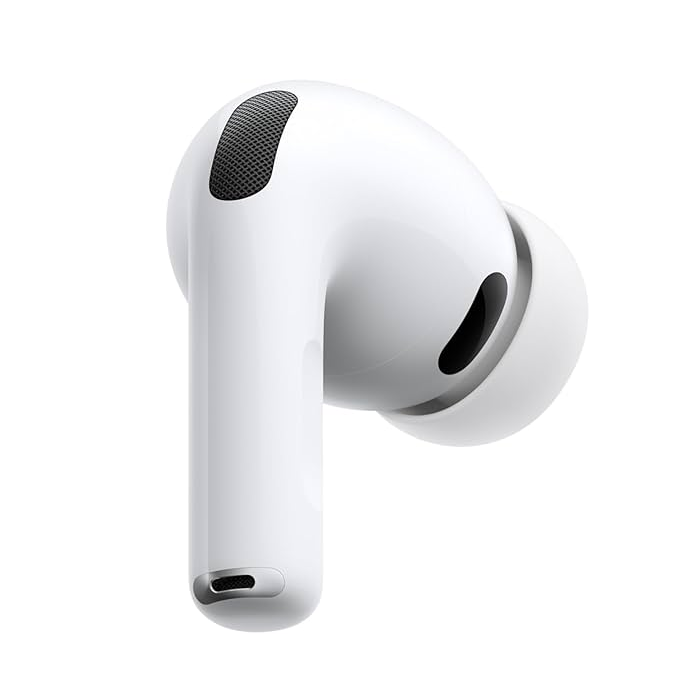
From $240per pair
Apple AirPods Pro 3 are FDA-cleared OTC hearing aids that double as wireless earbuds. They run Bluetooth 5.3 LE Audio, support hands-free calling for iOS and Android, offer up to 10 hours of battery in hearing aid mode, and include ANC and spatial audio.
Ideal for
Expert Review


The AirPods Pro 3 employ Bluetooth 5.3 LE Audio, but don't currently support Auracast (we think Auracast transmitters will become rapidly popular once Apple adopts it). You can use the AirPods Pro 3 for streaming audio and hands-free calling with both iOS and Android. However, you'll need an iPhone for the initial setup of its hearing aid features, putting Android users at a slight disadvantage. That said, the latest iPhone is arguably the best smartphone for hearing loss.
Pros
One of the most affordable FDA-approved OTC hearing aids on the market
Bluetooth 5.3 LE Audio with wireless streaming and hands-free calling on iOS and Android devices
Great speech in noise benefits considering the product's price point
Cons
No Auracast support to date
Apple Health app and hearing aid feature accessible on iPhones only
AirPods 3 have limited battery life of up to 10 hours per charge in transparency or hearing aid mode
Limited lifespan of two to three years as the built-in Lithium-ion battery isn't meant to be replaced
No professional care option, tech support only
AirPords Pro 3 only have an Ingress Protection (IP) rating of IP57 against moisture and debris, compared to IP68 for the best "waterproof" hearing aids
Audiologist Matthew Allsop looks at the new Apple Airpods Pro 3 with their hearing aid mode that extends its use up to 10 hours.
How did we pick the best Bluetooth hearing aids?
To find the best Bluetooth hearing aids, we selected all Bluetooth-enabled hearing aids that met the following criteria:
- Streaming to iPhone and Android
- Hands-free calling
- Auracast-ready or -enabled.

We ranked matching devices based on their overall HearingTracker Score. This score is based on objective lab results and hands-on testing. In addition to selecting those with the highest scores, we also picked the best OTC and the best budget options.
Other Hearing Aid Brands and Vendors to Consider
You'll find Bluetooth connectivity in many modern hearing aids. Below is a summary of additional brands and vendors to consider and which products they currently offer.
Costco Bluetooth Hearing Aids
Costco, the big box retailer, has hearing centers that offer hearing tests, professional services, and affordable prices, with current prices starting at $1,599 a pair.
Costco doesn't manufacture its own hearing aids but resells products and technology from top manufacturers. Costco sells Jabra, Philips, and Rexton brand hearing aids, with models from each brand offering Bluetooth connectivity for smartphone control apps and audio streaming for Android phones and iPhones. Costco also offers a range of Bluetooth-connected accessories for each of the brands, including remote control devices, TV audio streamers, and remote microphones.
In April 2023, Costco started selling its first over-the-counter (OTC) hearing aid, Lexie B2 Powered by Bose, which is covered in the OTC hearing aid section below. You'll also find Apple AirPods Pro 2 and Pro 3 at Costco's online store.
Starkey Bluetooth Hearing Aids
Starkey Omega AI and Starkey Edge AI offer iOS- and Android-compatible audio streaming, hands-free calling for iOS, wireless control with the My Starkey app (except for the IIC and CIC models), as well as hands-free 2-way audio for compatible iOS devices when using FaceTime, Zoom, Teams, etc.
With a battery life of up to 51 hours, Starkey Edge AI is one of the best rechargeable hearing aids available today.
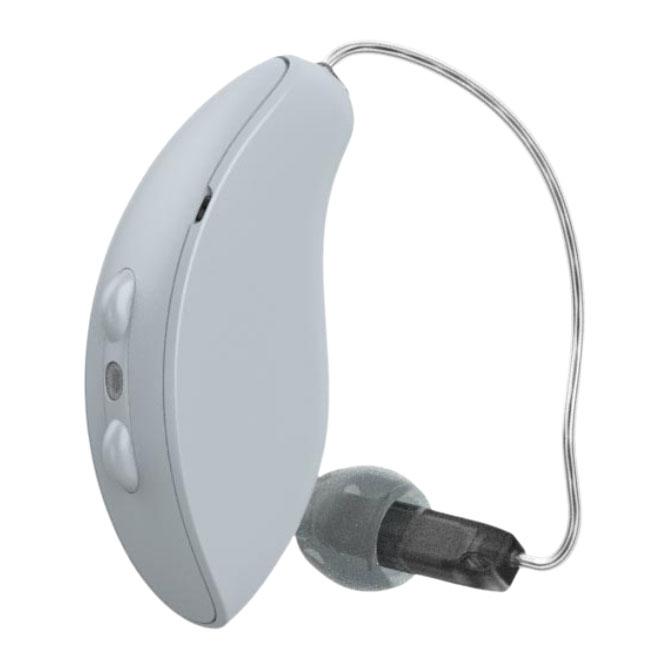
From $3,398per pair
Starkey Omega AI is a flagship prescription mRIC with a DNN 360 AI engine, up to 51 hours of rechargeable battery life, and an IP68+ waterproof rating. Its My Starkey app includes wellness tracking, fall detection, respiratory monitoring, and Auracast support.
Ideal for
Expert Review


Using a unique antenna, Omega AI and Edge AI have a range of 20-30 feet. Starkey's flagship model is also Auracast-enabled (as of January 2026). The My Starkey app puts you in control of these hearing aids, as well as the "healthable" features found in its predecessor, Starkey Evolv AI (which uses the older Thrive app).
Evolv AI, introduced in August 2021, essentially offers all the Bluetooth capabilities and "healthable" features as Edge AI and Genesis AI, but uses the older Thrive app and lacks the newer and more powerful chip and sound processing capabilities.
As a leader in custom in-ear devices, Starkey offers the truly unique and tiny Completely-in-Canal (CIC) hearing aids, which are some of the only full-featured devices of their size with audio streaming (for details, see this YouTube video from Matthew Allsop).
Starkey's streaming accessories provide Bluetooth connections for its legacy products or when needed for non-compatible devices. The Starkey StarLink Accessories enable hands-free phone calls from iPhones and Android smartphones, as well as audio streaming from multiple Bluetooth sources. They also feature remote microphones and a unique table microphone. And the Starkey TV accessory steams audio from your TV or other audio source directly to Omega AI and Edge AI.
Widex Bluetooth Hearing Aids
Widex Allure and Widex MOMENT hearing aids offer wireless connectivity with both iOS and Android devices. Widex says its signal processing chip set features independent channel separation with minimal-delay filters to offer clean sound even while streaming. The Widex MOMENT app lets you set up and manage your Bluetooth connections.
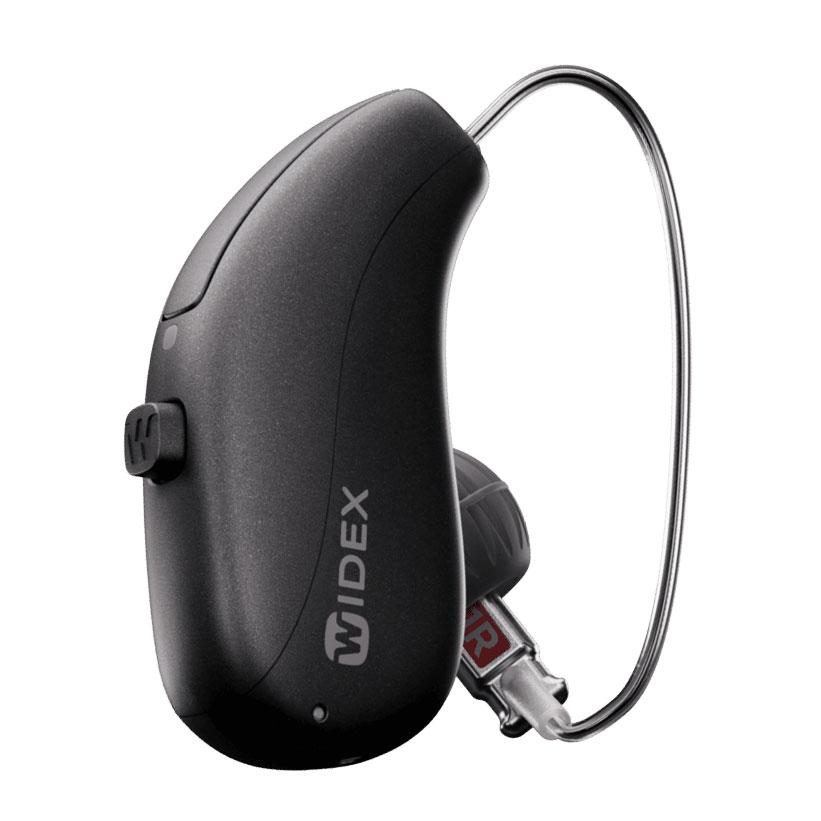
From $4,398per pair
Widex Allure is a prescription RIC built around the brand's signature low-delay PureSound processing, now paired with stronger speech clarity. It streams to iOS and Android via LE Audio, supports hands-free calling, and offers IP68 protection.
Expert Review

Widex offers connectivity for non-smartphone Bluetooth devices via its range of streaming accessories. The COM-DEX streamer hangs from the neck and streams high-quality sound from any Bluetooth device to your hearing aid. It offers up to 8 hours of streaming time and comes with an optional remote mic. Other accessories for the phone, TV, and other Bluetooth devices include Sound Assist, RC-DEX, TV PLAY, and TV-DEX.

Moment Allure is reviewed in this video by HearingTracker Audiologist Matthew Allsop.
Signia Bluetooth Hearing Aids
Signia Pure Charge&Go IX, Signia Pure Charge&Go AX, and Active Pro IX hearing aids provide direct wireless connectivity with both iOS and Android-compatible devices. Additionally, Signia has made its Integrated Xperience (IX) product line "Auracast-ready,” meaning it is capable of receiving Auracast broadcasts with just a firmware update from the company (see the Auracast section below).


In February 2025, Signia introduced the BCT (Bluetooth Connectivity Transformed) version of the Pure C&G IX that uses Bluetooth Classic instead of Bluetooth LE Audio. Like the above Phonak Infinio, this gives it greater compatibility with Android devices and more active connections. But, also like Phonak, it does this at the expense of future-forward Auracast broadcast technology. However, it does offer a telecoil, allowing it to access inductive loop systems.
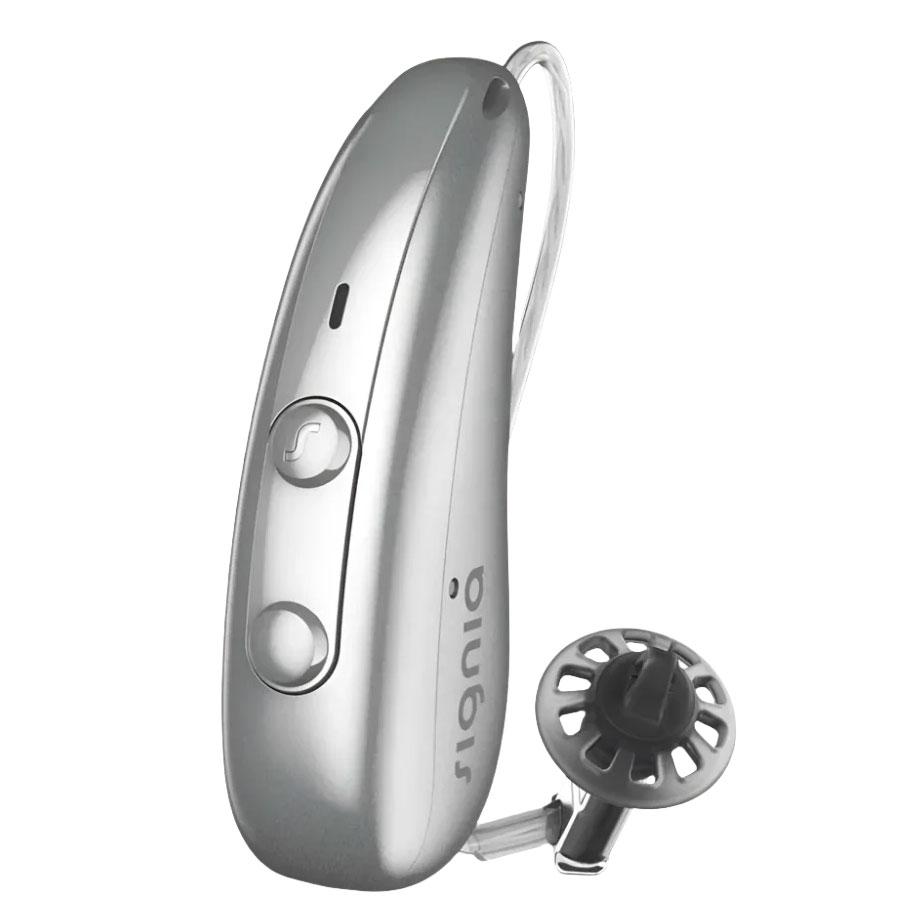
From $3,298per pair
Signia Pure Charge&Go IX BCT is a prescription RIC. It features Signia's RTCE speech processing, Bluetooth Classic for universal Android and iOS compatibility, up to 36 hours of battery life, a built-in telecoil, hands-free calling, IP68 protection, and app-based tinnitus therapy.
Ideal for
Expert Review
The in-ear Insio Charge&Go IX ITEs offer direct audio streaming from iOS devices with the MFi hearing aid standard, as well as certain Android devices using the ASHA standard. Signia Insio IX and Pure AX and IX hearing aids offer hands-free calling on iPhones but not Android phones (although you can use either the BCT version or an accessory to gain this function).
The performance of the Signia IX is reviewed by Audiologist Steve Taddei from the independent HearAdvisor lab.
Unitron Bluetooth Hearing Aids
Unitron, a sister company of Phonak in the Sonova group, offers universal Bluetooth connectivity in a number of product families, including its flagship product Vivante, as well as Blu, Discover Next, and Tempus. The company’s Moxi Blu runs on the Sonova PRISM (Processing Real-Time Intelligent Sound Management) chip and uses Unitron’s Integra OS signal processing system. Like Phonak Lumity and Paradise, it offers two active Bluetooth connections with pairing up to 8 different devices and includes the same tap controls. In April 2023, Unitron launched its Moxi Vivante V-R and VR-T rechargeable RIC models that also have these Bluetooth capabilities for Apple and Android.
Bluetooth Hearing Aid Costs
Premium Bluetooth hearing aids aren't inexpensive. A pair can cost anywhere from $1,399 (at Costco) to $6,000 (or more) for top-end hearing aids.

Streaming accessories cost extra, and prices vary from clinic to clinic; fortunately, to achieve wireless Bluetooth connectivity, these accessories are needed less and less. However, when needed, a clip-on streamer can easily add $500 to the cost of hearing aids. And TV streamers and remote mics can cost even more, depending on their capabilities. Some local providers do provide discounts through our hearing aid discounts program.
Alternative Bluetooth-enabled OTC Hearing Aids and Hearables
Several direct-to-consumer hearing aids available online offer Bluetooth compatibility, including over-the-counter (OTC) hearing aids, which you can buy directly from the manufacturer or through retailers like Best Buy, Walmart, and Amazon.
There is also a whole world of Bluetooth-enabled earpieces, hearables, and PSAPs (personal sound amplification products) to explore. Many of them integrate high-end hearing aid technology. Often they are less expensive than prescription Bluetooth hearing aids.
HearingTracker Audiologist Matthew Allsop provides information on how to set up Apple AirPods Pro earbuds as hearing aids.
There is quite a lot of confusion about over-the-counter (OTC) hearing aids, and HearingTracker has recently published an updated list of FDA-registered OTC hearing aids. In a related article, we've picked what we think are the Top-10 best OTC hearing aids, several of which feature Bluetooth streaming, such as the ones included below.
Sennheiser All-Day Clear
Sennheiser All-Day Clear OTC hearing aids are made by Sonova, the world’s largest hearing aid manufacturer and maker of Phonak and Unitron hearing aids. Using this technology, these rechargeable aids are offered online and provide hands-free calling and music streaming for both iOS and Android-compatible phones.
Lucid Engage Rechargeable
Lucid is the manufacturer of Lucid hearing aids for Sam’s Club and the owner of Etymotic Research, which makes high-quality earplugs and headphones. Tala is Lucid's flagship earbud-style Bluetooth-enabled OTC hearing aid for $1,300. Lucid Engage Rechargeable—which is offered online and Sam's Club—is a self-fit Receiver-In-canal (RIC) hearing aid that offers Bluetooth streaming and app-based controls for both iOS and Android devices. These OTC hearing aids go for $800 per pair, and you'll need to specify if you want Bluetooth streaming for either Android or iPhone when ordering.
Lexie B2 Plus Powered by Bose
Available for $999, Lexie B2 Plus Powered by Bose is one of the better OTC hearing aids. It now offers Bluetooth streaming for phone calls for compatible iPhones, although it does not support hands-free calling. These hearing aids stream phone calls for iPhones, although the audio is not designed or optimized for music or video content streaming and does not offer hands-free calling.
A introduction to the Lexie B2 Powered by Bose hearing aid by audiologist Matthew Allsop.
JLab Hear
Looking for a rechargeable OTC hearing aid with Bluetooth audio streaming functionality that won't break the bank? At $99, the JLab Hear OTC hearing aid earbuds are a great choice. These hearing aids offer wireless control and streaming for iOS and Android devices with Bluetooth 5.3. You also get hands-free calling for iPhones. The only major drawback is that JLab Hear OTCs are “instant-fit” devices that rely on preset programs instead of being tuned to your unique hearing loss as "self-fitting" OTCs.
"Made-For-iPhone" (MFi) Hearing Aids
"Made-for-iPhone" (MFi) hearing aids were first introduced in 2015 by GN ReSound and launched an entirely new era of connectivity. MFi hearing aids allow you to stream audio directly from your iPhone and iPad—no wireless streamer required. All major manufacturers now sell at least some MFi-compatible hearing aids.
Historically, one drawback of the MFi protocol is that it did not allow for two-way communication. That is, the connected device could stream to your hearing aids but the hearing aids could not send data back to the device. It was a one-way street. For hearing aid wearers, this meant no hands-free calling as the hearing aid microphones couldn’t pick up the sound of your voice and transmit back to the phone.


However, with the recent release of Bluetooth version 5.2, two-way communication is now available within the MFi protocol. Keep in mind though, that not all hearing aid manufacturers have incorporated Bluetooth 5.2 or 5.3, so hands-free calling isn’t an option for every MFi hearing aid. Also, while backward compatibility is pretty broad, some advanced features of the newer Bluetooth standards—like Auracast (introduced with LE Audio)—will not function with older Bluetooth devices that lack support for these features.
And some good news for Mac computer users: in May 2023, Apple announced that MFi hearing aids would pair directly with “select Mac devices” that use the M1 chip and all devices that use the M2 and M3 chips. Previously, iPhones, iPod Touch, and iPad tablets were the only devices that could pair directly with MFi hearing aids without workarounds or accessories.
In the video below, our audiologist Matthew Allsop explains how you can take advantage of this new capability. He also explains how to disconnect your hearing aids from an Apple computer in a separate video.

HearingTracker Audiologist Matthew Allsop explains how to connect your hearing aids to an Apple Mac computer.
Using Hearing Aids With Your Apple Watch
If you have an Apple Watch, you can likely control some hearing aid features (e.g., volume) from it. Depending on the brand and model, you may even be able to use your hearing aid app and/or enjoy direct streaming of phone calls, music, podcasts, and videos (see video below). However, judging from hearing aid user comments on the HearingTracker Hearing Aid Forum, some hearing aids don't play well in the sandbox with Apple Watches, so you may want to do your own research if this is a major feature you wish to use. We plan to devote a dedicated page to this issue in the near future.

Here is a quick guide to pairing Phonak hearing aids with an Apple Watch by Matthew Allsop.
Android Compatible Hearing Aids
In 2018, Google finally announced a new Android streaming spec for hearing aids—Audio Streaming for Hearing Aids (ASHA). The announcement from Google signaled their intention to pair hearing aids with the much larger universe of Android phones.

Flash forward to 2025, and we now have all major hearing aid manufacturers— Phonak, Starkey, Oticon, Signia, ReSound, and Widex—with Android-compatible hearing aids on the market.
One caveat to ASHA-based Android compatibility: for some hearing aids, it won’t be a truly hands-free experience. You’ll still need to talk into the phone for the caller to hear your voice. In these cases, to achieve hands-free calling with Android you’ll either need to purchase a Bluetooth streamer or pursue hearing aids that use the Bluetooth Classic Hands-Free Protocol (HFP).
While Made-for-iPhone is supported by all iOS devices (from recent years), Android ASHA is only supported on select Android phones. In general, any phone with Bluetooth 5.0+ and Android 10 (or higher) is capable of providing wireless streaming via ASHA. However, ASHA must be enabled by each phone manufacturer and service carrier, so it pays to check with your carrier about whether your specific Android model can support ASHA connectivity (see our article about how Samsung, Google Pixel, and OnePlus offer the best support). Most ASHA compatible aids also support MFi.
Universal Bluetooth Streaming and Bluetooth Classic
Only Sonova, the world’s largest hearing aid manufacturer, offers true, hands-free universal Bluetooth connectivity for its entire product line via Bluetooth Classic. In addition to iPhone and Android connectivity, Phonak and Unitron (owned by Sonova) offer models that provide wireless audio streaming from any Bluetooth audio device. More recently, Signia's Pure Charge&Go BCT (Bluetooth Connectivity Transformed) hearing aid also achieves the same result. This is accomplished via Bluetooth Classic’s A2DP and HFP protocols for audio streaming and hands-free calling, respectively.
Sonova calls their technology “Made For All” or MFA, a tongue-in-cheek nod to Apple’s “Made For iPhone” (MFi).Phonak Infinio and Lumity, as well as Unitron Smile and Vivante, are the latest Sonova products to offer MFA technology. Models from both product families support two simultaneous Bluetooth connections. Costco's now-discontinued Kirkland Signature 10.0 hearing aid, also manufactured by Sonova, offered universal Bluetooth as well.
Bluetooth LE (BTLE)
Bluetooth Low-Energy (LE) has been used for years in hearing aids, but in 2022 the Bluetooth Special Interest Group (SIG) announced the completion of its long-awaited Bluetooth 5.2 standard—a new version of Bluetooth that optimizes energy efficiency and elevates sound quality across all devices using it. Bluetooth 5.3 and subsequent versions (5.4 and 6.0) followed, with various upgrades for efficiency, connectivity, security, and other functions. Most major hearing aid brands now utilize this Bluetooth standard.

Importantly, Auracast is included in these new standards. Auracast enables transmitters to broadcast a Bluetooth audio signal to an unlimited number of people using their in-range compatible devices, such as headphones, earbuds and hearables, hearing aids, and cochlear implants. Because the audio is being transmitted directly from the transmitter to your audio device, you hear it in real-time, with very low latency. And because Bluetooth LE is so important, we've included a special section about it and Auracast at the bottom of this page.
We'll discuss BTLE in more detail below.
Shopping for Bluetooth Hearing Aids
Shopping for a Bluetooth hearing aid can be confusing. Bluetooth- and smartphone-compatible hearing instruments come in dozens of different flavors. So knowing the basics about MFi, ASHA, Sonova’s MFA, and LE Audio can help.
Because connectivity is a sought-after feature in hearing aids, this technology is improving very quickly. The bottom line is you should talk with your hearing provider about the wireless connectivity features that are important to you prior to purchasing any devices.
And a word of caution! Some hearing aid manufacturers promote “Bluetooth compatibility,” but they require an intermediate streamer to receive and retransmit Bluetooth audio from Bluetooth devices to their hearing aids. We talk about these streamers below.
The Latest Hearing Aid Streamers Make Bluetooth Easy
If your hearing aids don’t connect natively to your smartphone (or other Bluetooth audio device), you’ll likely need a “streamer” from the same manufacturer that produced your hearing aids. Streamers are typically purchased as an add-on accessory to hearing aids, but the good news is that today's Bluetooth streamers provide a relatively painless workaround to achieving universal Bluetooth connectivity with your hearing aids.
:format(webp))
A streamer either hangs from your neck or clips to your clothing, and receives audio from Bluetooth-enabled phones, MP3 music players, computers, tablets and other electronic devices. Once the streamer has picked up the sound from your favorite Bluetooth-enabled audio device, it re-transmits the audio to the hearing aids, typically via a proprietary 2.4 GHz radio signal.
Hearing aid manufacturers have begun offering Bluetooth streaming accessories that are smaller, more feature-rich, and easier to use. They provide wireless communication with all Bluetooth-enabled devices. And their associated apps work well with both iPhones and Android smartphones.
Bluetooth LE Audio: The Future of Bluetooth Hearing Aids
The Bluetooth specification, Bluetooth 5.2, was introduced to provide higher-quality audio with less latency (delay) in wireless streaming and multichannel connectivity with multiple Bluetooth accessories. All of this is accomplished with Bluetooth LE Audio, the “next generation of Bluetooth audio,” available with Bluetooth 5.2 and 5.3.
Auracast to Make Bluetooth More Versatile and Accessible
In June 2022, the Bluetooth Special Interest Group (SIG) announced the release of its new Auracast™ broadcast audio system which uses LE Audio. Auracast is designed to link Bluetooth hearing devices (including hearing aids, implants, earbuds, etc) that are Auracast-enabled to a Auracast-enabled transmitter through your Bluetooth-compatible smartphone, tablet, or computer.

So, if you’re attending a lecture, play, or ballgame, an Auracast transmitter might notify your smartphone that streaming audio is available. Then you’d use the Auracast Assistant on your phone to simply find and select that sound stream and have it paired with your Bluetooth hearing device.
Although Auracast is a new technology that may take some time for widespread implementation and use, it promises to expand Bluetooth’s usefulness to a much wider range of settings and situations, like airports, ticket booths, tours, personal song/audio sharing, and more.
The ReSound Vivia and Nexia and Oticon Zeal were some of the first hearing aids to be fully Auracast-enabled. At this writing, several other hearing aids with the Bluetooth LE 5.2 and 5.3 standard have received firmware upgrades to unlock Auracast, including Oticon Intent and Starkey Edge AI and Omega AI. Many other hearing aids remain "Auracast-ready," including Signia IX and Phonak Infinio, meaning they will just need firmware updates to accommodate the technology. We think more manufacturers will follow suit, although some (like Phonak) may opt not to adopt Auracast just yet, as the older wireless standard still affords certain competitive advantages.
Apple has not yet embraced Auracast in the design of its popular AirPods Pro earbuds. When it does, we think the implementation of Auracast in public address systems (including houses of worship, lecture halls, airports, etc.) will accelerate substantially.

Audiologist Matthew Allsop explains why Auracast is a HUGE deal for hearing aids and earphones.
What's the Best Hearing Aid for Streamed Music Quality? HearAdvisor Lab Results
We've detailed above some of the best and newest Bluetooth hearing aids. But how do hearing aids really stack up against each other in terms of audio quality when streaming music?
The HearAdvisor independent test lab has conducted tests on most of the top brands and models of hearing aids. Below are the initial fit scores on streamed music for hearing aids tested to date (as of November 2025) that achieved ratings of 3.4 or higher (out of 5, with 5 being the best). The “initial fit” is how the hearing aid sounds by either following the manufacturer's instructions or the result of the hearing care provider's fitting when they're using the manufacturer's initial (first-fit) fitting algorithm.
To view all of the tested hearing aid scores, visit the HearAdvisor Leaderboard, then select "Streamed Music" in the "Scores and Audio Files" section. This will also allow you to hear audio files of both the “initial fit” and “tuned fit” sound samples of the individual devices.
Music Streaming: Compare the Best Hearing Aids for Wireless Streaming Sound Quality in 2026
Brand/model | Type | Style | Score |
|---|---|---|---|
JLab HEAR OTC | OTC | Earbud | 4.6 |
Linner Mars | OTC | Earbud | 4.6 |
Linner Nova | OTC | Earbud | 4.5 |
Apple Airpods Pro 2 | Hearable | Earbud | 4.4 |
Yeasound RIC800 | OTC | RIC | 4.3 |
Phonak Infinio Sphere | Prescription | RIC | 4.2 |
Sony CRE-E10 | OTC | Earbud | 4.2 |
Elehear Alpha | OTC | RIC | 4.2 |
Phonak Audéo Lumity | Prescription | RIC | 4.1 |
Audicus OMNI 2 | OTC | RIC | 4.1 |
Hear.com Horizon Go IX | Prescription | RIC | 4.1 |
Cearvol Diamond X1 | OTC | Earbud | 4.1 |
Oticon Intent | Prescription | RIC | 4.0 |
Starkey Edge AI | Prescription | RIC | 3.9 |
Starkey Evolv AI | Prescription | RIC | 3.8 |
Widex Moment Sheer | Prescription | RIC | 3.7 |
Elehear Beyond & Beyond Pro | OTC | RIC | 3.8 |
Audicus Omni Series 2 | OTC | RIC | 3.8 |
GoHearing Ultra | OTC | RIC | 3.6 |
Lexie H1 / Eargo Link | OTC | Earbud | 3.6 |
Signia Pure Charge&Go | Prescription | RIC | 3.5 |
Oticon Real | Prescription | RIC | 3.5 |
Starkey Genesis AI | Prescription | RIC | 3.4 |
Hear.com Horizon Go IX | Prescription | RIC | 3.4 |
Highest ratings of Streamed Music quality for the over-the-counter (OTC) and prescription hearing aids as rated by the HearAdvisor lab (scores of 3.4 or higher). Please visit the HearAdvisor Leaderboard for the scores of other hearing aids and to listen to sound samples.
One apparent trend from the table above is that earbud-style hearing aids generally tend to punch above their weight for streamed music. That's because earbuds tend to seal off the ear canal completely (i.e., creating a "closed fitting"), allowing only the sound processed by the hearing aid to enter the ear canal. In contrast, the popular receiver-in-canal (RIC) devices generally allow external sounds to pass through the ear tip or vented dome (an "open fitting" or "vented fitting") in addition to the sound processed by the hearing aid, mixing them together in the ear canal. While open fittings significantly enhance the perception of the user's own voice and allow for a more natural sound, they can reduce the sound quality of streamed music relative to low frequencies.
So, the above table is useful if streamed audio is extremely important to you. However, most hearing aid users place a premium on top-notch performance in speech in quiet and speech in noise (e.g., a weak spot for Linner OTC hearing aids), as well as specific hearing aid features (e.g., rechargeability, user controls, etc.)—so please keep all these factors in mind. In fact, none of the top-4 earbuds on this list have an overall SoundGrade of "A", while 10 of the next 12 on the same list do!
For a more comprehensive look at the products, see our Best Hearing Aids and Best OTC Hearing Aids pages. You may also be interested in our Best Hearing Aids for Music page.

Audiologist Matthew Allsop offers tips for using hearing aids for musicians and music lovers.
The Bottom Line
As much as we love Bluetooth technology at Hearing Tracker, it is only one of many variables to consider when purchasing hearing devices. Remember, hearing aids need to function as hearing aids first and foremost, and a local hearing health professional can provide guidance on what hearing aid options may be appropriate for you (given your unique hearing needs).
Bluetooth Hearing Aid FAQ
Prices range from $1,399 to more than $6,000 per pair, depending on the specific model. Bluetooth connectivity has quickly become a standard “must-have” feature, and is now widely available—even in lower-tier models.
The majority of hearing aid manufacturers offer products that are iOS and Android compatible with select smartphone models. To connect to other Bluetooth devices, you’ll need to purchase a Bluetooth streamer accessory or look at newer products from Phonak and Unitron, which offer direct streaming from any Bluetooth audio device.
MFi hearing aids are natively compatible with most iOS devices, like iPhones and iPads. Most MFi hearing aids may achieve Bluetooth connectivity with a broader range of devices using an intermediary accessory. In some cases they may also be natively compatible with Android devices, but this varies by manufacturer and Android device.
All of the major hearing aid manufacturers offer at least one product with Android compatibility. Among the popular models include Phonak Infinio, Oticon Real, Oticon Zircon, Starkey Edge AI, ReSound Nexia, Widex Moment, and Signia IX.
A streamer either hangs from your neck or clips to your clothing, and receives audio from Bluetooth-enabled phones, MP3 music players, computers, tablets and other electronic devices. Once the streamer has picked up the sound from the Bluetooth-device, it re-transmits the audio to the hearing aids, typically via a proprietary 2.4GHz radio signal. Streamers are usually used when your hearing aids don’t support direct connectivity with Bluetooth devices.
No hearing aids will stream directly from Apple TV. However, there are several ways to accomplish this. You could use a personal loop system (either installed in your home or hard-wired to where you're sitting (cushion loop), or you could use a Bluetooth TV streamer from the hearing aid manufacturer.
Yes, you can use headphones while wearing hearing aids. This can be useful if you'd like to connect to a device that isn't supported by your hearing aids. For example, some Bluetooth hearing aids can only stream music from iOS, but not from Android, or vice versa. Using Bluetooth headphones with your hearing aids also lets you access features like active noise cancelling (ANC). Read our guide on using hearing aids with headphones to find out which types of headphones are suitable for your type of hearing aid.
Based on what we know today, it's highly unlikely.
Both the FDA and FCC regulate the amount of allowable radiation in wireless devices, including hearing aids, with health concerns at the forefront. In fact, one of the main reasons why wireless hearing aids are classified as Class 2 medical devices is this regulation.
)
Abram Bailey, AuD
Founder and PresidentDr. Bailey is a leading expert on consumer technology in the audiology industry. He is a staunch advocate for patient-centered hearing care and audiological best practices, and welcomes any technological innovation that improves access to quality hearing outcomes. Dr. Bailey holds an Au.D. from Vanderbilt University Medical Center.