Key Features of Jabra Enhance Pro 30
Now let’s take a closer look at some of the standout features and technologies that define the Enhance Pro 30, and how they benefit the wearer:
AI “Intelligence Augmented” Processing with DNN Chip
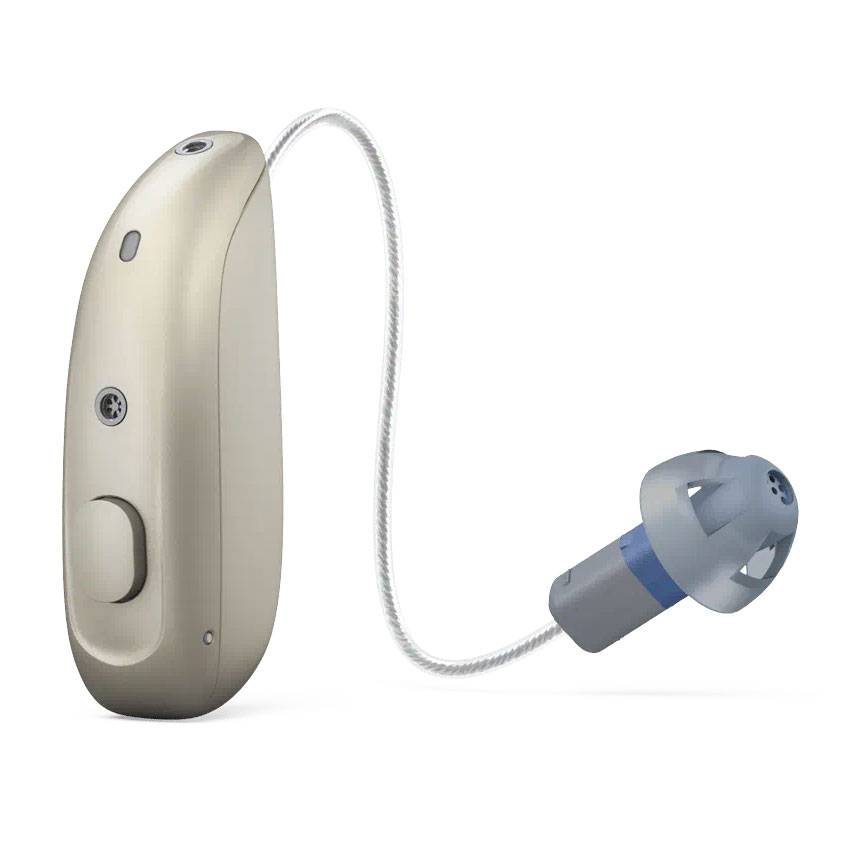
The headliner of the Jabra Enhance Pro 30 is its use of Artificial Intelligence for sound processing. Jabra refers to this as “Intelligence Augmented—a human approach to AI,” which highlights that the goal is to work with your brain’s natural hearing, not replace it. At the core is a dedicated Deep Neural Network (DNN) chip that runs an AI algorithm trained on an immense database of real-world sounds and speech. According to GN, the network was trained on over 12 million sound scenarios to teach it how to recognize speech versus noise. This chip works in tandem with the 360 All-Around sound processing chip. Think of it like having a specialized co-processor whose only job is to filter out noise and enhance voices.
All of this combines to form the Intelligent Focus feature. When you’re in a chaotic environment— for example, a crowded cafe or a busy street— you can enable the AI-driven mode. The hearing aids will then dynamically focus on speech sounds (especially from the person in front of you) and aggressively reduce background noise such as clanging dishes, engine hum, or other people’s chatter. The system doesn’t simply block all other sounds; it uses clever processing to maintain awareness of surroundings (so you’re not completely isolated) while still spotlighting the voices you care about.
It’s important to note that the AI is adaptive and works in real time. GN’s research indicates that their DNN approach even takes into account the direction you’re facing or “looking” to help decide which speech to emphasize. So, if you turn toward a talker, the aids know to hone in on that voice. This is more intuitive than old manual “beam” programs—it’s essentially automating the process our brains do naturally when we cock our head to listen to someone. All of this is said to result in clearer conversations with reduced listening effort. In fact, GN has reports indicating that, compared to other advanced hearing aids, a majority of users prefer the GN/Jabra AI system for hearing in noise.
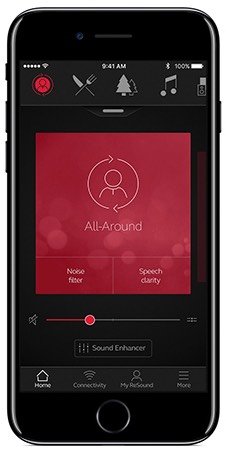
The trade-off, as mentioned above, is battery usage. The AI DNN chip consumes additional power, so you wouldn’t necessarily want to run it 100% of the time (nor would you need to). Typically, the Enhance Pro 30 is configured with an automatic “All-Around” program that manages everyday environments using normal processing, along with a separate “Speech Focus” or noise program that activates the DNN for particularly challenging situations. You can easily switch to the AI program via the app or a push-button when needed.
The good news is that even in the default mode, the Pro 30 still benefits from its dual-chip architecture—the standard 360 All-Around chip already provides good directional processing and noise reduction for moderate conditions. So the DNN acts like a turbo boost you can call upon in extreme noise.
Overall, the AI capabilities of the Pro 30 make it one of the most intelligent hearing aids on the market in 2025. HearAdvisor has not specifically tested Jabra Enhance Pro 30 in its audio lab; however, it did test ReSound Vivia, on which the Pro 30's technology is based. As HearAdvisor Cofounder and Audiologist Dr. Steve Taddei states in his review, “While their new AI-driven noise reduction feature provided some benefit in louder settings, we found its impact to be less pronounced than expected in challenging noise environments.” Still, testing of Vivia yielded a Tuned SoundScore of 4.1 (out of 5) for individuals with mild-to-moderate hearing loss, demonstrating that it is a top-notch hearing aid.
)

:format(webp))
:format(webp))



:format(webp))
:format(webp))

:format(webp))
:format(webp))
:format(webp))