Produktbewertung
)

In this video, HearAdvisor's Dr. Steve Taddei, AuD, provides an overview of Oticon Zeal and presents his lab findings.
Quick Take
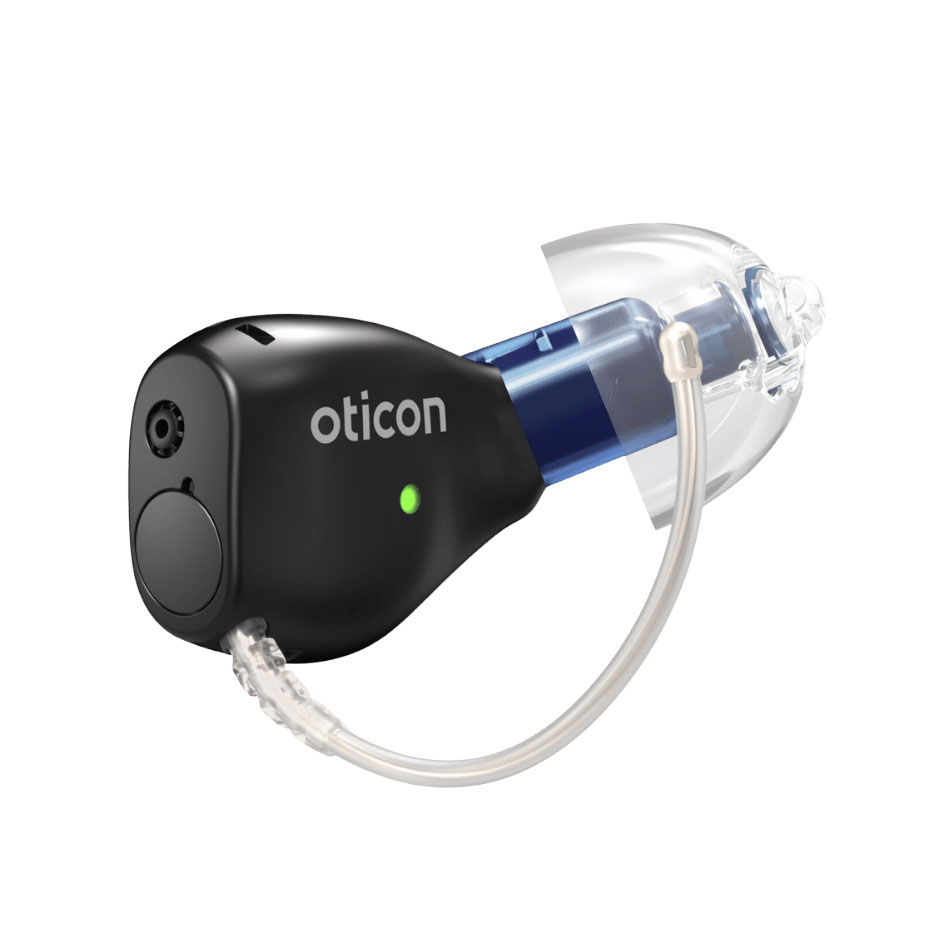
Oticon Zeal is one of the most interesting prescription hearing aids we’ve tested recently because it brings many “big hearing aid” features—AI-driven sound processing, rechargeability, Bluetooth LE Audio streaming, app control, and Auracast—into a tiny, nearly invisible in-ear design. In HearAdvisor lab testing, Zeal performed very well, earning a 4.3 out of 5 SoundScore, an A SoundGrade, and an Expert Choice Award, with particularly strong results for speech understanding in both quiet and noise.
Our quick take: Zeal is a strong option for people who want a discreet, same-day-fit prescription hearing aid without giving up modern wireless features and high-end Oticon processing. However, the small CIC-like form factor inherently comes with some tradeoffs: it may be harder to handle for people with dexterity or vision challenges, it is best suited for mild to moderate losses, and some users may run into feedback, high-frequency gain limitations, wax-related maintenance, or “own voice” issues. Streaming is reliable, but music quality is only fair. For the right candidate, however, Zeal is an impressive example of how far small in-ear hearing aids have come.
What Is Oticon Zeal?
Zeal was launched by Oticon in January 2026, and immediately drew our attention because it’s a tiny in-ear prescription hearing aid with the type of features you generally expect only from larger behind-the-ear-type models: AI-driven speech-in-noise processing, rechargeability, Bluetooth LE Audio streaming, app control, and (notably) Auracast—all without requiring an ear impression on day one.
A few years ago, this would’ve been asking a lot from an in-ear hearing aid. But today, this device promises a discreet fit, all-day battery life, and full wireless features.
That sounds almost too good to be true…so let’s take a closer look. In this article, I’ll walk through my real-world experience, objective lab testing from HearAdvisor, and I’ll also include sound samples at the bottom of this page so you can listen to Zeal with your own ears.
Zeal at a Glance: Technology, Pricing, Specs, Pros & Cons
On paper, Zeal addresses many of the long-standing trade-offs people have had to make among size, battery life, and wireless features. In fact, because its features differ from conventional completely-in-canal (CIC) hearing aids, Oticon is positioning Zeal as a new style category—called NXT—that combines a tiny, discreet design with rechargeability, wireless connectivity, durability, and AI-driven signal processing.
Zeal is much smaller than a typical behind-the-ear style hearing aid. But beyond its size, there’s one other potential big advantage of this design: our ears are actually incredibly sophisticated acoustic systems. The outer ear, or pinna, acts like a satellite dish, helping collect and shape sound before it enters our ear canals. That natural shaping helps with things like resonance—think speech clarity and sound localization. So when you place microphones inside the ear, instead of above it, you’re capturing sound more naturally, which can help preserve some of those benefits.
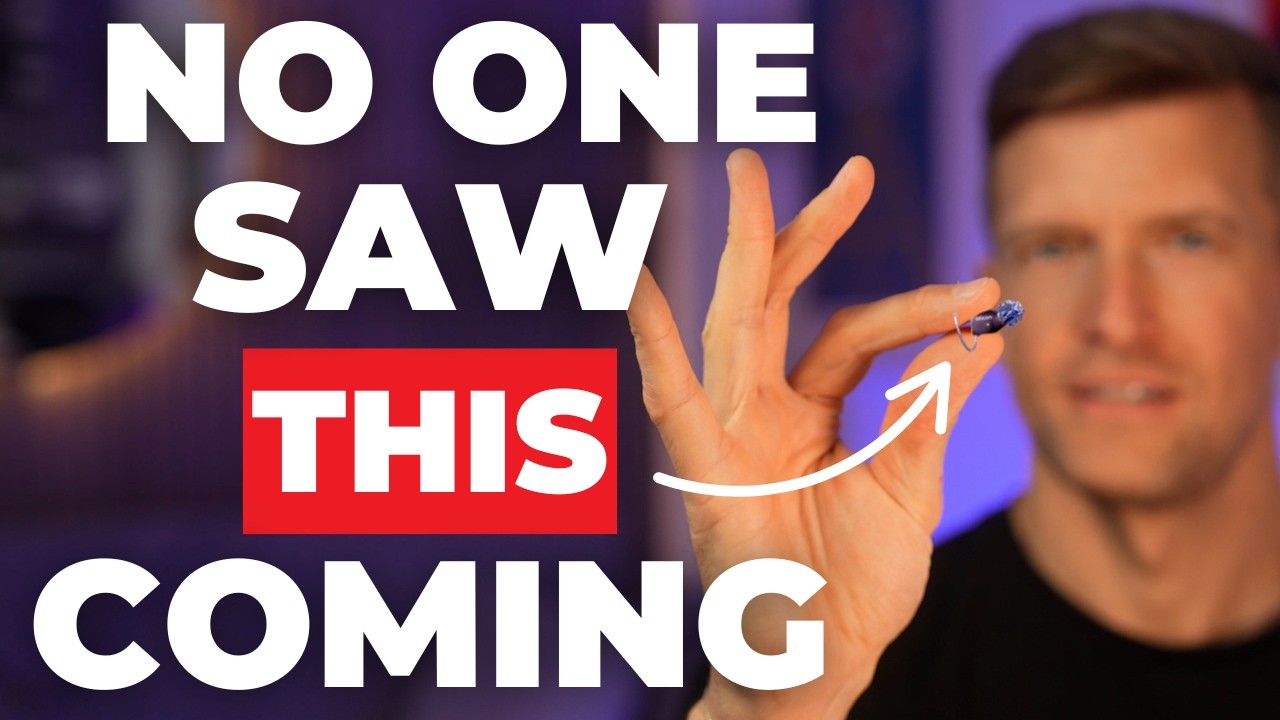
HearingTracker audiologist and London-based clinician Matthew Allsop provides an overview of Oticon Zeal.
What’s more, Oticon is one of the earliest adopters of integrating AI into its hearing aid processing. In Zeal, Oticon’s Deep Neural Network (DNN 2.0) is a form of AI that runs on the Sirius chip—the same one that powers Oticon’s flagship Intent hearing aids—and is “always on.” This newer DNN 2.0 version was trained on a wider variety of real-world sounds and uses higher resolution compared with its first-generation system, allowing for more intelligent hearing adjustments.
Zeal is only available in Oticon’s highest technology tier (Zeal 1) and is positioned as a premium product with the option of custom earmolds, which leads us to believe you’re likely to find it costing upwards of $5,000 per pair— although the actual price will vary by clinic, region, service bundle, and follow-up care.
Before we get into our lab findings and what it’s like to wear Zeal, here are some product specs and Pros & Cons; we’ll get into some of the finer points below.
:format(webp))
Key Product Specs of Oticon Zeal
- Style: “NXT In-the-Ear”—an instant-fit, mostly-invisible modular CIC form factor
- Connectivity: Features Bluetooth LE Audio with Auracast; Made for iPhone and Android, although Android hands-free streaming depends on smartphone/tablet support (LE Audio and/or ASHA); however, Zeal does not have a telecoil
- Rechargeable: Oticon says you can expect about 20 hours of operating time with "typical” streaming (varies with use)
- Customization: Can be adjusted with the iOS- and Android-compatible Oticon App
- Durability: Encapsulation to keep electronic components secure, with an IP68 rating — the highest Ingress Protection rating hearing aids can have against moisture and dirt or dust.
- Same core sound processing as Oticon Intent flagship: Sirius chip platform + Deep Neural Network 2.0 + MoreSound Intelligence 3.0
- Controls: Oticon Companion app + tap control
What we love about Oticon Zeal
Excellent audio performance: Both in real-world use and in lab testing, Oticon’s processing is strong, earning it an A SoundGrade and Expert Choice Award from HearAdvisor. Nearly invisible CIC with “big” features: A nearly invisible completely-in-canal (CIC) hearing aid with almost all the modern features of a receiver-in-canal (RIC). Exceptional comfort: Our testing found Zeal comfortable for extended wear, which isn't always the case with instant-fit devices.
:format(webp))
HearAdvisor Lab Testing Scores
Let’s go back to something I mentioned earlier. Because Zeal places its microphones inside the ear, it has access to the natural acoustic benefits of your pinna. In theory, that should help with things like speech understanding and spatial awareness. So let’s see how that translates into actual performance.


We tested Zeal in our partner lab, HearAdvisor — using standardized, objective testing designed to predict real-world performance for a common age-related hearing loss.
Here are Zeal’s results across HearAdvisor’s five sound quality metrics. The “Initial Fit” is the result you’d get if the hearing care provider used only the manufacturer’s “first fit” programming, with the device not optimized through procedures like real-ear measurement (REM). The “Tuned Fit” is the best fit a hearing provider can typically achieve using best practices that optimize hearing aid performance, like REM and other methods.
Test Condition | Initial Fit | Tuned Fit |
|---|---|---|
Speech in Quiet | 3.9 (+1.0) | 4.5 (+1.2) |
Speech in Noise | 2.0 (+0.7) | 2.9 (+1.2) |
Feedback Handling | 3.8 (-0.8) |
Zeal earned an A SoundGrade, placing it among the top-performing devices we’ve tested. That’s great, but also not entirely surprising given Oticon has a strong track record.
HearAdvisor lab testing showed that Oticon Zeal does very well where it matters most: helping people understand speech. In testing, Zeal scored above the prescription hearing aid average for speech in quiet and even higher for speech in noise, suggesting that this tiny in-the-ear device can deliver strong real-world communication benefits. Music streaming quality also tested above average, which is a nice bonus for a hearing aid this small, although you shouldn’t expect the high-fidelity sound quality you’d get from many top consumer electronics headphones (e.g., Apple AirPods Pro).
The main trade-offs were those we might expect from a small, deeper-seated in-ear hearing aid. Scores for feedback control and own-voice comfort both fell below the prescription hearing aid average, which may be more noticeable for some wearers—especially those who are sensitive to the “plugged-up” feeling or who need more amplification. For many people, Zeal’s mix of discretion, rechargeability, wireless features, and strong speech performance will be very appealing, but getting the fit and programming right with a hearing care professional will be important.
So the big takeaway is this: Zeal isn’t just impressive for its size; it holds its own from a performance standpoint, too.
To hear Oticon Zeal for yourself, use a pair of quality headphones and play the sound samples at the bottom of this page. More detailed analysis of the test scores and sound samples is also available on the HearAdvisor webpage for Zeal.
:format(webp))
Using Oticon Zeal
Now that we’ve covered the important lab acoustic testing, let’s take a look at what you get with Zeal and what it’s like to use these hearing aids. Your provider will walk you through what’s in the Zeal box, make sure you have the right ear tips, and go over cleaning and maintenance, so we’ll keep this part brief.
Domes / Earmolds and Insertion Tips
One thing I will mention is that Zeal comes with the option of either the manufacturer-supplied ear tips or custom-made earmolds from your provider, with help from an earmold lab. Custom molds conform to the unique bends and contours of your ear canal, and can increase comfort and sound quality. Although eartips often work well and let you walk out of the office on the first day you purchase the aids, custom earmolds—which usually add a little to the cost—are often worth it. Make sure you ask your provider about them and see if they might be right for you.
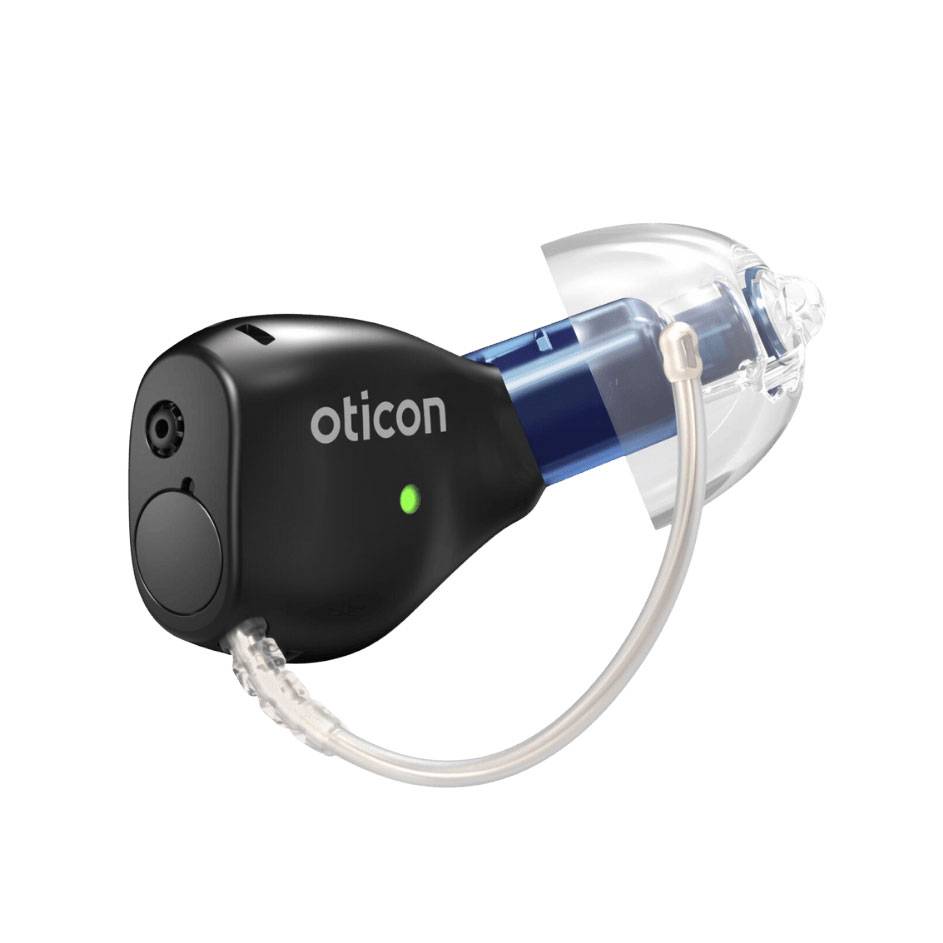
For fit and handling, think of Zeal as having three “touchpoints”: the ear tip/dome, the sound outlet (speaker end), and the wrap-around antenna. My colleague Matthew Allsop, a partner and audiologist at one of London’s largest hearing care centers, notes Zeal's silicone tips come in different shapes and sizes (and, as noted, a custom earmold can be made if needed), so it’s worth having your provider confirm the best option for your ear canal and hearing loss.
To insert the aid, Allsop recommends placing the tip into the canal with the antenna pointing downward, gently pulling your ear outward if needed, then tucking the antenna into the bowl of the outer ear. To remove it, hold the antenna and gently pull to avoid stressing the antenna-to-body connection.
Rechargeability and the Charging Case
The charging case for Zeal feels well-built, though it’s slightly larger—not exactly pocket-sized, but it’ll easily fit in a backpack or purse. It has LED indicators for both the hearing aids and the case, and the case itself provides up to three additional full charges.
:format(webp))
Placing Zeal into the charger isn’t difficult, but there are designated left and right slots—so there’s a small learning curve at first. Charging takes about 2 hours using the included USB-C cable and wall adapter. The charger’s status lights flash orange while charging, solid orange when you’ve got enough power for several hours, and solid green when fully charged—and you can leave them in overnight because the SmartCharger stops automatically once they’re full.
If you do run low on power while using Zeal during the day, three alternating tones is the early warning (meaning you have ~2 hours left, and less if you’re streaming), and four descending tones means the battery is essentially about to quit—so turning off streaming at that point can help stretch things until you get home. However, the SmartCharger enables quick power-ups: about 4 hours of use with just 15 minutes of charging, or 8 hours with 30 minutes.
One of the main talking points with Zeal is its size. They are impressively small and yet feel well-built with an IP68 rating, meaning they offer excellent protection against moisture and debris. It features an industry-first manufacturing process in which most of the electronics are encapsulated in a protective resin—similar to how pacemakers and spacecraft components are shielded—making them super-resistant to moisture and the elements while also optimizing space for Oticon’s Sirius chip and an expanded battery.
:format(webp))
Another feature that might jump out at you is its “tail-like” extension. This is the antenna that makes all the wireless communication and connections possible. The antenna is a unique part of Zeal, as it works as a 3-in-1 device: it isn’t just for connectivity—it also helps with retention and gives you something to grab for removal—while the encapsulated body is designed to keep things discreet, secure, and consistent. The antenna is designed to mold to your ear for retention and have over half of its length in contact with the ear’s surface for enhanced conductivity (think of how touching the “rabbit ears” antenna on an old TV or portable radio boosts the signal strength).
Here’s what Zeal looks like in my ears. The hearing aid sits almost completely in the ear, and as the antenna is mostly transparent, they’re very difficult to notice.
:format(webp))
Wireless Features of Oticon Zeal
Now let’s talk about wireless features and the Oticon Companion app. Honestly, a few years ago we wouldn’t even be having this conversation. Small in-the-ear devices like this typically didn’t offer wireless features—or if they did, they were pretty limited. Bluetooth audio streaming, as found in Zeal, is rare among CIC-type hearing aids (Starkey’s Omega AI CIC and Signia’s Active Pro Mini IX ITE are two other notable exceptions).
Zeal streams audio to both iOS and Android phones and tablets, with hands-free calling available on Apple iOS, as well as newer Android devices that support LE Audio. For older Android phones with the ASHA protocol, you’ll still be able to hear the caller, but you’ll need to speak into the phone (like a normal phone call) instead of having the hearing aid’s microphones pick up your voice and transmit it to the person on the line. For users with older Android phones and tablets, Oticon offers the Easy LE Adapter that provides a workaround: a USB plug-in path to LE Audio streaming. (The company’s Compatibility Guide page helps you check your streaming options.)
With Zeal, you get essentially the same iOS and Android app experience you’d expect with a traditional advanced prescription hearing aid. Oticon’s Companion App lets you control Zeal hearing aids using standard controls like volume and program changes. There’s also a 3-band EQ for deeper sound customization, and I like that Oticon includes a separate EQ for streamed audio.
:format(webp))
On the app, you’ll also find 3 little dots (•••) that give you quick access to additional features, such as remote microphone functionality and Auracast. If you navigate to the Hearing Aids tab, you’ll also find basics like battery status and “Find My Hearing Aids” which is nothing new, but always helpful. Allsop tested out the Auracast and says it is genuinely straightforward: open the Companion app’s Auracast menu, tap the broadcast you want, and it streams directly to both ears.
Overall, the app is solid. It’s not flashy, and it may feel a bit minimal compared to some newer platforms that include advanced health and fitness tracking, but it worked reliably in my testing—and for most people, that’s probably what matters most. If health features pique your interest, you may be interested in other prescription hearing aids, such as Starkey Omega AI, Signia IX, or Phonak Infinio.

HearingTracker Audiologist Matthew Allsop shows you how to set up and use Zeal hearing aids in this YouTube video.
Other Controls and Features
You also have tap controls, which I found worked reasonably well. They’re not overly sensitive, and I’d sometimes have to double-tap again to get it to work. But compared to physical buttons, tap controls make a lot more sense here. With buttons, you’re essentially pushing the device deeper into your ear every time you press them…which isn’t exactly comfortable. With tap controls, you avoid that entirely.
The default tapping is pretty easy to remember: double-tap right = volume up (both aids), double-tap left = volume down. If your audiologist sets up extra programs, taps can cycle through the commands, with audible tones that indicate which program you’re on; tapping can also answer/end phone calls when your phone is paired.
I’ll admit that I’m not a huge fan of tap controls on most hearing aids (primarily because they can take some practice before becoming second-nature), but with a hearing aid of this size, they’re very useful. You can also control the settings via the app.
Although not especially unique for advanced top-level hearing aids, Zeal includes many familiar Oticon features (varying by fitting and personalization), such as feedback management, spatial sound, sudden-sound handling, tinnitus support (if enabled), and frequency-lowering options. Because of its small size, it does not contain a telecoil, so you won’t be able to access induction loop system broadcasts.
:format(webp))
Final Verdict
Oticon Zeal is genuinely impressive, and it’s a good reminder of how far hearing aid technology has come. A few years ago, getting this combination of size, battery life, and wireless features just wasn’t realistic.
So who are they for? If you’re looking for a nearly invisible hearing aid with strong sound performance and modern features, Zeal makes a lot of sense.
But there are some important limitations to understand. First, these are best suited for mild to moderate or in some cases moderately-severe hearing loss. At the extremes of those ranges and beyond, you may run into issues like limited amplification, meaning reduced high-frequency clarity and feedback.
You can push performance a bit further with custom earmolds—but that’s an added cost, and something to discuss with your provider. In my clinical experience, when someone is right on that edge, you often end up making considerable tradeoffs for discreetness and, in most cases, another style like a receiver-in-canal hearing aid may simply be the better option.
Here’s what I liked most about Zeal:
- Audio Performance. Both in real-world use and in lab testing, Zeal was excellent in audio performance. Oticon’s processing is strong, and I had no issues programming these for a typical mild-to-moderate hearing loss. That said, I did notice some high-frequency hiss and occasional distortion with louder sounds. Both can be addressed to some extent by your provider, but it starts to highlight the amplification limitations I mentioned above.
- Discrete Design. Next up, these are about as close to invisible as you can get — while still offering wireless features and all-day battery life. The tradeoff is that they can be harder to handle, especially if you have limited dexterity or vision. Even I found them a bit tricky to remove at times.
- Comfort. I found Zeal comfortable for extended wear compared to many instant-fit devices, which tend to cause pressure points and or offer poorer retention. I did not run into those issues with Zeal, and these are frequent problems in the OTC space.
Downsides of Zeal:
- Additional Maintenance Required. Like most CIC-type hearing aids, because they sit deep in the ear, they’re more susceptible to wax and debris, which impacts microphone performance and charging reliability. This is manageable, but it requires consistent cleaning.
- Feedback & Gain Limitations. Again, due to its size and placement in the ear, Zeal will be more prone to feedback than other hearing aid styles, like RICs. And depending on your hearing loss, you may run into limits with high-frequency amplification. Almost all hearing aids have gain limitations, so speak with your provider to vet your candidacy.
- Streaming Sound Quality: Last up, streaming is reliable without dropouts, but the sound quality is just okay. It tends to sound thin and lacking in bass, which you may notice when listening to the sound files below or on HearAdvisor’s Zeal page. You can improve it slightly using EQ and ear tip changes, but don’t expect high-fidelity audio here.
:format(webp))
Alternatives to Zeal
What are some tiny, full-featured hearing aids that might be compared to Oticon Zeal? Here are two that we think may come close:
Starkey Omega AI: Starkey has a reputation for making exceptional custom products, and its flagship Omega AI line includes a CIC model with app controls, Bluetooth wireless streaming, and AI/DNN speech-in-noise processing. However, it is a custom-fit-only hearing aid (i.e., no instant, same-day fitting option) that uses a size 312 button-cell battery rather than a rechargeable battery.
Signia Active Pro IX: Although not a CIC form factor, the Active Pro IX might be the hearing aid most like Zeal: it’s a small, discreet, instant-fit, earbud-like device that offers exceptional hearing enhancement and comfort, wireless connectivity, and rechargeability. Active Pro IX ranked in the top-10% of HearAdvisor’s best prescription hearing aids. Note that there is also an economy Active IX that lacks some features of the Active Pro IX and the Active Pro Mini IX, released in May 2026, which we have not yet evaluated.