The Best Hearing Aids of 2026: Lab Tested and Audiologist Approved
After testing almost 100 hearing devices in our lab, we're confident in our selection of the best hearing aids.Our expert team selects and tests products rigorously. We may earn commissions if you buy through our links. Here's how we keep reviews independent.
The 2026 Shortlist
Best speech-in-noise, universal Bluetooth, top-tier water resistance.
The Elehear Beyond Pro is a feature-packed, self-fitting OTC hearing aid that delivers clear, natural sound and strong speech-in-noise performance for the price—and in my opinion, while it’s not flawless, I was genuinely impressed by how much value and real-world performance it offers for the money.
Best OTC value with optional professional care and strong features.
Prescription hearing aid prices vary from region to region, so do your local research.
Noise + Bluetooth: Noise + Bluetooth: Today's "best" hearing aids win by making speech clearer in busy places and streaming reliably with modern Bluetooth.
Clear price tiers: You can now choose between premium prescription, supported OTC, or budget OTC—each step down saves money but gives up something.
Tradeoffs matter: Battery life, tinnitus features, invisibility, and power for severe loss all pull in different directions, so the right pick depends on what you value most.
We tested most hearing aids featured here in a custom-built acoustic lab using calibrated speakers and spatially accurate recordings from real-world environments, including busy restaurants and offices.
Our audiologists wore each device for at least a week, rating build quality, battery life, Bluetooth stability, comfort, handling, app features, and value alongside lab results.
Our experts assess build quality, handling, app functionality, connectivity, design, value, professional support, and more.
Our Recommendations
)
Phonak’s Infinio Sphere delivers genuinely standout speech clarity in loud, noisy places thanks to its DEEPSONIC “Sphere mode,” but you’ll trade some discretion and may wrestle with fit or Bluetooth pairing to get that top-tier performance.
- Best “speech in noise” score
- DEEPSONIC speech separation
- Universal Bluetooth + stereo streaming
- IP68+ water & dust resistance
)
The Elehear Beyond Pro is a feature-packed, self-fitting OTC hearing aid that delivers clear, natural sound and strong speech-in-noise performance for the price—and in my opinion, while it’s not flawless, I was genuinely impressed by how much value and real-world performance it offers for the money.
)
Compare the Best Hearing Aids of 2026
| Product | Top Pick | ||||||||
|---|---|---|---|---|---|---|---|---|---|
| Our Rating | 4.4/5 | 4.4/5 | 4.1/5 | 4.4/5 | 4.4/5 | 4.4/5 | 4.2/5 | 4.5/5 | 4.6/5 |
| Verdict | Best Overall Hearing Aid | Best OTC Hearing Aid | Best OTC for Remote Care | Best Prescription Hearing Aid Runner-Up | Best for Tinnitus | Best Rechargeable Prescription Aid | Best OTC for Battery Life | Best Earbud Style Prescription Hearing Aid | Best Budget Premium Hearing Aid |
| Price | From $3,598 / pair | $449 | $1,995 | $4,898 | $3,398 | $3,398 | $599 | $2,348 | $1,600 |
| Hands-Free Calling | |||||||||
| Rechargeable | |||||||||
| iPhone Streaming | |||||||||
| Android Streaming | |||||||||
| Telecoil |
)
)
)
)
)
)
Prices and availability are subject to change. We independently review each item we recommend and appreciate your trust and support. When you buy through our links, we may earn a commission.
Our picks for 2026 offer superior sound processing, excellent wireless connectivity, and next-generation speech-in-noise capabilities. Each recommendation is backed by HearingTracker's hands-on review and wear tests, and HearAdvisor's acoustic lab measurements. After scrutinizing over 95 modern hearing aid models, here are our top 10 picks, including detailed pros and cons to help you find a match for your specific hearing needs, lifestyle, and budget.
Note: This list contains both prescription and OTC hearing aids. If you wonder whether OTC devices are any good, read our full OTC vs. prescription hearing aids analysis.
![Comparing the Best Hearing Aids of 2026 [Updated February 2026]](https://i.ytimg.com/vi/wTUi1dnGE28/maxresdefault.jpg "Comparing the Best Hearing Aids of 2026 [Updated February 2026]")
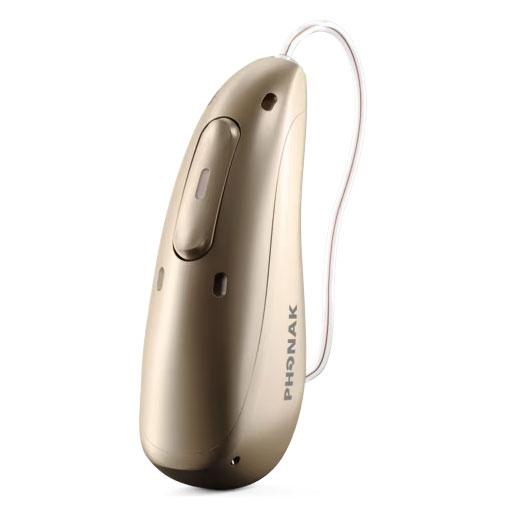
Best Overall Hearing Aid: Phonak Audéo Infinio Ultra
Phonak’s Infinio Sphere delivers genuinely standout speech clarity in loud, noisy places thanks to its DEEPSONIC “Sphere mode,” but you’ll trade some discretion and may wrestle with fit or Bluetooth pairing to get that top-tier performance.
Expert Review
The Phonak Audéo Infinio Ultra Sphere is the best overall hearing aid, hands down. Whether you’re looking for the best hearing aids for background noise, high-quality streaming music, or the highest possible water resistance, the “Sphere” is our top recommendation.
Phonak’s “DEEPSONIC” chip employs a Deep Neural Network (DNN) to separate speech from noise, and Phonak claims that users are 2-3x more likely to understand speech from any direction compared to two leading competitors. Independent testing from the HearAdvisor acoustic lab also measured the highest “speech in noise” score the lab has ever recorded—the Sphere Ultra came in at 4.6 out of 5.0 (the original Sphere was the first score above 4.0).

Universal Bluetooth support for Android and iOS, paired with speakers that actively block out external noise make the Sphere one of the best hearing aids for music lovers. Its support for up to eight Bluetooth devices and two active Bluetooth connections, which enables seamless switching between your phone and your computer, also made it our top pick for the best Bluetooth hearing aid. People with an active lifestyle seeking waterproof hearing aids should also consider the Sphere because Phonak applies rigorous testing to ensure its devices perform well above the industry-standard IP68 dust- and water-resistance rating.
Grab a pair of headphones and listen to real lab recordings of the Sphere above. And, you can also hear how the Sphere performs in background noise.
Pros
Top "speech in noise" scores measured by HearAdvisor
Universal Bluetooth connectivity with stereo streaming
Tap controls and motion sensing
Hands-free calling in stereo
Best wireless accessories on the market
IP68+ rating—highest Ingress Protection (IP) available for hearing aid resistance to dust and moisture
Cons
Battery life of up to 16 hours, but possibly much less when in noisy environments that require DEEPSONIC chip processing for long periods
Own voice may sound degraded to conversation partners on hands-free calls
Auracast-ready, but firmware upgrade will be required to unlock the feature
Expect to pay a premium price for these premium prescription hearing aids.
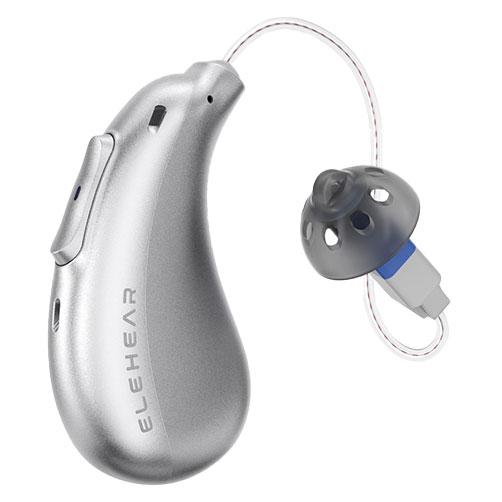
Best OTC Hearing Aid: Elehear Beyond
The Elehear Beyond Pro is a feature-packed, self-fitting OTC hearing aid that delivers clear, natural sound and strong speech-in-noise performance for the price—and in my opinion, while it’s not flawless, I was genuinely impressed by how much value and real-world performance it offers for the money.
Ideal for
Expert Review
Looking for a sub-$600 OTC hearing aid that outperforms some devices more than twice that price and includes with remote care? The Elehear Beyond Pro, priced at $649, punches well above its weight class with good high-frequency gain (amplification) and great AI-driven speech clarity, a feature that many OTC devices struggle to achieve without feedback or whistling. Considering its performance, this OTC hearing aid is not only one of the most affordable OTC hearing aids on the market today, but also the best OTC hearing aid overall because it checks almost all the boxes.
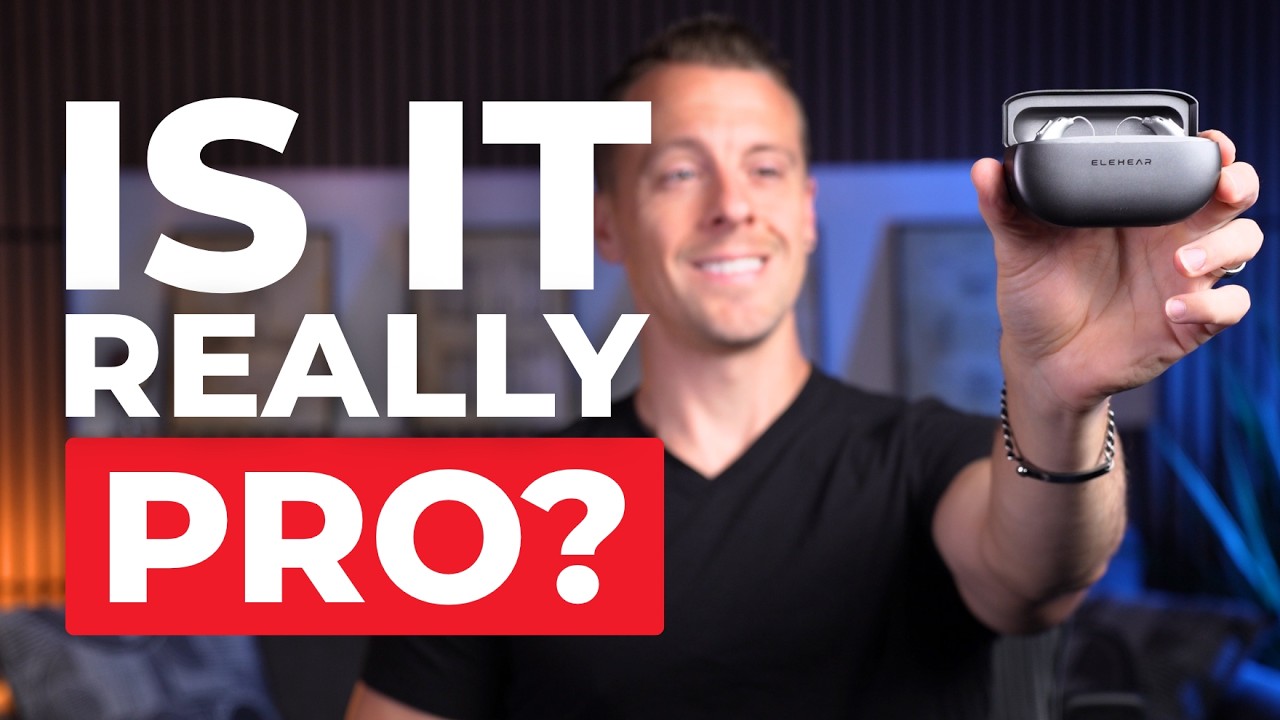
The Beyond Pro provides audio streaming and hands-free calling for both iOS and Android devices. With a rechargeable battery life of 20 hours per charge, it will last you all day, and the charging case adds four full charges. The online professional support provided by Elehear includes remote adjustments by licensed audiologists, meaning you can have the Beyond Pro programmed using the results of an audiogram, i.e., a professional hearing test.
If you're looking for a more affordable option, consider Elehear Beyond, the company's previous flagship, available for $399 or less. The Beyond is preset based, meaning you can't customize it to your hearing loss. Nevertheless, it showed performance similar to the Beyond Pro, earning it a HearingTracker score of 4.1 (out of 5), a HearAdvisor SoundGrade of A, and an Expert Choice Award.
Pros
Lower-cost quality OTC hearing aid
Improved speech clarity
Latest Bluetooth 5.3 wireless audio streaming
Comfortable design
No Auracast support
Cons
Larger hearing aid body size and thus less discrete
Low IP X5 rating
“Good but not great” audio streaming
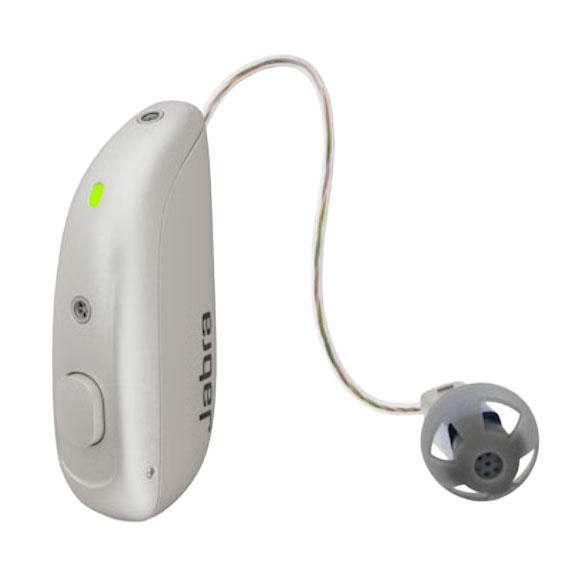
Best OTC for Remote Care: Jabra Enhance Select 700
Jabra's flagship Enhance Select 700 offers premium sound, LE Audio, Auracast, and top-tier remote audiology care in a tiny, discreet design.
Expert Review
While high-end prescription hearing aids remain the gold standard in treating hearing loss, not everyone can afford them. For people with mild-to-moderate hearing loss, self-fitted over-the-counter (OTC) devices might be sufficient, but the lack of professional care can be a huge downside. The Jabra Enhance Select 700 is an excellent compromise, as it combines the affordability and ease of an OTC device with an optional care package.

The Jabra Enhance Select 700 is the best OTC hearing aid because it offers solid speech in noise benefits, an excellent premium package that includes professional hearing care, and a comprehensive set of features, including up to 24 hours of battery life per charge, as well as audio streaming and hands-free calling from iPhone and Android.
Pros
Comfortable and compact receiver-in-canal design
Good sound quality and speech in noise performance
Comprehensive customization options in the Jabra Enhance app
Bluetooth LE Audio streaming for calls, music, and media with iOS and Android
Battery life of up to 24 hours per charge, plus three full charges with the case
IP68 ingress rating, the highest available for a hearing aid
Professional telehealth support with hearing care providers, remote programming, and tech support
Up to 3 years of warranty and loss & damage protection
Cons
More expensive than most OTC hearing aids
Telecare services may be slow to schedule appointments
Won't work with all devices, but Jabra offers a compatibility check


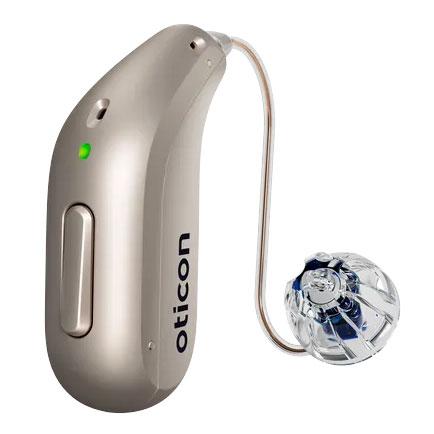
Best Prescription Hearing Aid Runner-Up: Oticon Intent
Oticon Intent is a top-tier flagship with excellent lab-verified speech performance, strong streaming and connectivity, and smart features like 4D sensors and fast charging, though its slightly bulkier fit, simpler button controls, and the still early LE Audio and Auracast rollout may be drawbacks for some users.
Ideal for
Expert Review
Intent is the latest hearing aid from Danish company Oticon. If you need a prescription hearing aid with tinnitus support, good battery life, modern wireless features, and strong resistance to dust and moisture, the Oticon Intent has got you covered. Unlike Phonak's Audéo Sphere, Intent features impressive rechargeability and battery life, with up to 24 hours of use time. Oticon's Tinnitus SoundSupport generator offers a great selection of sounds to mask your tinnitus, making it one of the best hearing aids to treat ringing in the ear. Intent's IP68 rating and support for Bluetooth LE Audio with Auracast make it durable and future-proof.
Like Phonak's Sphere (best overall) and Starkey's Edge AI (best rechargeable), Intent uses AI-driven technology to improve environment recognition and speech clarity in noise. Its second-generation DNN 2.0 technology was built using enriched learning from over 12 million sound inputs during its training phase, allowing it to perform in even more diverse listening situations. The overall goal of Intent is to work similarly to the brain, enabling more accurate representations of sound and better access to speech in noisy situations. Oticon claims that these features can result in accessing 35% more speech cues, offering a significant boost in clarity and conversation quality.

Pros
Excellent speech in noise performance and sound quality
Good battery life of up to 23 hours per charge
Wireless audio streaming for iOS and Android
Better hearing in background noise through onboard AI and DNN 2.0 system
Tap controls to accept/end hands-free calls
IP68 moisture rating
Auracast-ready
Cons
Accessory required for non-smartphone Bluetooth
Offsite service required for battery replacement, unlike its predecessor, Oticon Real
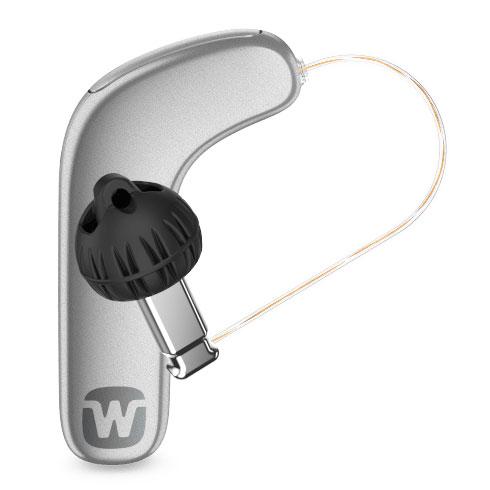
Best for Tinnitus: Widex MOMENT
The Widex MOMENT is a flagship hearing aid line known for its superior sound quality and advanced AI-driven personalization features, including ZeroDelay™ and PureSound™ technologies that offer natural sound processing. Suitable for a wide range of hearing losses, these hearing aids are available in various styles, including rechargeable options, and are highly rated for music streaming and listening in noisy environments.
Ideal for
Expert Review


Picking the best hearing aid for tinnitus is tricky because it's quite subjective. If you're new to hearing aids, focus on finding the best device for your hearing loss because addressing the hearing loss will often resolve the tinnitus or at least make it less noticeable. If you're struggling with tinnitus even after fully adjusting to hearing aids, look into devices that offer sound therapy.
For tinnitus relief, we recommend the Widex MOMENT SmartRIC hearing aid because the Widex Zen and SoundRelax programs can help you manage tinnitus and stress with chime-like fractal tones and nature-inspired sounds. Your hearing care professional can activate the feature and customize the tones or soundscapes to your preferences.
The Widex MOMENT SmartRIC's L-shaped design aligns the dual-directional microphones with the wearer's focus to improve the hearing aid's signal-to-noise ratio. In HearAdvisor's acoustic lab, the MOMENT SmartRIC performed above average for speech in quiet and speech in noise, though not nearly as good as Phonak's Audéo Sphere Infinio. With a battery life of up to 37 hours per charge, however, the MOMENT offers twice as much as the Sphere Infinio.
Pros
Rechargeable battery with up to 37 hours of runtime per charge
Audio streaming and hands-free calling with iOS and Android
Modern app with comprehensive customization options and optional tinnitus programs
Optimized hearing aid shape in SmartRIC model
IP68 ingress rating
Cons
Older Bluetooth protocol, lacking LE Audio with Auracast
Speech in noise performance is weaker than competing premium prescription hearing aids
Average streaming music performance
We'll note that you may also opt for the newer Widex Allure hearing aid, the successor to MOMENT. Allure actually outperformed both SmartRIC and Sheer in the HearAdvisor lab. However, Allure ranks slightly lower in its overall HearingTracker score due to a shorter battery life (25 hours vs. 29 for Sheer and 37 for SmartRIC, respectively). Importantly, its new cloud-based software doesn't include many of the tinnitus features of previous versions and doesn't offer a portable charger—although that's slated to be available soon.
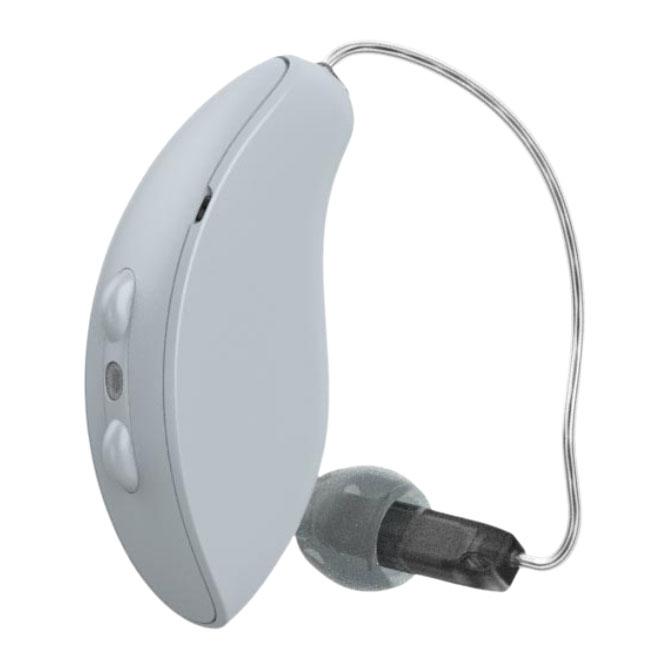
Best Rechargeable Prescription Aid: Starkey Omega AI
Starkey Omega AI is a top-tier prescription hearing aid with excellent speech-in-noise performance, a best-in-class app and wellness features, and standout durability and battery life—though its high price and feature-heavy setup won’t suit everyone.
Ideal for
Expert Review

The Starkey Omega AI offers the best rechargeability solution on the market. On a full charge, the Omega AI provides a whopping 51 hours of operating time. That’s a full 14 and 21 hours more than their closest competition, Widex and ReSound, respectively!
Omega AI takes about 3.5 hours to fully recharge from a flat battery, and this is more or less in line with every other rechargeable lithium-ion hearing aid on the market. Starkey also features a turbo charging feature that adds 3 hours of use in just a 10-minute charge, so you can quickly top up the hearing aids when pinched for time. Add to this the fact you get an extra 14 hours of battery life with the full 3.5-hours charge compared to other exceptional hearing aids, and it seems like Starkey wins on all-around recharging.
In addition, Starkey's Premium Mini Charger is a well-designed and rugged charging case that offers four on-the-go charges. It’s also easy to slot the hearing aids into the charger, which is a huge win for anyone with dexterity issues.
In terms of battery replacement, it’s hard to find a winner here. Rechargeable lithium-ion batteries are relatively new in the world of hearing aids, and manufacturers are saying to expect anywhere from four to six years from the rechargeable cells. Replacing a rechargeable battery will require your audiologist to send your hearing aids to the manufacturer for an off-site servicing. This will mean some hearing down time, unless you can secure a hearing aid loaner.
Pros
Great battery life and robust portable charging case
Wireless audio streaming with Bluetooth LE Audio and Auracast for iOS and Android
The shape, light weight, and new FlexForm™ receiver cables make them extremely comfortable on the ear
Uses AI for speech-in-noise handling
IP68 moisture rating
Robust telecare support
Rechargeable custom hearing aids available
Cons
Accessory required for hands-free calling (aka two-way audio) on some devices, check Starkey's Compatibility list Off site service needed to replace rechargeable battery
No disposable battery option for behind-the-ear models
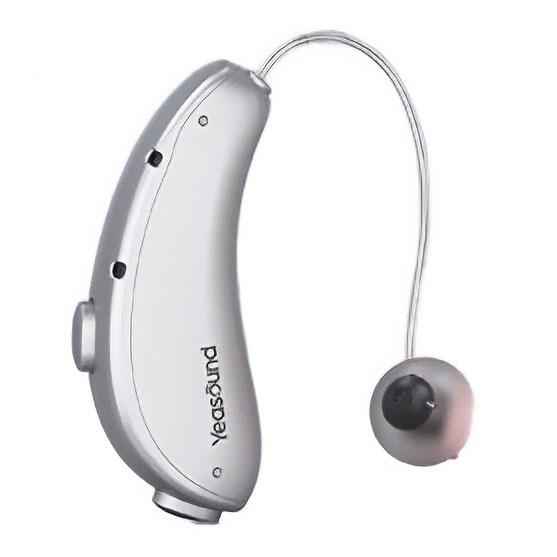
Best OTC for Battery Life: Yeasound RIC800
The Yeasound RIC800 is a rechargeable OTC hearing aid priced at just $699 a pair. It's streams to both both iPhone and Android, and scored in the top 5% of all OTC hearing aids tested by the independent HearAdvisor Lab.
Expert Review


The Yeasound RIC800 is a preset-based OTC hearing aid that offers great benefits for people with typical mild-to-moderate hearing loss.
In our acoustic lab, the RIC800 showed great performance in quiet and noisy environments, earning it a HearAdvisor SoundScore of 4.46/5. While this score is better than many prescription hearing aids, the RIC800 relies on presets, meaning it's less customizable than aids custom-tuned based on a hearing test and audiology best practices, like real ear measurements. On the other hand, you can share a third-party audiogram with Yeasound's team of licensed audiologists to receive custom settings recommendations for your unique hearing loss; remote care is included.
Features that round out this OTC hearing aid are the RIC800's excellent battery life of up to 31 hours per charge (plus three full charges from the included portable charging case), solid IPX8 water resistance, and hands-free calling and Bluetooth streaming to iOS and Android with Auracast support. At $699 or less, the Yeasound RIC800 offers great value for an OTC hearing aid, making it one of the best Amazon OTC hearing aids.
Pros
Up to 31 hours of battery life per charge, plus three full charges with portable charging case
Bluetooth 5.2 audio streaming and hands-free calling
Auracast-enabled
AI noise cancellation in adaptive mode
IPX8 water resistance
Professional remote care via the app
Cons
Preset-based setup with limited fine-tuning inside the app
Unknown dust ingress protection
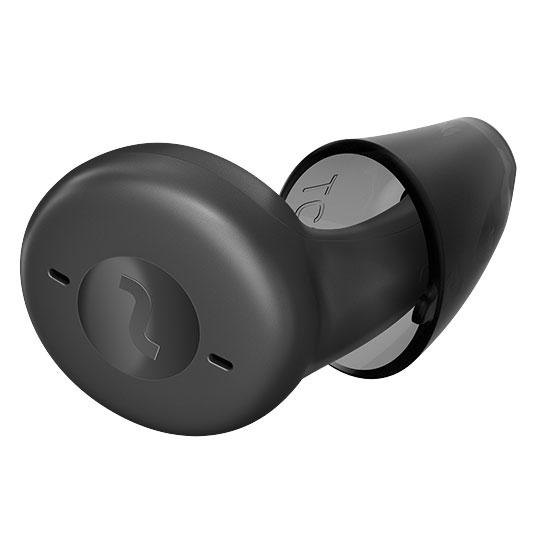
Best Earbud Style Prescription Hearing Aid: Signia Active Pro IX
The Signia Active Pro IX offers the functionality of a high-performance hearing aid in a sleek, earbud-like design, making it ideal for those who value both modern aesthetics and advanced hearing enhancement. Lab tests showed strong performance in speech clarity and music streaming, though its instant-fit design has some limitations, such as reduced feedback handling and lack of custom-fit personalization.
Expert Review

The Signia Active Pro IX (Integrated Xperience) is an earbud style hearing aid that combines cutting-edge hearing technology and modern design. While it gives the impression of an OTC device, it is a prescription hearing aid, but with an instant-fit design and remote care via the Signia app. And because of its lower price tag, Active Pro IX tops our list as the prescription hearing aid with the best overall value (performance vs. cost).
Signia's novel Real-Time Conversation Enhancement (RTCE) technology can dynamically track and enhance multiple speakers in real-time. This feature significantly improves speech clarity in noisy environments.
The Signia Active Pro IX supports Bluetooth streaming for both iOS and Android devices, including hands-free calling for iPhone users. To enable hands-free calling on Android, you can use Signia's StreamLine Mic accessory. With compatibility for Bluetooth LE Audio, you can expect high-quality, low-energy audio streaming. Note that Auracast has not yet been enabled and the Active Pro IX lacks a Telecoil.
Pros
Great speech clarity in background noise
34-hour battery life and user-friendly portable charging case
Wireless audio streaming with Bluetooth LE Audio for iOS and Android; Auracast-ready
Sleek earbud design with universal fit
IP68 rating for dust and moisture protection
User-friendly remote care through the Signia app
Compatible with Signia accessories
Cons
Visible in-ear design
Requires fitting, i.e. not a self-fit OTC option
Instant-fit design, i.e. no custom fit options
No disposable battery option
Lacks Telecoil, i.e. no hearing loop support
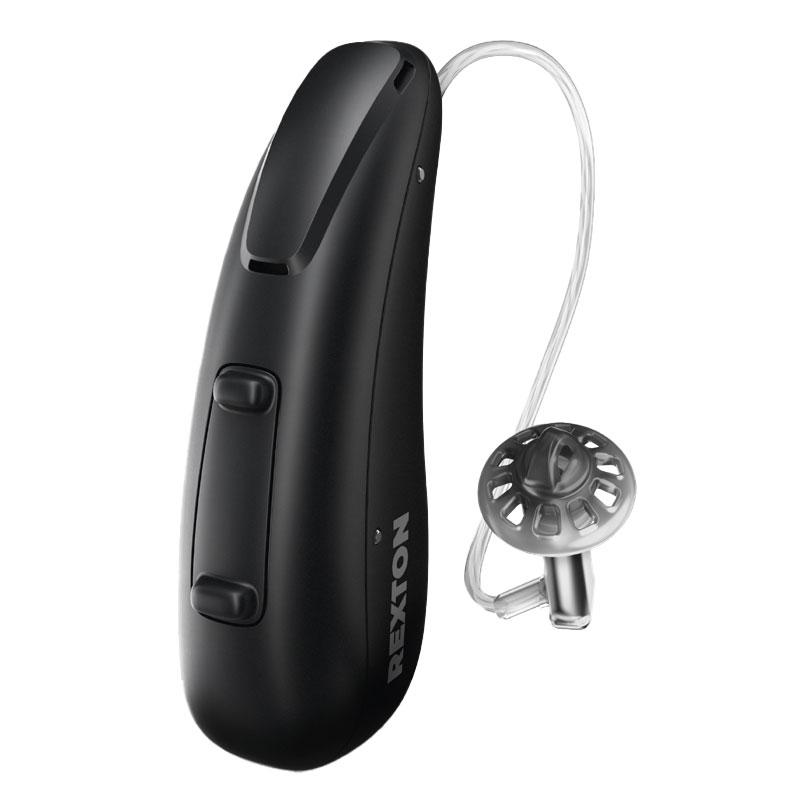
Best Budget Premium Hearing Aid: Rexton Reach
The Rexton Reach R-Li T is a premium receiver-in-canal (RIC) hearing aid, now available at Costco for $1,499 per pair. Given its premium features, outstanding battery life, and strong Bluetooth connectivity, it delivers excellent value for the money.
Expert Review


The Rexton Reach R-Li T is a prescription-grade RIC hearing aid with Multi-Voice Focus technology to deliver advanced speech clarity. In our lab tests, it showed particularly impressive performance in quiet settings (4.1 out of 5 points), but it also produced great results in noisy environments (2.4/5).
The rechargeable hearing aid offers up to 39 hours of battery life per charge, though that drops to 34 hours with 5 hours of audio streaming. The Reach supports wireless streaming and hands-free calling from Android and iPhone via Bluetooth LE Audio. While it does not yet support Auracast, Rexton will soon implement this feature with a simple firmware update. Meanwhile, you can use its built-in Telecoil to connect to open loop systems, where available.
At $1,400, the Rexton Reach is one of the most affordable premium hearing aids. It's available at Costco in the U.S. and Canada; U.S. locations don't require a prescription.
Pros
Excellent value if fitted by a skilled provider
Above average speech-in-quiet and speech-in-noise performance
Exceptional battery life of up to 39 hours per charge
Great wireless connectivity for audio streaming and hands-free calling through Bluetooth LE Audio
Includes a Telecoil
IP68 rating for dust and moisture protection
Intuitive and feature-rich app
Cons
Not suitable for people with severe or complex hearing loss
Below average music streaming quality
Limited accessories compared to clinics and independent practices
Video comparison of the best hearing aids of 2026
In this video, audiologist Matthew Allsop compares six major brands head-to-head on what actually matters: speech-in-noise performance (with sound samples), day-to-day usability, and the real connectivity roadmap (Bluetooth LE Audio + Auracast + telecoil).
How do we pick the best hearing aids?
To select the best hearing aids, we rely on hands-on qualitative and quantitative testing of almost 100 hearing aids in the HearAdvisor and HearingTracker labs. For each category featured here, we applied tailored selection criteria. We list the best hearing aids in each of these categories in separate articles, for example the best hearing aids for music. In those articles, we outlined how we picked these hearing aids in more detail. The winners of each category make up the list of best hearing aids presented here. This list is updated as soon as new products top the list in one of the categories we’re testing. We select categories to explore in individual articles based on the hearing aid features we know HearingTracker readers want.
How do I choose the best hearing aid?
Before trying to pick your own hearing aid, check out this list of considerations. You might be surprised by how complicated the process is.
- Your hearing loss severity - You need a hearing aid that is capable of providing adequate amplification. If you have a severe or profound hearing loss, you’ll need a device that can produce higher sound levels.
- Your ability to hear speech in noise - Speech in noise testing should be performed at every hearing evaluation. If you perform well on the test with amplification, hearing aids are likely to help you in noisy environments.
- Brand accessibility - Certain brands may not be accessible in your area. This may limit your options.
- Important features - Your hearing professional should get to know your listening needs and goals and suggest hearing aid features that can give you the most satisfaction and benefit.
- Your lifestyle - More advanced hearing aids are geared towards meeting the needs of those with the most active lifestyles. If you find yourself in more complex listening environments you should consider purchasing higher technology.
- Best practices - Does your hearing care provider follow best practices? If you aren’t receiving real ear measurement testing, you probably won’t get the most out of your hearing aids, even if they are top-of-the-line!
Looking to understand the available hearing aid features? Check out Hearing Tracker’s hearing aid matching engine.
:format(webp))
How much do hearing aids cost?
We recently surveyed U.S. hearing aid owners to understand what people actually pay out of pocket across today’s major purchase channels—including traditional clinics, insurance-supported purchases, Costco, and over-the-counter (OTC) options. In our latest survey, the average price paid for a pair of hearing aids was $2,694 (with prices ranging from under $100 to over $8,500, depending on the device and where it was purchased).
If you’d like to dig deeper, we break the data down by purchase channel, technology level, and brand, including how much people typically save with insurance and at Costco compared with traditional clinics. Read the full breakdown on our hearing aid cost page.
Where should I purchase hearing aids?
Hearing aids are typically purchased from a local hearing healthcare practice. When shopping for hearing aids, we recommend working with a local practice that offers critical services like Real-Ear Measurements (REMs).

Most hearing clinics offer an array of different hearing aid models (and should work with multiple brands). Depending on your specific needs, and budget, you may pay anywhere from $1,500 - $8,000 (or more) for a pair of hearing aids.
There are also a few trusted online retailers, like ZipHearing, that work with local clinics to offer fixed price hearing aid + service bundles. We know that ZipHearing works directly with reputable hearing aid manufacturers, which is important because some online retailers sell “grey market” products that have dubious product warranties. The company also has a good reputation within the audiology community. Note: HearingTracker parters with ZipHearing and other national providers to offer discounted hearing aid prices to its visitors.
If you’re considering purchasing prescription hearing aids from an online retailer, be sure to do a comprehensive investigation of the business before sending them your credit card details. There have been many fly-by-night operations, like BuyHear.com, which left customers in the lurch after shutting down operations. And, aside from the fraud risks, prescription hearing aids are also capable of producing very high decibel levels—we recommend having them fit in person by a licensed professional who performs real-ear measurements. We’ve published a list of what we’ve determined as the best value (performance vs. price) prescription hearing aids that might get you started.
If you’re looking for a safer do-it-yourself option, and have no worse than mild to moderate hearing loss, take a look at all the OTC products we’ve reviewed including Walmart hearing aids, Amazon hearing aids, Sam’s Club hearing aids, Lexie, Jabra Enhance, and Audicus.
)
Abram Bailey, AuD
Founder and PresidentDr. Bailey is a leading expert on consumer technology in the audiology industry. He is a staunch advocate for patient-centered hearing care and audiological best practices, and welcomes any technological innovation that improves access to quality hearing outcomes. Dr. Bailey holds an Au.D. from Vanderbilt University Medical Center.
)
Dr Steve Taddei
Doctor of AudiologySteve Taddei, Au.D., merges his audio engineering degree from Columbia College Chicago with his doctorate in audiology from Northern Illinois University to advance hearing technologies and raise hearing loss awareness as the Lab Director at HearAdvisor. He also contributes consumer-focused hearing aid and earplug reviews at HearingTracker.com, and inspires future professionals through his adjunct faculty roles at several colleges, encouraging the next generation to discover and pursue their passions.