Wir überprüfen jeden von uns empfohlenen Artikel unabhängig und schätzen Ihr Vertrauen und Ihre Unterstützung. Wenn Sie über unsere Links kaufen, erhalten wir möglicherweise eine Provision.Mehr erfahren.
Shop
Top-AuswahlTop 10 ansehen
Unabhängig. Unvoreingenommen.
Produktbewertungen.
Hörhilfen
  • Erste Schritte
  • Beste Hörhilfen
  • Hörhilfen vergleichen
  • Preise für Hörhilfen
  • Freiverkäufliche Hörhilfen
  • Kaufanleitung
  • Nachrichten zu Hörhilfen
  • Hörgeräte-Forum
Top-Marken
  • Phonak
  • Oticon
  • Starkey
  • Signia
  • ReSound
  • Widex
Ressourcen
  • Hörverlust
  • Tinnitus
  • Ohrenschmalz
  • Ohrstöpsel
  • Hörvermögen testen
  • Facebook-Gruppe
  • Zubehör-Shop
Über uns
  • Über das Team
  • Wie wir bewerten
  • Mitwirkende
  • Kontaktieren Sie uns
Abonnieren Sie für die neuesten Nachrichten und Bewertungen von uns
Unabhängige Hörgeräte-Bewertungen & Ratings
Aktuelle Branchennachrichten & Experteneinblicke
Kostenlos. Kein Spam. Jederzeit abbestellbar.
Mit dem Abonnieren stimmen Sie unserer Datenschutzrichtlinie zu.
  • Allgemeine Geschäftsbedingungen
  • Datenschutzrichtlinie
© 2026 HearingTracker. Alle Rechte vorbehalten.English
Redaktionell
  1. Startseite
  2. Die besten wasserdichten Hörg ...

The Best Waterproof Hearing Aids of 2026

Matt Hay
Written by
Matt Hay
Written by
Abram Bailey, AuD
Audiology review
Abram Bailey, AuD
Independent Testing
HearAdvisor Lab
Aktualisiert am Jan 30, 2026·Wie wir testen

Unser Expertenteam wählt Produkte sorgfältig aus und testet sie gründlich. Wenn Sie über unsere Links kaufen, erhalten wir möglicherweise eine Provision. So halten wir unsere Bewertungen unabhängig.

Warum uns vertrauen?
295+Stunden Audioaufnahmen
95Getestete Hörgerätemodelle
5Branchenführende Audiologen
13Jahre unabhängig geführt & betrieben

2026 Guide Includes:
4 models benchmarked in our lab.

So testen wir

Unsere Empfehlungen

Top-AuswahlIP68+ Prescription Hearing Aid
Phonak Audéo Infinio Ultra
Ab $3,998 pro Paar|Vollständigen Test lesen
Phonak Audéo Infinio Ultra
4.4/5

Phonaks Infinio Sphere bietet dank des DEEPSONIC "Sphere mode" wirklich herausragende Sprachklarheit an lauten, lärmigen Orten, aber Sie müssen auf etwas Diskretion verzichten und könnten Schwierigkeiten mit der Passform oder Bluetooth-Kopplung haben, um diese erstklassige Leistung zu erreichen.

Warum wir es ausgewählt haben
  • The Phonak Audéo Infinio (Ultra) Sphere can resist water exposure beyond it's IP68 rating.
Kompromiss: Phonak's warranty does not cover damage from immersion in water, but neither do other hearing aid manufacturers.
Details ansehen
IP68+ Prescription Hearing Aid
Starkey Omega AI
Vollständigen Test lesen
Starkey Omega AI
4.2/5

Edge AI ist mit Starkels brandneuem G2 Neuro Processor ausgestattet, der über eine integrierte Neural Processing Unit verfügt. Diese klassifiziert komplexe Soundlandschaften, verbessert Sprache und reduziert Geräusche in Echtzeit mithilfe fortschrittlicher KI.

Details ansehen
IPX8 OTC Hearing Aid
Yeasound RIC800
Ab $599 pro Paar|Vollständigen Test lesen
Yeasound RIC800
4.2/5

Das Yeasound RIC800 ist ein wiederaufladbares OTC-Hörgerät zum Preis von nur $699 pro Paar. Es streamt sowohl zu iPhone als auch zu Android und erzielte bei den vom unabhängigen HearAdvisor Lab getesteten OTC-Hörgeräten eine Platzierung in den Top 5%.

Details ansehen

Comparing the Best Waterproof Hearing Aids

Produkt
Top-Auswahl
Phonak Audéo Infinio Ultra

Phonak Audéo Infinio Ultra

Seite besuchen
Starkey Omega AI

Starkey Omega AI

Seite besuchen
Yeasound RIC800

Yeasound RIC800

Seite besuchen
Audicus Omni 2

Audicus Omni 2

Seite besuchen
Unsere Bewertung4.4/54.2/54.2/54.2/5
UrteilIP68+ Prescription Hearing AidIP68+ Prescription Hearing AidIPX8 OTC Hearing AidIP68 OTC Hearing Aid
PreisFrom $3,998 / pair—

Prices and availability are subject to change. We independently review each item we recommend and appreciate your trust and support. When you buy through our links, we may earn a commission.

As body-worn electronic devices, hearing aids are particularly prone to the corrosive effects of humidity and perspiration. If you want your hearing aids to work without interruption, keeping them protected from moisture is the single most important thing you can do.

Over the years, hearing aid manufacturers have made huge advances in water-proofing their products. With the introduction of rubber seals and nano-coating, some hearing aids are even rated for shallow underwater use. Here, we introduce you to the best "waterproof" hearing aids.

Despite these improvements, moisture continues to be a serious issue for hearing aids, and knowing the basics of better care, especially how to keep them dry, can help you avoid any downtime related to moisture damage, which is what we cover in the second part of this article.

Reviewing the Best “Waterproof” Hearing Aids

From the Editors: While there is no such thing as a truly waterproof hearing aid, Hearing Tracker’s list of Best Hearing Aids in 2026 includes a number of models that have achieved a rating of “IP68” on the Ingress Protection rating scale. The “6” in the IP rating indicates excellent resistance to solid contaminants (“dust-tight, no ingress of dust over two-to-eight hours”), and the “8” indicates excellent water resistance (“resists periods of immersion under water,” generally up to 3 meters, or 9.8 ft).

Following are several of our picks for best hearing aids that also score at the top of the IP scale. Note that while all the models get great reviews for technical excellence and user satisfaction, we don’t rank them in order of preference.

Phonak Audéo Infinio (Ultra) Sphere

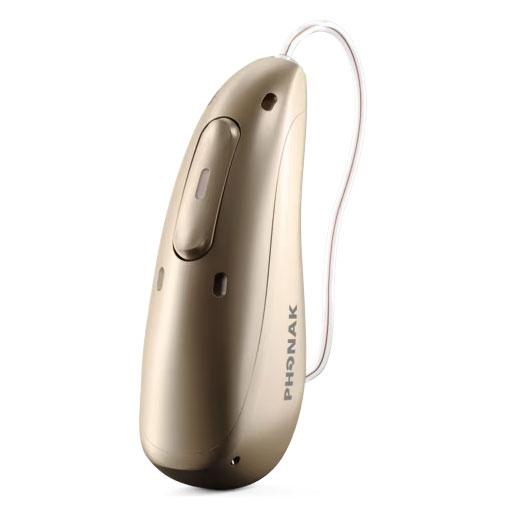
Technically, no hearing aid we know of is suitable for swimming and diving, but Phonak's flagship comes close. The Audéo Sphere Infinio from Phonak has an Ingress Protection (IP) rating of IP68+, the highest attainable level for hearing aids. Like all hearing aids on this list, models of the Infinio family are compatible with an active lifestyle and can withstand exposure to moisture, water, high temperatures, and more.

Phonak says it has put Infinio through 10,000 hours and 135 different “torture tests,” ensuring it is mechanically robust and resistant to water and dirt/debris. While Phonak doesn't recommend users to swim or shower with Infinio hearing aids, these tests and the resulting "+" in the IP rating indicate that the devices can resist sweat and water exposure beyond IP68 requirements, provided they are wiped dry before recharging. Phonak noted that other IP68-rated hearing aids failed acoustic survival when put through similar tests, while the company's own devices had a 70% survival rate.

Table showing the results of four functionality tests (listening, charging, function, and acoustic) after 11 cycles of a 20-hour Mean Time to Failure test for hearing aids form Phonak and two unnamed competing brands.
After 11 cycles of a 20-hour test, which exposed the tested hearing aids to synthetic sweat spray, humidity condensation, and high-heat drying, all 16 IP68-rated hearing aids of two unnamed competitors failed the acoustic test, while 7 of the 10 tested Phonak Audéo devices passed all four tests.

In addition to being one of the most robust hearing aids, the Sphere Infinio is also the world's first hearing aid powered by a dedicated real-time AI chip for speech-from-noise separation, giving Sphere Infinio an outstanding 10 dB signal-to-noise ratio (SNR) benefit—a level previously unattainable in real-world hearing aids without the use of an accessory like a remote microphone. The rechargeable hearing aids are said to provide 16 hours of power under normal use. Sphere is one of the highest-ranking hearing aids on the HearAdvisor SoundGrade Leaderboard and our pick for the best hearing aid overall.

In October 2025, Phonak upgraded Infinio to Ultra Infinio, a firmware update that brings next-gen AI hearing aids with clearer 360° voice enhancement, easier maintenance, and all-day battery life. The Ultra update targets two of the most persistent challenges faced by hearing aid users: enhancing clear speech understanding from every direction and introducing a new system to prevent earwax from degrading hearing aid performance. Importantly, Infinio Ultra also achieves this with lower power consumption from its rechargeable batteries compared to previous models—providing a minimum of 16 hours of use with 3 hours of Spheric Clarity 2.0 and 5 hours of audio streaming, and up to 56 hours without these features.

Starkey Omega AI

Starkey's previous flagship hearing aids, Edge AI, are IP68+ rated for dust- and water resistance, meaning they can withstand sweat, rain, dirt, and brief submersions in water. Eight protective barriers make Edge AI hearing aids waterproof up to 3.28 ft (1 meter) for 30 minutes and protect them from corrosion.

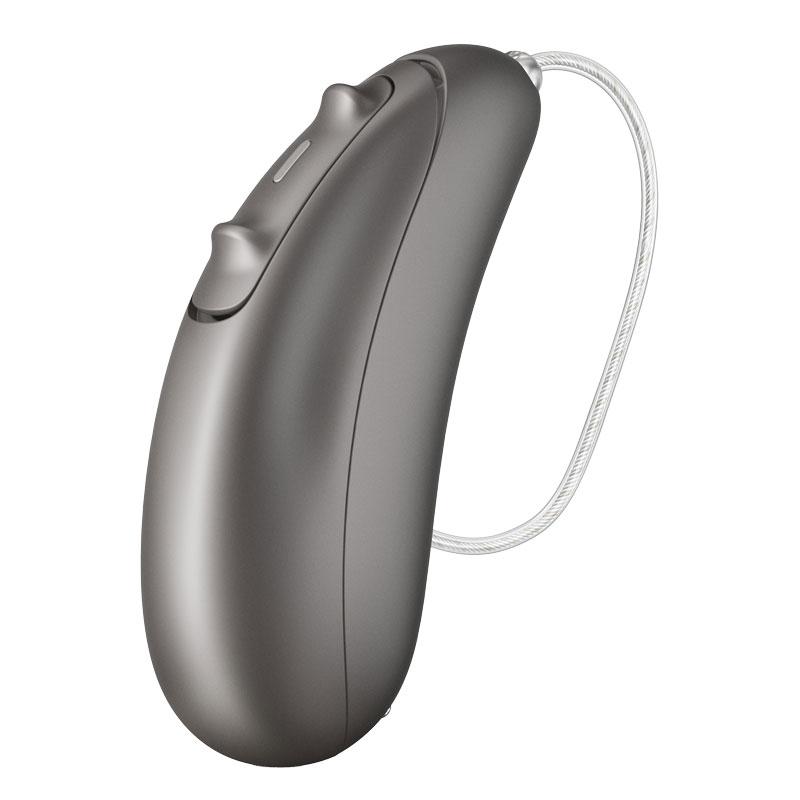
And with it's latest Omega AI hearing aids, introduced in October 2025, Starkey has used a proprietary Pro10 HydraShield™ waterproof coating that is even more durable.

Like Phonak, Starkey has gone beyond the standard testing, devising its own "torture chamber" water tests for the Omega AI and Edge AI families of hearing aids. In addition to simulating sweat, high humidity, rain, and high temperature, these hearing aids were tested with exposure to chlorinated water, immersion in salt water, and the waterproofness of exposed internal components, stripped from its external housing. Based on the materials we reviewed, the tested hearing aids meet the ASTM F1980 standard for accelerated aging, the IEC 60068-2-78 standard for environmental testing, and the MIL-STD-810 standard for withstanding salt fog and its associated corrosion. To extend a hearing aid's lifespan, good maintenance is critical, which includes wiping the device dry after exposure to water. Starkey also recommends using a hearing aid dehumidifier.

Starkey Omega hearing aids are powered by the N3 "Neuro Processor" that uses AI to enhance speech clarity and reduce background noise, while imparting a more natural spatial listening experience. In our independent HearAdvisor testing, Omega AI had a Tuned Score of 4.6 out of 5, earning a 2025 Expert Choice Award from the lab. Edge AI was said to have as much as 13 dB SNR improvement, and Omega AI offers up to a 28% improvement in speech intelligibility and a 6.5 dB gain in speech reception thresholds “over previous Starkey models,” says the company.

The micro receiver-in-canal (mRIC) model is one of the smallest mRICs currently available on the market. Nevertheless, the rechargeable battery achieves an impressive 51-hour battery life per charge, making it one of the best rechargeable hearing aids. With its integrated biosensors that track activity levels, detect falls, monitor social engagement, and feature other capabilities enabled by artificial intelligence and machine learning, Edge AI fully supports an active lifestyle.

Yeasound RIC800

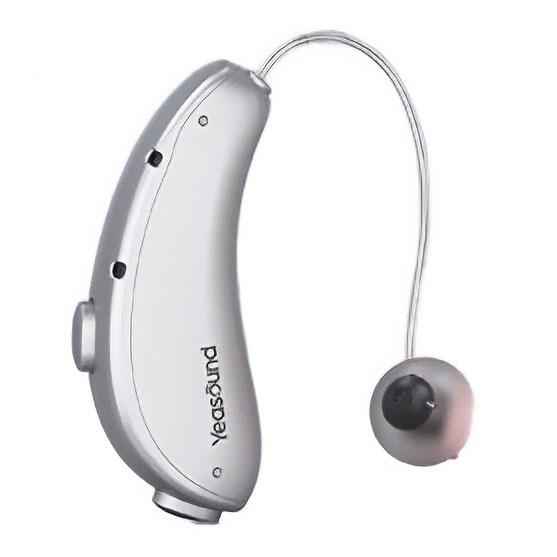
The Yeasound RIC800 is an OTC hearing aid that carries an IPX8 rating; its dust ingress protection is untested, hence the X. In our hands, the RIC800 appeared well-built, approaching the feel of a prescription hearing aid.

Since our original review of the RIC800 in February of 2026, Yeasound has added an app-based hearing test via firmware update, possibly moving the RIC800 beyond preset-only fitting. The company also accepts audiograms by email for remote programming. We’re retesting the RIC800 using the new hearing test feature to confirm how it impacts performance. Check back for our updated verdict.

Despite relying on presets, rather than a hearing test or screener, the RIC800 performed well in our lab, which landed it among the best OTC hearing aids. In addition to switching between five presets, you can fine-tune four of the presets with a three-band equalizer and adjust the noise reduction level and directionality.

With a battery life of up to 31 hours per charge, it's also one of the best rechargeable hearing aids on the market. However, streaming audio or using the AI-powered adaptive mode, which is one of the presets, will have a negative impact on battery life.

Yeasound offers a generous 100-days free trial, which is more than what you'll get with most hearing aids, including prescription devices.

Alternative Options

As with most OTC devices, you won't have access to support from a hearing care professional. If this is important to you, we recommend looking into the Jabra Enhance Select 700, which includes lifetime remote care by licensed hearing care specialists and carries an IP68 rating.

ADVERTISEMENTad for OticonADVERTISEMENTad for Oticon

If you have access to a Costco Hearing Center, however, you might be better-off with the Rexton Reach or the Jabra Enhance Pro 30, prescription hearing aids with an IP68 rating. Both cost around the same as the Enhance Select 700 and include in-person fittings and follow-up care from licensed professionals, which tends to yield better results in the long-term. As an added bonus, the Jabra Enhance Pro 30 fully supports Auracast broadcasts, while most other hearing aids are still pending a firmware update to enable Auracast.

Audicus Omni 2

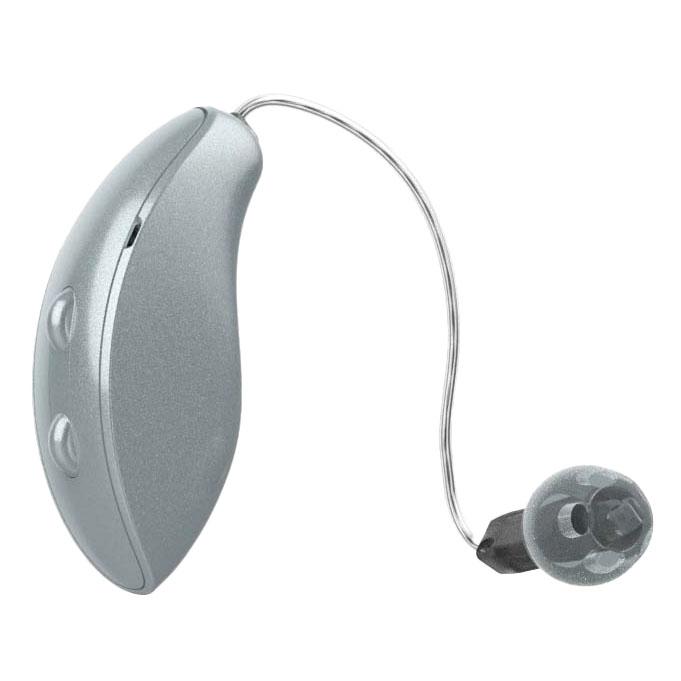
The Audicus Omni 2 is another IP68-rated OTC hearing aid option. Unlike many other OTC devices, if you don't need a pair, Audicus lets you purchase an individual hearing aid unit.

Based on Unitron technology from Sonova, the Omni 2 brings you speech in quiet and speech in noise benefits that are similar to the Yeasound RIC800. While the RIC800 scored slightly better in our tests, the Omni 2 is programmed remotely and can be fine-tuned based on a professional hearing test. Audicus offers professional hearing care services, including hearing aid programming and remote care.

Inside the app you'll find a three-band equalizer with the option to store settings for streamed audio and speech separately.

ADVERTISEMENTad for ReSound

The battery life of only 16 hours per charge might be a deal breaker, though you could opt for the version with a replaceable battery.

How We Picked the Best Waterproof Hearing

Aids

To find the best (nearly) waterproof hearing aids, we filtered for hearing aids with an ingress protection (IP) rating of X8 or more. From the resulting list, we looked for products with a high HearingTracker Score to select the best performing prescription, over-the-counter, and invisible hearing aids available on the market today.

Do Your Research Before Purchasing!

If you live in a humid environment, or are prone to heavy perspiration, be sure to carefully investigate the options, and pay special attention to the IP ratings of the hearing aids offered by your hearing care professional. Be sure to consult our list of IP-rated hearing aids, and if your product is missing from the list above, drop a comment in the discussion area below. We are here to help!

Moisture Impacts All Hearing Aids

Recent research by Redux (a commercial hearing aid dryer company) revealed that 98%* of all hearing aids have some amount of moisture present. This isn’t surprising when considering the environment hearing aids operate in:

  • Hearing aids spend hours surrounded by skin, an organ that releases moisture (sweat) to control your body temperature.
  • The effects of perspiration may worsen due to exercise, certain medications, or underlying health conditions.
  • Humidity exists as a vapor, allowing it to pass through barriers that are traditionally water-resistant. Consider that most homes keep water out with a roof and solid foundation, but all homes have moisture in them due to a level of humidity in the air.
  • Your hearing aids can get wet when it’s cold out, too. If you wear glasses, you know they sometimes fog up when you come inside from the cold. That’s condensation due to the fast temperature change, and it can also create a layer of moisture on your hearing aids.
  • And, no surprise, rain is a constant threat to hearing aids. More on that below.

Humidity and Hearing Aids

“The two primary culprits to cause problems with hearing aids are wax and moisture,” writes Scot Frink, AuD, an audiologist based in Salem, Ore.  “Some are less vulnerable to wax issues because of their design, but because of humidity, ALL hearing aids are susceptible to the effects of moisture to some degree. Even the rechargeable instruments, while they benefit from some heat from the recharging process, can still benefit from the use of a dehumidifier—and some manufacturers have started incorporating [dehumidifiers] into the recharging case as a result. Manufacturers don't like having to repair hearing aids, so whatever they can do to reduce that they will.

ADVERTISEMENTad for ReSoundADVERTISEMENTad for Phonak

“At a minimum, what generically is called a 'Dry Aid Kit' (DAK) should be used,” continues Dr. Frink. “This is a small sealable jar or cup that has desiccants in it that absorb moisture from the hearing aids and retail for around $10-$20. That small investment can save a lot when it comes to repairs. Moist hearing aid users can do just fine with DAK's.

*Based on Redux Inc. measurements of moisture removed from more than 750 hearing aids by hearing care professionals in multiple practices, states, and countries using the Redux vacuum chamber drying system,

Warning Signs of Water Damage

Corrosion and other damage to your hearing aids can build up over time. If you have an in-the-ear (ITE) hearing aid, sweat can quickly accumulate between the eardrum and the sensitive receiver.

Other form factors are also prone to moisture problems. The popular open-fit receiver-in-the-canal (RIC) hearing aids insert the speaker deep within your ear canal, where it’s surrounded by warm, moist air. The receiver is attached to a thin wire extending to the hearing aid processor sitting behind your ear, where there are additional opportunities for moisture buildup. And traditional behind-the-ear (BTE) hearing aids have an air tube extending from an ear mold in the ear, where moisture can build up quickly.

Here are a few warning signs that indicate your hearing aids may be on the way to failure:

  • Static or crackling sounds—corrosion of electrical connections can create a lot of unwanted static in your ears.
  • Distorted sounds or fluctuations in volume—damaged connections can create uneven performance in the audio output of your hearing aid.
  • Intermittent outages—if your hearing aid suddenly turns off, then turns back on, corrosion may have damaged the contacts close to their final breaking point.

If you wear behind-the-ear hearing aids, sometimes a small drop of water can find its way into one of the tubes that extend from the ear mold to the processor, blocking all sound from entering your ear. Blowing out the tube is an easy temporary fix. However, the presence of that droplet is a sign that you may need to take additional steps to keep your hearing aids dry.

Can I wear my hearing aids in the rain?

No, hearing aids are not rain-proof, although many hearing aids now have IP68 ratings and extra safeguards that should make them "rain-resistant" or "splashproof.” Having said this, you should try to avoid heavy rain while wearing your hearing aids. Don’t worry—if you’re caught in a light shower as you dash from the grocery store to the car, you most likely won’t destroy your hearing aids. But make sure to take them off and dry them by hand as soon as possible afterward. Then, later, when you can afford to go without them for a few hours, you should dry your hearing aids thoroughly using an at-home or commercial drying system.

ADVERTISEMENTad for Starkey

If you can’t avoid the rain, you might want to wear a wide-brimmed hat to shield your hearing aids. You may also want to grow your hair out to add a little protection.

What are the most moisture-resistant hearing aids?

In the past decade, there’s been a mini revolution in moisture protection for hearing aids. Digital 3D-print manufacturing ensures that the dozens of tiny components integrated into hearing aids fit more perfectly with each other and within their case. A better fit means less room for moisture to penetrate the components.

And new nanotechnology-based materials provide further protection. Nano coatings are polymer layers, one thousand times thinner than a human hair, applied when the aid is made. They cover the hearing instrument with a compound that repels water and moisture very effectively.

The good news is that all major hearing aid brands have dramatically improved the water resistance of their products. Premium-level hearing aids feature higher levels of water resistance. Less costly hearing aids may have lower ratings for protection but are more reliable now than in the past. However, keep in mind that there are currently no completely waterproof hearing aids available on the market.

IP Ratings Measure Water and Dust Resistance

When you’re shopping for a hearing aid, it’s helpful to look at the IP ratings (Ingress Protection) published by manufacturers for their products. IP ratings classify the level of protection that the casing of a hearing instrument provides against solids and liquids entering and damaging the device.

If you live somewhere with high humidity, if you work in an outdoor job, if you naturally sweat a lot, or if you are routinely exposed to other high-moisture environments, it will be important to ask for a highly-rated product. IP ratings are usually made up of two digits, the first denoting resistance to solids and the second to liquids.

IP ratings can be a helpful guide, but it’s important to note that ratings are assigned in laboratory conditions with “clean” water rather than sweat or rain. Additionally, IP ratings are not certified and may not reflect intended use. So, while a high IP rating is desirable, it does not guarantee moisture protection in the real world.

IP Rating

Protected Against

IPX1

Dripping water

IPX2

Dripping water when tilted at 15°

IPX3

Spraying water

IPX4

Splashing of water

IPX5

ADVERTISEMENTad for PhonakADVERTISEMENTad for Signia

Note: The X in the first position means that the dust resistance is unknown.

Earbuds and OTC Hearing Aids Need to Stay Dry, Too

Over-the-counter hearing aid brands like Elehear, Yeasound, or Bose/Lexie, as well as hearables like Apple are continuing to expand their footprint into what is projected to be an $80B “hearables” (smart wireless earbuds) market by 2025. And moisture is an issue for this burgeoning product category of ear-worn devices, just like it is for prescription hearing aids.

While Apple markets its hugely popular AirPods Pro earbuds as “sweat and water resistant,” the product footnote adds an important disclaimer: AirPods are only designed for “non-water sports and exercise…. Sweat and water resistance are not permanent conditions, and resistance might decrease as a result of normal wear.”

What are the benefits of dry hearing aids?

There are some very specific benefits you’ll get when keep your hearing aids dry.

  • Better sound - Because modern hearing instruments are packed full of digital circuits and components, it only takes a very small amount of moisture to negatively impact sound quality. In fact, audiometric testing by Redux Inc. found that only 0.5 microliters of moisture was enough to cause a 30-dB reduction in hearing aid volume. That’s a big difference for someone with hearing loss.
  • More reliable - Manufacturers report that a large percentage of returns are due to moisture damage and other related issues. This represents thousands of hearing aids returned to manufacturers each month, with returns increasing dramatically during the hotter and more humid summer months. Dryer products mean fewer returns are required.
  • Longer lasting hearing aids - What is the life expectancy of a hearing aid? A good percentage of users upgrade their hearing aids every three or four years, but often their old hearing aids still work and can be donated to people who need them. The lifespan of hearing aids seems to be getting longer all the time, and the simple act of drying them out frequently can keep them healthy for years.

Making Your Hearing Aids Last

Results from a quick poll conducted by Hearing Tracker revealed that three out of every four hearing aid users replaces their hearing aids every 3-5 years. If you want your hearing aids to last beyond the typical 2-3 year manufacturer warranty, be sure to learn best practices for keeping your hearing aids dry!

How often do you replace your hearing aids?

We asked over 175 people on our hearing aid forum how often they replace their hearing aids. Here are the results:

ADVERTISEMENTad for Signia

How often do you replace your hearing aids?

Percent of People

1 year

1%

2 years

6%

3 years

29%

4 years

23%

5 years

How do you get moisture out of a hearing aid?

Keeping your hearing aids dry can be as simple as putting them in a drying container and leaving them overnight. Or for a total dry-out, many audiologists offer more sophisticated commercial drying systems in their offices.

ADVERTISEMENTad for WidexADVERTISEMENTad for Yeasound

Drying systems typically evaporate all the moisture that’s collected in your hearing aids, including the ear molds. The systems will even dry out the irritating droplets of water that block the sound from passing through a behind-the-ear hearing aid tube.

Depending on the climate you live in and how moist your ears are, there are a range of solutions and price levels to choose from:

1. Rice: The World’s Oldest Drying “Technology”

This 8,000-year-old drying “technology” is widely available and will cost you about $2.00. However, there is little science to prove whether this method is any more effective than leaving your hearing aid out on a sunny countertop. And unfortunately, rice exposes your valuable electronics to tiny dust and starch particles that risk greater damage than moisture may have caused alone.

2. Dry Aid Kits

A dry aid kit is a small sealable jar or cup that has desiccants (tiny beads similar to what you might find in packets when you buy new shoes) that absorb moisture from the hearing aids. Dry aid kits can be found in most drugstores and retail for around $10-$20. They are a small investment and worth keeping on-hand for regular use, and for minor moisture issues that can typically be resolved overnight.

The desiccants themselves, loose beads or contained in a small disc, need to be "recharged" every few months in an oven per the dry kit directions. Eventually, the entire kit should be replaced, and in most areas they last about 5 years.

Hal Hen Mini Dri Aid Kit
Mini Dri-Aid from Hal Hen uses a dessicant to help eliminate moisture from hearing aids overnight.

A few examples of these kits include:

Stay Dri Dehumidifier – This basic rechargeable dryer is large enough for two hearing aids, earbuds, or sound processors.  It’s affordable and the color-coded desiccant package is easy to refresh in the microwave.

ADVERTISEMENTad for Yeasound

Audiologist’s Choice Dehumidifier – Patriotic Eagle – Similar to the Stay Dri, but in an eye-catching patriotic-themed case.

Mini Dri-Aid (Hal-Hen/Warner Tech Care) – Uses a dessicant to help eliminate moisture from hearing aids overnight.

3. Heat and Fan System

Heat and fan systems can be ordered online for $80-$120. While the cost is higher, these systems are a better option than a standard dry kit for people living in high-moisture environments. They are designed to treat a hearing aid using warm air and heat, similar to a clothes dryer, and often recommended for overnight use. Some have a UV light in them designed to kill bacteria build-up, which may lessen any itchiness in your ears caused by wearing your hearing aids.

Note that the desiccant "bricks" that come with these systems need to be replaced about every two months for about $4.

Dry and Store Heat and Fan Hearing Aid Drying System
Dry & Store's DryMax UV heat and fan hearing aid drying system also has a UV light to kill bacteria.

The original heat and fan system is the Dry and Store.  They offer several models including a few that include uV lights.  All of their models accommodate at least two hearing devices. Dry and Store systems include desiccant bricks which last about 2-3 months.

An alternative to the Dry and Store is the PerfectDry Lux.  This dryer has a uV light, but no desiccant bricks.

4. Vacuum Chamber Drying

The newest technology available for drying aids comes from Redux, a system that audiologists use to dry out their patients’ hearing aids. Redux lowers the boiling point of moisture within a vacuum chamber, monitoring the humidity as it’s reduced to as close to zero as possible. The drying process takes about 12 minutes to remove all moisture from a pair of hearing aids.

Redux Hearing Aid Drying System
The Redux hearing aid drying system uses a vacuum chamber to lower the temperature required to evaporate moisture.

Because the Redux system removes all moisture, it also enhances the effectiveness of ultrasonic processes for deep cleaning of foreign materials, such as wax, salt, and other foreign materials that cause corrosion. According to data compiled by Redux, 76% of all aids treated with the system—even some previously reported as “dead”—showed an immediate improvement.

The Bottom Line

Your hearing aids probably weren’t cheap, and they’re bound to face moisture issues at some point during their lifetime. Hearing aid dryers offer an excellent way to protect your investment, and to ensure that your hearing aids sound better, offer greater reliability, and last longer.

ADVERTISEMENTad for YeasoundADVERTISEMENTad for Oticon

Frequently Asked Questions

Static or crackling sounds, distortion, fluctuations in volume, and intermittent outages are all signs of moisture damage.

There are currently no waterproof hearing aids available on the market. However, many hearing aids are now rated to handle “periods of immersion” in water at a depth of 3 meters (9.8ft) or less.

There is a long list of hearing aids that offer a strong IPX8 water resistance rating. New IPX8 products include Phonak Audéo Sphere Infinio and Starkey Edge AI.

Inexpensive dry aid kits offer a great way to dry out your hearing aids overnight. For more difficult moisture issues, it may be worth investing in a drying system that applies heating and air flow. Many hearing clinics also offer industrial dryers for more rapid and thorough drying.

Diesen Beitrag teilen
  • Best Lists
Warum uns vertrauen?
295+Stunden Audioaufnahmen
95Getestete Hörgerätemodelle
5Branchenführende Audiologen
13Jahre unabhängig geführt & betrieben

2026 Guide Includes:
4 models benchmarked in our lab.

So testen wir

Inhaltsverzeichnis

  • Introduction
  • Best waterproof hearing aids
  • Prescription options
  • IP68+ Prescription Hearing Aid
  • IP68+ Prescription Hearing Aid
  • OTC options
  • IPX8 OTC Hearing Aid
  • IP68 OTC Hearing Aid
  • How we picked
  • Understanding moisture damage
  • Water damage warning signs
  • Wearing hearing aids in the rain
  • Understanding IP ratings
  • The benefits of dry hearing aids
  • How to remove moisture
Schnellurteil

Die 2026 Auswahl

Aktualisiert 2026 • 95+ Getestete Modelle
Top-AuswahlIP68+ Prescription Hearing Aid
Phonak Audéo Infinio Ultra

Phonaks Infinio Sphere bietet dank des DEEPSONIC "Sphere mode" wirklich herausragende Sprachklarheit an lauten, lärmigen Orten, aber Sie müssen auf etwas Diskretion verzichten und könnten Schwierigkeiten mit der Passform oder Bluetooth-Kopplung haben, um diese erstklassige Leistung zu erreichen.

Expertenbewertung
4.4/5
From $3,998 / pair
IP68+ Prescription Hearing Aid
Starkey Omega AI

Edge AI ist mit Starkels brandneuem G2 Neuro Processor ausgestattet, der über eine integrierte Neural Processing Unit verfügt. Diese klassifiziert komplexe Soundlandschaften, verbessert Sprache und reduziert Geräusche in Echtzeit mithilfe fortschrittlicher KI.

Expertenbewertung
4.2/5
IPX8 OTC Hearing Aid
Yeasound RIC800

Das Yeasound RIC800 ist ein wiederaufladbares OTC-Hörgerät zum Preis von nur $699 pro Paar. Es streamt sowohl zu iPhone als auch zu Android und erzielte bei den vom unabhängigen HearAdvisor Lab getesteten OTC-Hörgeräten eine Platzierung in den Top 5%.

Expertenbewertung
4.2/5
$599 pro Paar
Water resistant doesn't equal waterproof

Hearing aids on this list have a minimum ingress protection (IP) rating of 8 for water, e.g., IPX8. This means they can withstand full immersion in up to 3 meters (9.8 feet) of water for 30 minutes or more. Strictly speaking, this doesn't equal waterproofness.

Professionell getestet

Wir haben die meisten hier vorgestellten Hörgeräte in einem speziell gebauten Akustiklabor mit kalibrierten Lautsprechern und räumlich genauen Aufnahmen aus realen Umgebungen getestet.

Alltagsnutzung

Unsere Audiologen trugen jedes Gerät mindestens eine Woche lang und bewerteten Verarbeitungsqualität, Akkulaufzeit, Bluetooth-Stabilität, Komfort, Handhabung, App-Funktionen und Preis-Leistungs-Verhältnis.

Expert selection

We ranked hearing aids rated IPX8 or better based on their HearingTracker Score and selected the best prescription and OTC models.

$599
$1,798
Freisprechen
Wiederaufladbar
iPhone-Streaming
Android-Streaming
Telefonspule

Water jets

IPX6

Powerful water jets

IPX6K

Powerful water jets with increased pressure

IPX7

Immersion, up to 1 meter (3 ft 3 in) depth

IPX8

Immersion, 1 meter (3 ft 3 in) or more depth

IPX9K

Powerful high-temperature water jets

Source: Wikipedia

24%

6 years

4%

7 years

3%

>7 years

10%

Source: Hearing Aid Forum
  • Matt Hay

    Matt Hay

    Gastautorin

    Matt Hay ist Director of Audiology Sales bei Redux, dem Entwickler eines patentierten und preisgekrönten Trocknungssystems für Hörinstrumente, Hearables und Elektronik für den persönlichen Gebrauch. Mit Vakuumkammertrocknungstechnik entfernt Redux die gesamte Feuchtigkeit in Minuten auf Knopfdruck und bietet dabei eine Echtzeitmessung der entfernten Feuchtigkeitsmenge. Diese Technik wird effektiv bei Hörgeräten, Hörimplantaten, Ohrknospen, Mobiltelefonen und zahlreichen anderen elektronischen Geräten eingesetzt. Matt ist oft (langsam) laufend, Rad fahrend und schwimmend im Mittleren Westen unterwegs, um gemeinnützige Organisationen im Bereich Hörkommunikation und Neurofibromatose zu unterstützen.

  • Abram Bailey, AuD

    Abram Bailey, AuD

    Gründer und Präsident

    Dr. Bailey ist ein führender Experte für Verbrauchertechnologie in der Audiologie-Branche. Er ist ein überzeugter Befürworter der patientenzentrierten Hörkommunikation und audiologischen Best Practices und begrüßt jede technologische Innovation, die den Zugang zu qualitativ hochwertigen Hörergebnissen verbessert. Dr. Bailey hält einen Au.D. vom Vanderbilt University Medical Center.

Bewertung
4.2
Starkey Omega AI
Angebot anzeigen
IP68+ Prescription Hearing Aid: Starkey Omega AI
Ab pro Paar

Edge AI ist mit Starkels brandneuem G2 Neuro Processor ausgestattet, der über eine integrierte Neural Processing Unit verfügt. Diese klassifiziert komplexe Soundlandschaften, verbessert Sprache und reduziert Geräusche in Echtzeit mithilfe fortschrittlicher KI.

Wichtige Merkmale

Hands-Free
Wiederaufladbar
Streaming
Streaming
Induktionsspule
Angebot anzeigen

Expertenbewertung

Bewertung
4.2
Yeasound RIC800
Angebot anzeigen
IPX8 OTC Hearing Aid: Yeasound RIC800
Ab $599pro Paar

Das Yeasound RIC800 ist ein wiederaufladbares OTC-Hörgerät zum Preis von nur $699 pro Paar. Es streamt sowohl zu iPhone als auch zu Android und erzielte bei den vom unabhängigen HearAdvisor Lab getesteten OTC-Hörgeräten eine Platzierung in den Top 5%.

Wichtige Merkmale

Hands-Free
Wiederaufladbar
Streaming
Streaming
Induktionsspule
Angebot anzeigen

Expertenbewertung

Bewertung
4.2
Audicus Omni 2
Angebot anzeigen
IP68 OTC Hearing Aid: Audicus Omni 2
Ab $1,798pro Paar

Audicus Omni 2 ist ein elegantes „Premium-OTC"-Hörgerät (RIC) auf Basis bewährter Sonova/Unitron-Technologie mit kompakterem Design, starker Sprachverbesserung in ruhigeren Umgebungen, zuverlässiger universeller Bluetooth-Verbindung und freihändiger Anruffunktion sowie einer einfachen, funktionsfähigen App. Allerdings ist die Akkulaufzeit des wiederaufladbaren Akkus nur mittelmäßig und das Fernbetreuungsmodell wirkt limitierter und weniger modern als bei einigen führenden Direct-to-Consumer-Konkurrenten.

Wichtige Merkmale

Hands-Free
Wiederaufladbar
Angebot anzeigen

Expertenbewertung

Bewertung
4.4
Phonak Audéo Infinio Ultra
Angebot anzeigen
Alle Angebote anzeigen
IP68+
IPx8
Streaming
Streaming
Induktionsspule
IP68
IP68+ Prescription Hearing Aid: Phonak Audéo Infinio Ultra
Ab $4,598pro Paar

Phonaks Infinio Sphere bietet dank des DEEPSONIC "Sphere mode" wirklich herausragende Sprachklarheit an lauten, lärmigen Orten, aber Sie müssen auf etwas Diskretion verzichten und könnten Schwierigkeiten mit der Passform oder Bluetooth-Kopplung haben, um diese erstklassige Leistung zu erreichen.

Ideal für

MusikliebhaberLaute UmgebungenTinnitus-Linderung

Wichtige Merkmale

Hands-Free
Wiederaufladbar
Streaming
Streaming
Induktionsspule
IP68
Angebot anzeigen
Alle Angebote anzeigen

Expertenbewertung