Wir überprüfen jeden von uns empfohlenen Artikel unabhängig und schätzen Ihr Vertrauen und Ihre Unterstützung. Wenn Sie über unsere Links kaufen, erhalten wir möglicherweise eine Provision.Mehr erfahren.
Shop
Top-AuswahlTop 10 ansehen
Unabhängig. Unvoreingenommen.
Produktbewertungen.
Hörhilfen
  • Erste Schritte
  • Beste Hörhilfen
  • Hörhilfen vergleichen
  • Preise für Hörhilfen
  • Freiverkäufliche Hörhilfen
  • Kaufanleitung
  • Nachrichten zu Hörhilfen
  • Hörgeräte-Forum
Top-Marken
  • Phonak
  • Oticon
  • Starkey
  • Signia
  • ReSound
  • Widex
Ressourcen
  • Hörverlust
  • Tinnitus
  • Ohrenschmalz
  • Ohrstöpsel
  • Hörvermögen testen
  • Facebook-Gruppe
  • Zubehör-Shop
Über uns
  • Über das Team
  • Wie wir bewerten
  • Mitwirkende
  • Kontaktieren Sie uns
Abonnieren Sie für die neuesten Nachrichten und Bewertungen von uns
Unabhängige Hörgeräte-Bewertungen & Ratings
Aktuelle Branchennachrichten & Experteneinblicke
Kostenlos. Kein Spam. Jederzeit abbestellbar.
Mit dem Abonnieren stimmen Sie unserer Datenschutzrichtlinie zu.
  • Allgemeine Geschäftsbedingungen
  • Datenschutzrichtlinie
© 2026 HearingTracker. Alle Rechte vorbehalten.English
Redaktionell
  1. Startseite
  2. Beste wiederaufladbare Hörger ...

Best Rechargeable Hearing Aids of 2026 (Audiologist Tested)

We lab-tested 95+ rechargeable hearing aids for sound quality, features, and fit. See our top picks.
Abram Bailey, AuD
Written by
Abram Bailey, AuD
Independent Testing
HearAdvisor Lab
Aktualisiert am May 13, 2026·Wie wir testen

Unser Expertenteam wählt Produkte sorgfältig aus und testet sie gründlich. Wenn Sie über unsere Links kaufen, erhalten wir möglicherweise eine Provision. So halten wir unsere Bewertungen unabhängig.

Warum uns vertrauen?
295+Stunden Audioaufnahmen
95Getestete Hörgerätemodelle
5Branchenführende Audiologen
13Jahre unabhängig geführt & betrieben

2026 Guide Includes:
7 models benchmarked in our lab + 2 other reviewed products.

So testen wir

Unsere Empfehlungen

Top-AuswahlBest Overall Rechargeable Hearing Aid
Phonak Audéo Infinio Ultra
Ab $3,998 pro Paar|Vollständigen Test lesen
Phonak Audéo Infinio Ultra
4.4/5

Phonaks Infinio Sphere bietet dank des DEEPSONIC "Sphere mode" wirklich herausragende Sprachklarheit an lauten, lärmigen Orten, aber Sie müssen auf etwas Diskretion verzichten und könnten Schwierigkeiten mit der Passform oder Bluetooth-Kopplung haben, um diese erstklassige Leistung zu erreichen.

Warum wir es ausgewählt haben
  • The best overall prescription hearing aid
  • Ultra upgrade improved battery efficiency
  • Your hearing care provider can replace the battery
Kompromiss: Only 16 hours of battery life per charge, but the portable charging case adds three full charges.
Details ansehen
Best for Battery Life
Starkey Edge AI
Vollständigen Test lesen
Starkey Edge AI
4.2/5

Edge AI ist mit Starkels brandneuem G2 Neuro Processor ausgestattet, der über eine integrierte Neural Processing Unit verfügt. Diese klassifiziert komplexe Soundlandschaften, verbessert Sprache und reduziert Geräusche in Echtzeit mithilfe fortschrittlicher KI.

Details ansehen
Best Rechargeable OTC
Elehear Beyond Pro
Ab $649 pro Paar|Vollständigen Test lesen
Elehear Beyond Pro
4.4/5

Elehears $599 Beyond Pro ist ein funktionsreiches, selbstanpassendes rezeptfreies Hörgerät, das klaren, natürlichen Klang und starke Sprachverständlichkeit bei Hintergrundgeräuschen zum Preis bietet – und meiner Meinung nach war ich, obwohl es nicht fehlerfrei ist, wirklich beeindruckt von dem Wert und der realen Leistung, die es für das Geld bietet.

Details ansehen

Comparing the Best Rechargeable Hearing Aids

Produkt
Top-Auswahl
Phonak Audéo Infinio Ultra

Phonak Audéo Infinio Ultra

Seite besuchen
Starkey Edge AI

Starkey Edge AI

Seite besuchen
Elehear Beyond Pro

Elehear Beyond Pro

Seite besuchen
Oticon Intent

Oticon Intent

Seite besuchen
Rexton Reach

Rexton Reach

Seite besuchen
ReSound Vivia

ReSound Vivia

Seite besuchen
ReSound Nexia

ReSound Nexia

Seite besuchen
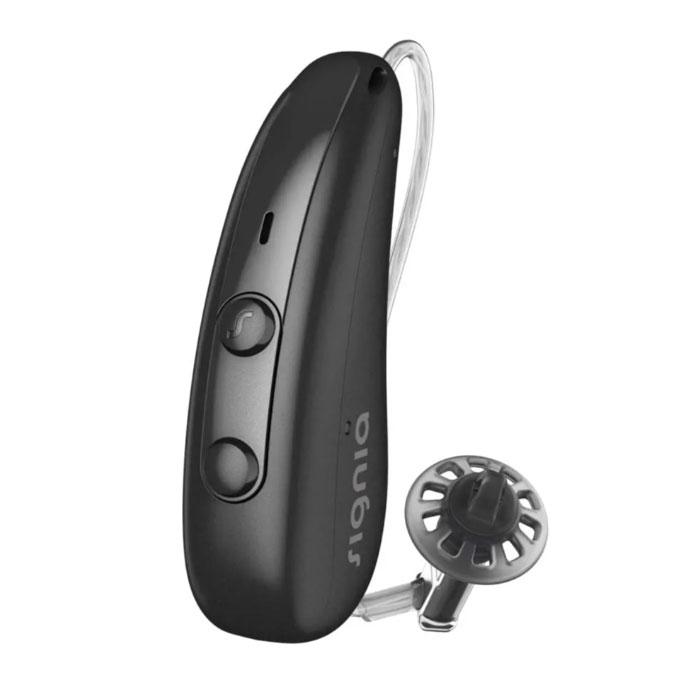
Signia Pure Charge&Go IX

Signia Pure Charge&Go IX

Seite besuchen
Widex MOMENT

Widex MOMENT

Seite besuchen
Unsere Bewertung4.4/54.2/54.4/54.4/54.6/54.2/5N/AN/A4.4/5
UrteilBest Overall Rechargeable Hearing AidBest for Battery LifeBest Rechargeable OTCBest for Quick Charging

Prices and availability are subject to change. We independently review each item we recommend and appreciate your trust and support. When you buy through our links, we may earn a commission.

As of 2025, around 80% of all hearing aids sold in the U.S. were rechargeable.1 New hearing aid models last up to 51 hours on a single charge, offer fast charging, and integrate power banks for on-the-go use. Rechargeable hearing aids eliminate the hassle of disposable batteries while delivering convenient all-day performance, but there are still some reasons to consider disposable battery options.

In this guide, we’ll explore the best rechargeable hearing aids available today, highlighting the top models that offer rechargeability, with a focus on battery life, charging time, and charger options.

Best Overall: Phonak Infinio (Ultra) Sphere

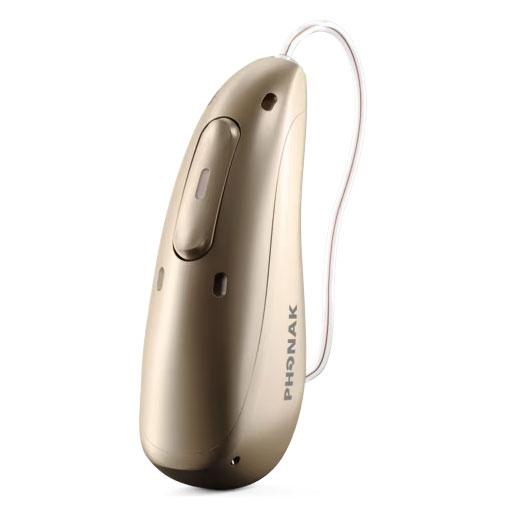
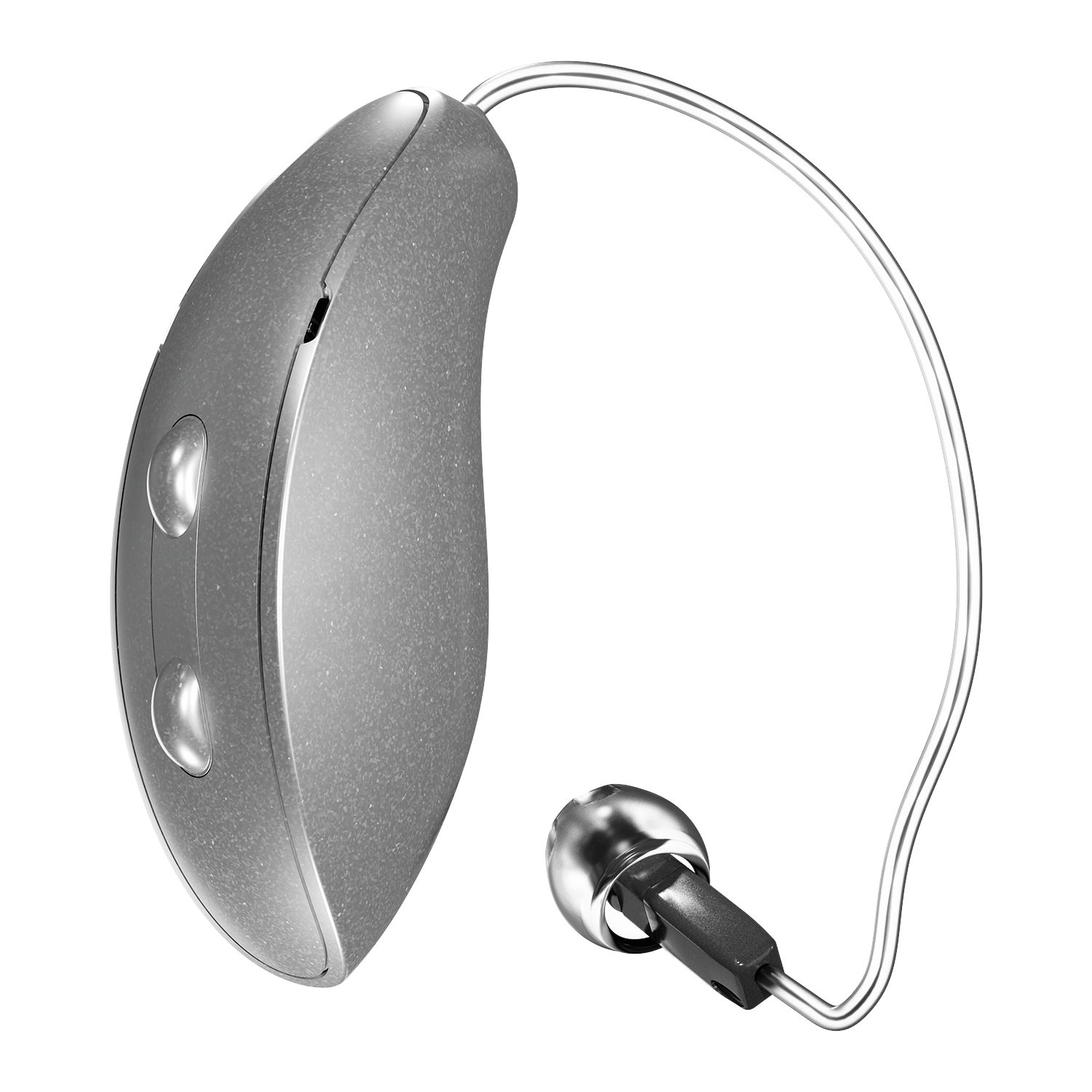
Infinio Sphere is the first Phonak hearing aid to deliver better hearing in background noise by leveraging artificial intelligence (AI). Sphere's battery life is on the lower end, delivering only 16 hours (with 3 hours of streaming) of run time—and less when using the special background noise setting. Although it's unlikely you'll need to be in the "Sphere mode" for long periods, this enhanced DNN mode can drain power quickly. The Ultra update, dropped in November 2025, improved battery efficiency, increasing the battery life in "Sphere mode" from 7 hours to up to 11 hours per charge.

In our lab, the Ultra upgrade didn't bring major performance improvements, on the contrary. While the HearingTracker Score remained at 4.5/5, the SoundScore, which represents acoustic performance, slightly dropped from 4.64/5 to 4.58/5. Only feedback handling and own voice perception scored better with the Ultra upgrade, while critical metrics like speech-in-quiet and speech-in-noise saw a slight drop. Regardless, overall, it's one of the best hearing aids, and for the moment holds top position with one of the highest HearingTracker Scores.

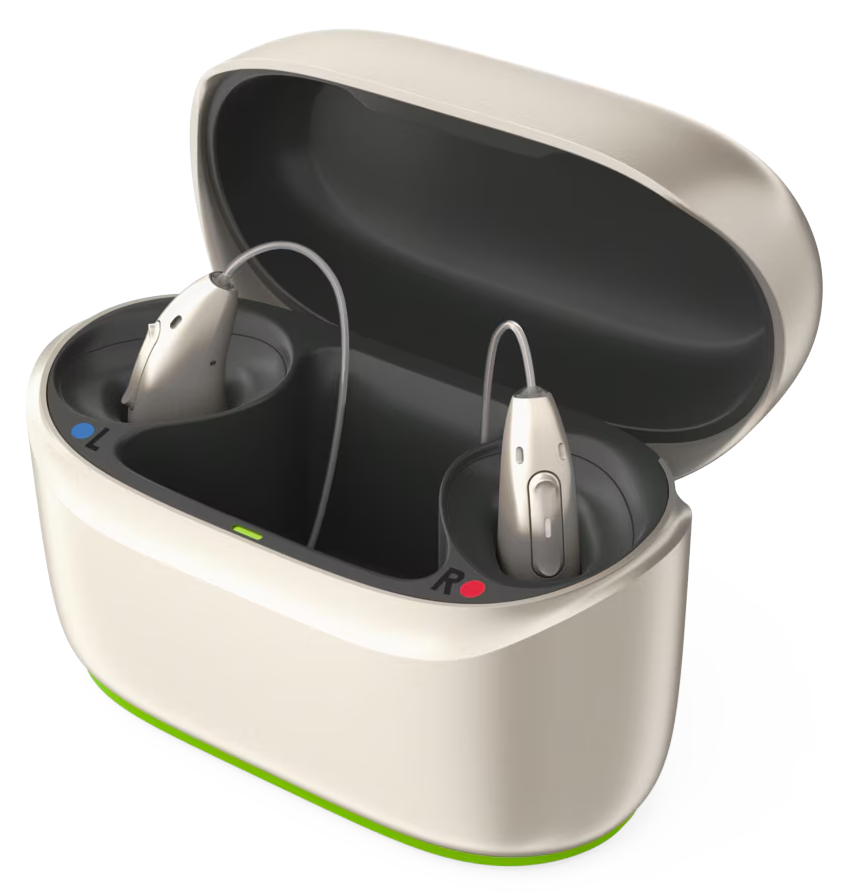
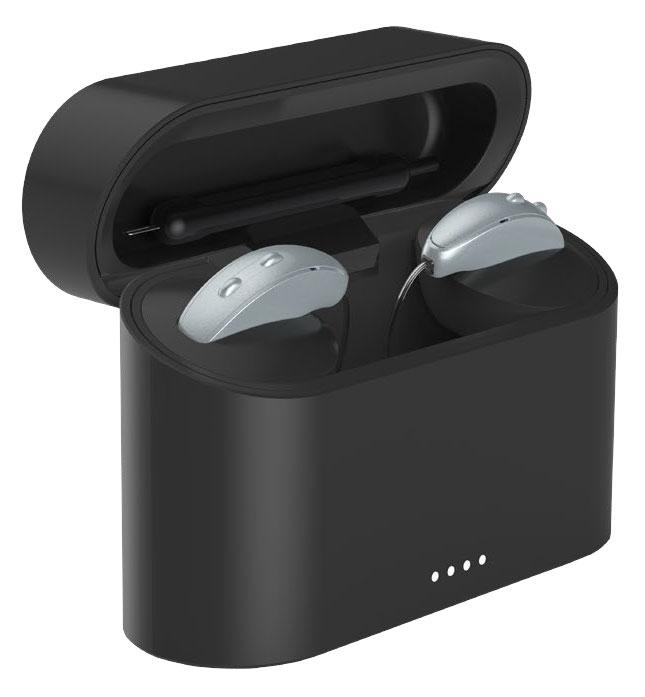
To charge the Sphere, you'll use Phonak's "ChargerGo", a good portable charging case that holds up to three full charges. A full recharge takes around 3 hours, and if you're in a pinch, a quick 15-minute charge will give you an additional 3 hours of use time.

The Sphere's also comes with health tracking features, including step counting and heart rate monitoring. To save money, you may want to consider Phonak's previous generation Lumity rechargeable hearing aids.

Best Battery Life: Starkey Edge AI

Starkey's Edge AI offers AI-driven noise reduction, Bluetooth LE Audio, fall alerts, language translation, health/activity tracking with self-guided balance assessment, Apple Watch compatibility, and IP68 ingress-protection rating. With up to 51 hours of battery life, Edge AI is by far the longest-lasting rechargeable hearing aid on the market.

Starkey’s StarLink Premium Mini Charger provides four charges while you're away from a power outlet, with one charge providing up to 51 hours of power for the Edge AI RIC RT, and 41 hours for the mini receiver-in-canal (mRIC). A full charge takes around 3.5 hours, but just 7 minutes of automatic turbo charging add up to three hours of use time.

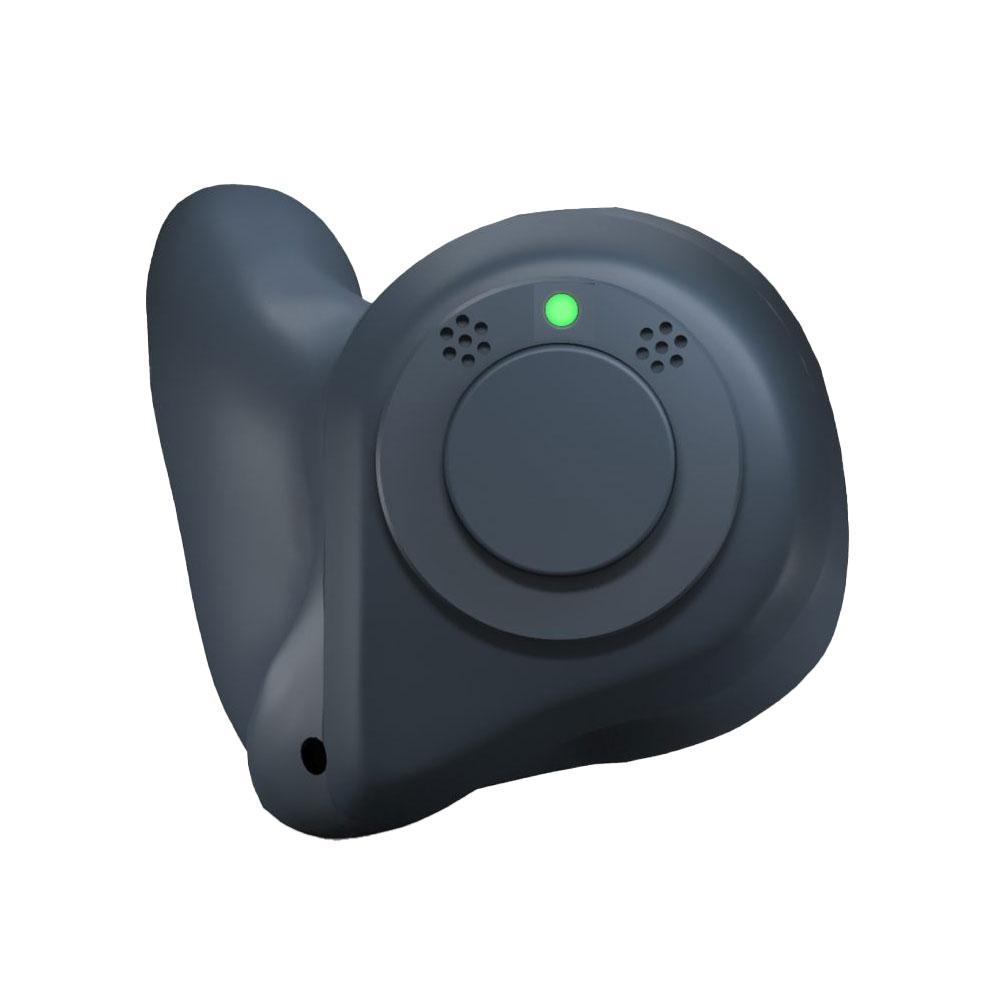
And for those looking for a non-behind-the-ear option, check out Starkey's Signature Series CIC R NW, reported to be the world’s smallest custom rechargeable hearing aid on the market. The new non-wireless completely-in-canal (CIC) can operate for up to 38 hours is highly water resistant (IP68 rated), making it one of the best waterproof hearing aids.

Best OTC: Elehear Beyond Pro

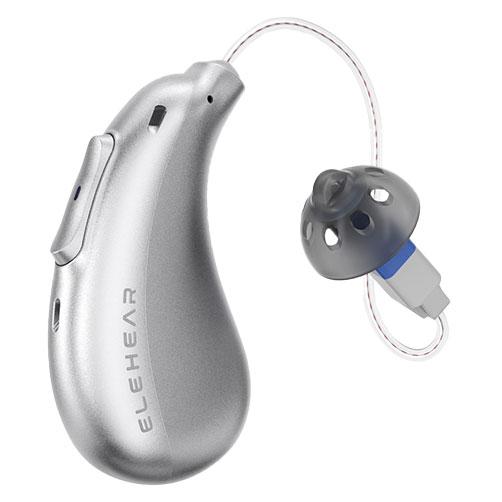
The Elehear Beyond Pro is hands-down the best rechargeable OTC hearing aid overall. While it doesn't offer record battery life, it does last up to 20 hours per charge. The portable charging case adds four extra charges, which is more than most. A 15 minutes quick charge adds an impressive six hours of battery life, and a full charge takes 2.5 hours.

As with all rechargeable hearing aids on this list, the battery isn't user-replaceable. OTC devices typically don't include extended maintenance, so battery replacement might not be an option at all.

In our lab, the Beyond Pro performed exceptionally well for speech-in-quiet and speech-in-noise, achieving a SoundScore of 4.78/5. However, OTC devices only achieve these impressive benefits when used by adults with typical age-related hearing loss, while prescription devices are more adaptable.

The Beyond Pro is self-fitting and uses an in-app hearing test, but you can also share the results of a third-party professional hearing test with their team of licensed audiologists, and they will adjust your aids accordingly.

Best Quick Charging: Oticon Intent

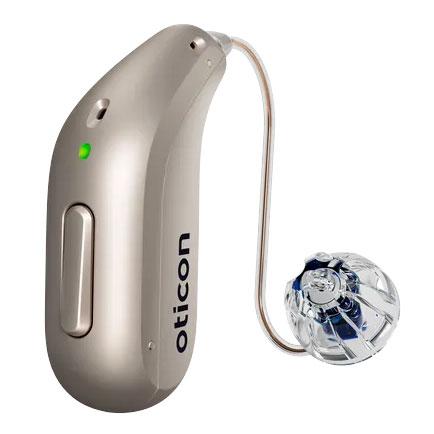
Intent is Oticon's current flagship. The RIC hearing aid features the “Sirius” processing chip and an overhauled approach to motion-based sound optimization (“4D sensor technology”). The device replaces the Oticon Real line, aiming to address prior issues with reliability and Bluetooth connectivity.

Intent provides a solid 20 hours of use time on just 2.5 hours of charging, or 16 hours after a one-hour charge. And when you're running low, a quick 15-minute or 30-minute "supercharge" gives you four or eight hours of use, respectively.

Notably smaller yet slightly bulkier than previous generations, Intents rely on a single push-button (replacing the older rocker switch) for on-device controls. The new style also incorporates reoriented microphones that are easier to maintain and redesigned speaker wires for a more comfortable, discreet fit.

ADVERTISEMENTad for OticonADVERTISEMENTad for Oticon

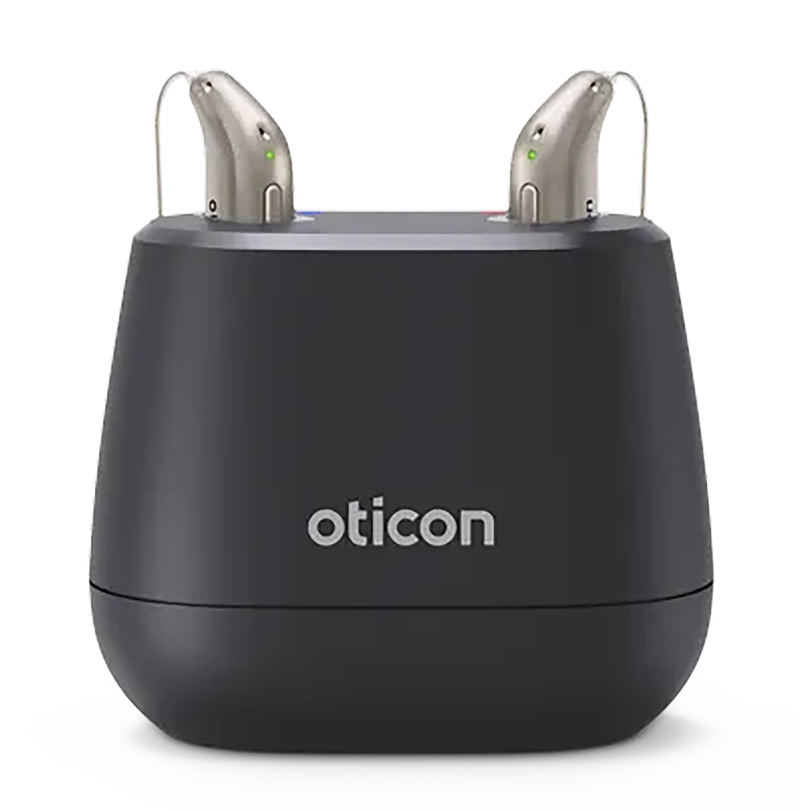
Oticon also offers a new portable “smart charger,” which holds up to three days of extra battery life, ideal for camping or situations without reliable power. However, unlike the previous Oticon Real, the battery in Intents is no longer user- or clinic-replaceable—if there’s a problem with the battery, the entire hearing aid must go in for service, potentially leaving users without their device for a couple of weeks.

Intent features both a telecoil and Bluetooth LE/Auracast-enabled broadcast technology (as of firmware version 1.3.0), which put it on our list of the best Bluetooth hearing aids.

How did we pick the best rechargeable hearing aids?

To find the best rechargeable hearing aids on the market, we considered the following four criteria:

  • Longest-lasting battery - When fully-charged, which hearing aid provides the highest number of hours of continuous use?
  • Fastest charging - Which hearing aids charge the fastest?
  • Battery replacement - How often do batteries need to be replaced? And, what is the process like?
  • Charging case options - Are the chargers well designed? Are they portable? Do they provide additional charges on the go?

All hearing aids were thoroughly tested in the HearAdvisor and HearingTracker labs. To balance out mere battery performance, we also considered the HearingTracker Score for our best overall hearing aid and selected the best models for different use cases, including best OTC and best invisible rechargeable hearing aid.

Other Rechargeable Hearing Aids

The rechargeable hearing aids featured above are our top choices, but you may also want to consider some of our other favorites. For example, if you're on a tight budget, but OTC isn't an option, you may want to consider previous-generation prescription hearing aids.

Rexton Reach

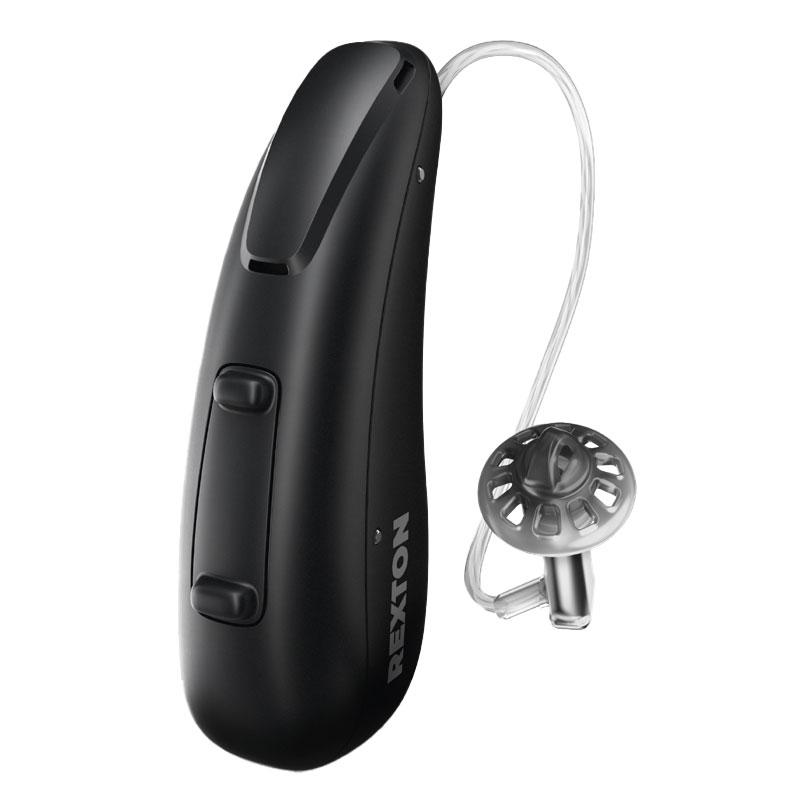
Rexton is the sister company of Signia and Widex and its hearing aids contain top-notch rechargeable technology. Introduced in March 2024, Reach R-Li T boasts 39 hours of battery life or 34 hours with 5 hours of streaming. It also gives you 4 hours of use on a quick 30-minute charge.

ADVERTISEMENTad for ReSound

Reach gives you the option of two chargers: the Charging Station R or the portable Travel Charger. Each fully charge the aids in 4 hours and come with a USB-C power adapter.

Rexton hearing aids are sold at Costco, HearUSA and HearCanada, hear.com, and private practices.

ReSound Rechargeable Hearing Aids

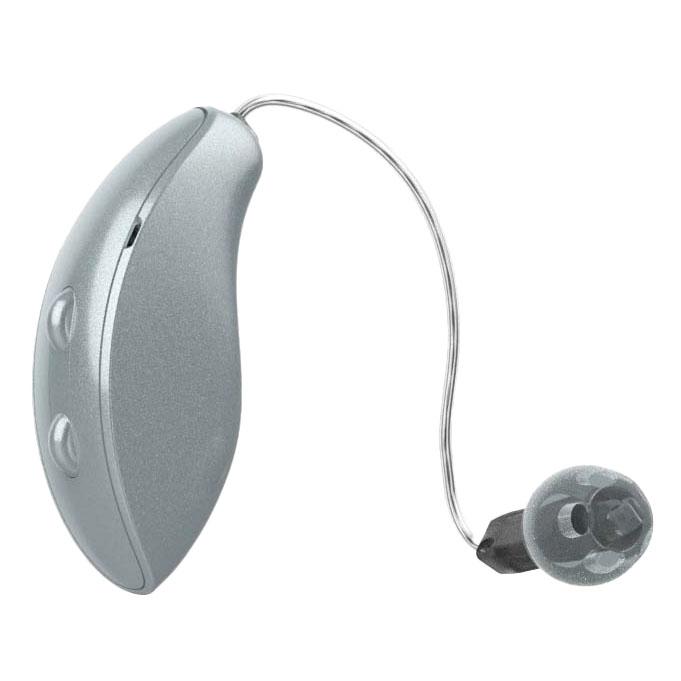
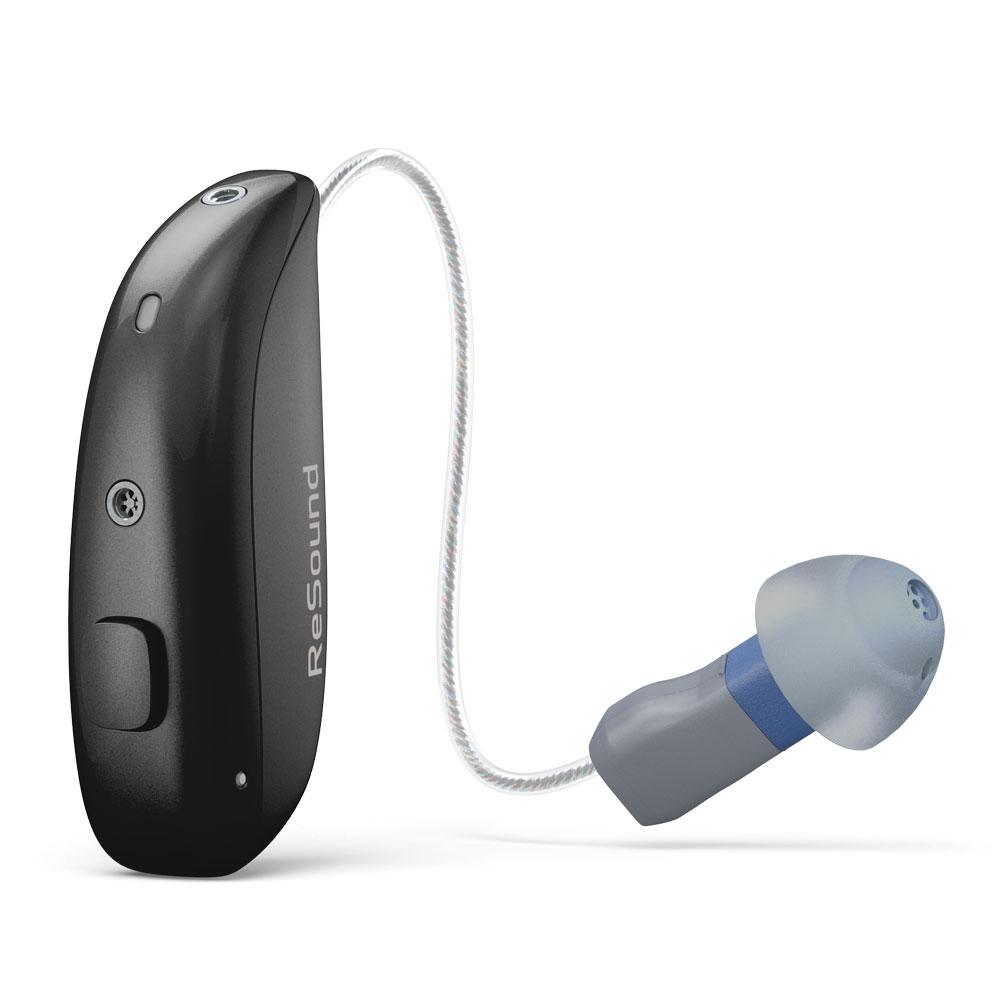
ReSound's latest flagship hearing aid, Vivia, was launched in February 2025 and is the smallest AI-powered miniRIC on the market. It features an all-new AI-powered hearing aid designed to enhance speech clarity in noisy environments. With its dual-chip DNN-powered engineering, Vivia is said to have the same or better speech-in-noise capabilities as Phonak Infinio Sphere—although Sphere came out better in HearAdvisor testing.

However, Vivia does provide better battery life with up to 30 hours (20 hours with streaming and the AI noise reduction employed). A quick 10-minute charge gives you an extra 2.7 hours of use.

ADVERTISEMENTad for ReSoundADVERTISEMENTad for Phonak

ReSound Nexia, the company's previous flagship hearing aid family, is also an exceptional rechargeable option. Although it depends on the wearer’s hearing loss and usage, Nexia offers 24 hours of typical use on one charge or 20 hours when streaming 50% of the time, placing it toward the upper end of battery life. Both Vivia and Nexia microRIEs have the option of a desktop, standard, or premium charger, with the latter carrying three extra charges for portable power.

ADVERTISEMENTad for Starkey

Nexia's custom in-the-canal (ITC) hearing aids get their power from a special Custom Charger that contains two specially created inserts that match the shape of each hearing aid for seamless, reliable charging. Like the microRIE devices, Nexia ITCs can be expected to offer up to 24 hours use-time on a single charge for all-day use.

Signia Rechargeable Hearing Aids

Signia's Integrated Xperience platform (Signia IX) is designed to provide sound clarity and definition for hearing aid wearers in dynamic, moving, multi-speaker scenarios. The line currently consists of the following rechargeable models: The Active Pro IX, the Pure Charge&Go IX and BCT RIC (the Bluetooth Classic for universal connectivity), the Styletto IX slim-RIC, and the Silk Charge & Go IX, a unique instant-fit rechargeable Completely-in-Canal (CIC) hearing aid.

Widex Rechargeable Hearing Aids

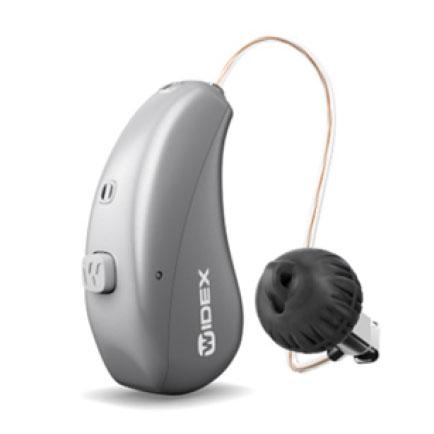
Widex MOMENT SHEER sRIC is one of the smallest rechargeable lithium-ion RIC hearing aids on the market. The sRIC represents Widex's second foray into lithium-ion technology, succeeding the mRIC, and features redesigned microphone ports so it’s easier and more comfortable to hear, process, place, and discern sounds in even the most complex listening environments. The SHEER sRIC, which uses the MOMENT family chipset that was introduced in March 2020, has a new charger that no longer has what some users viewed as a cumbersome lid, and it offers 29 hours of listening time on a full charge of 4 hours.

ADVERTISEMENTad for PhonakADVERTISEMENTad for Signia

Widex introduced its latest RIC hearing aid, SmartRIC, in February 2024. With a unique 20-degree curve at the top of the hearing aid, SmartRIC’s dual-microphone directional system is both higher up on the ear and closer to being on the horizontal plane than traditional RICs, reportedly allowing it to align better with the wearer's focus, leading to a greater signal-to-noise ratio (SNR) for noisy environments. The rechargeable device, which also uses the MOMENT chipset, has an impressive battery life of up to 36 hours of usage on a single charge, making it the company’s longest-lasting RIC. It also has Widex's first portable charger that carries 5 extra charges for on-the-go use.

Rechargeable vs. Disposable Hearing Aids Usage

Among *HearingTracker'*s readers, only 1 in 10 hearing aid user prefers models with disposable batteries. Others may not realize what it means to own a rechargeable hearing aid until the battery keeps running out on them.

ADVERTISEMENTad for Signia

Do you ever forget to charge your cell phone at night, only to have it die halfway through the next day? Do you spend a lot of time “off the grid” without access to electricity? Are you a power user who streams audio to your hearing aids 16 hours a day? If you answered yes to any of these questions, there’s a possibility that rechargeable hearing aids aren’t your best choice. Hearing aids with disposable batteries may work better for you.

But if you’re accustomed to recharging your phone and would prefer not to have to change your hearing aid batteries, you're not alone. In fact, hearing aid users have made it clear they would generally prefer rechargeable hearing aids over their disposable-battery counterparts.

In 2016, HearingTracker surveyed US consumers about their rechargeability preferences after two industry leaders, Phonak and Signia, each announced upcoming hearing aid models with lithium-ion rechargeable batteries. Of the 510 hearing-aid owners who responded to our survey, 89% said their aids used non-rechargeable disposable batteries, but 70% said they would prefer rechargeable hearing aids.

Four years later, in May 2020, we polled the members of our Facebook support group and found a huge jump in rechargeable hearing aid ownership, up to about 30% from 11% in 2016.

At the end of 2021, a whopping 4 out of 5 (79.4%) Receiver-in-Canal (RIC) and Behind-the-Ear (BTE) hearing aids sold in the U.S. were rechargeable, and these two hearing aid styles accounted for 87% of all hearing aid sales, according to Hearing Industries Association (HIA) statistics. As noted earlier, the MarkeTrak consumer survey indicates that about half (52%) of current hearing aid owners use rechargeable aids.

Should You Purchase Rechargeable Hearing Aids?

It's clear that consumers are increasingly voting with their wallets in favor of rechargeables. But rechargeable hearing aids have their upsides and downsides. Here are the top-7 things to consider before purchasing rechargeable hearing aids for yourself or a loved one:

  • Manageability - Hearing aids are small devices that require a lot of manual dexterity. Sometimes older adults or very young kids have trouble getting them into their ears, turning them on and off and, especially, changing those tiny batteries. Rechargeable hearing aids with built-in lithium-ion batteries eliminate that dexterity challenge.
  • Cost - Rechargeable hearing aids generally cost more than hearing aids that use disposables. But constantly replacing disposable batteries with new ones can cost $50 dollars or more per year, depending on how much power your hearing aids draw. So, in comparing hearing aid prices, keep in mind the extra cost of ownership of disposable-battery hearing aids.
  • Environmental concerns - The carbon footprint of rechargeable batteries is significantly smaller (better) than disposable batteries. Rechargeable batteries in hearing aids are generally expected to last for 5 years or more, so you don’t have to worry about recycling very often. Disposables last only a few days to a little over a week, and you may feel guilty for tossing them in the trash.
  • One charge per day - Until recently, rechargeable hearing aid batteries failed to meet the one-charge-per-day standard that consumers have become accustomed to with their mobile phones. Earlier batteries based on nickel metal hydride technology suffered from shorter life and less stable power output. But new lithium-ion batteries last all day, making an overnight charge easy—although, in some cases, streaming and AI-driven processing can make longer use times dicey.
  • Convenience - If you don’t want to carry around spare packs of batteries everywhere you go, rechargeable hearing aids are a great solution. On the flip side, you do need to remember to charge rechargeable hearing aids every night. Forgetting to place them in the charger at night can mean the difference between hearing and not the following day.
  • Power outages - For campers, frequent travelers, or people who live in areas frequently hit by hurricanes and natural disasters (i.e., with long power outages), you might encounter extended periods when its difficult to plug in your recharger. In these cases, hearing aids with disposable batteries can be a safer option.
ADVERTISEMENTad for WidexADVERTISEMENTad for Yeasound

When you look at the pros and cons, it’s clear both disposable hearing aid batteries and rechargeable hearing aids are here to stay. Which you choose depends on your specific needs.

Frequently Asked Questions About Rechargeables

Most rechargeable hearing aid manufacturers promise a full day of use on a single charge, so the batteries can be recharged overnight while you are sleeping. The length of time batteries hold their charge varies depending on how the hearing aids are being used. If you stream audio from your phone many hours a day, the batteries will run down faster.

Yes. One downside of a rechargeable hearing aid is that, like a cell phone (or any rechargeable device), they gradually lose charging capacity over time. Most lithium-ion hearing aid batteries last for about 5 years, but their power capacity decreases in that time. For example, after one year of use, a rechargeable hearing aid may be able to operate at 85% of what it did when new (e.g., if it could operate for 30 hours with no streaming when new, it may only operate for 25 hours after the first year). This is why, if possible, it's a good idea to have the rechargeable batteries in your hearing aids replaced by your hearing care professional sometime before your manufacturer warranty expires (typically 2-3 years).

Li-ion hearing aid batteries are very safe because they are always sealed in the hearing aid’s case. If the case breaks, you should stop using the hearing aid and have it serviced.

Some electronic products with larger lithium-ion batteries can’t be left in checked baggage. But lithium-ion hearing aids have passed safety checks that let you check them in baggage. You can also wear your hearing aids on airplanes and other public transportation.

Yes, in some cases, rechargeable hearing aid batteries can be replaced. Typically, however, they're not user-replaceable and you might have to return the hearing aid to the manufacturer for a battery replacement. The Oticon Intent's rechargeable battery, for example, can only be replaced at an Oticon facility. Like all lithium-ion batteries, rechargeable hearing aid batteries have a limited lifespan of three to five years.

Lithium-ion Rechargeable Batteries

All of the global hearing aid manufacturers now offer lithium-ion rechargeable hearing aids. They utilize the same technology found in your mobile phone and hundreds of other rechargeable consumer products. Providing a strong combination of energy and power density, they can now yield more than a full day of power for hearing aids, even when paired with power-hungry Bluetooth devices. And thanks to their consistent power output, users don’t experience the malfunctions or intermittence that limited hearing aids based on earlier rechargeable technologies.

Consumers have generally given most of these premium-level rechargeable hearing aids high marks for performance and ease of use. And they are proving to be reliable, too.

No More Battery Door

For safety and performance reasons, lithium-ion batteries are sealed into the cases of hearing aids. Unlike hearing aids with replaceable disposable batteries, they don't have battery doors. That's a benefit to users who sometimes have difficulty manipulating the small controls on hearing aids and who are happy to have one less moving part to worry about.

ADVERTISEMENTad for Yeasound

Sealed batteries also provide better moisture, dirt, and debris protection for the hearing aids. You'll find that many of the highest quality rechargeable hearing aids have ingress protection (IP) ratings of IP68—the highest possible level for these types of devices—and have extra protection due to the sealed battery.

How Much Do Rechargeable Hearing Aids Cost?

According to our latest survey on how much hearing aids cost in 2026, the average price of hearing aids is now around $2,700 per pair, though prescription devices are closer to $3,500, while OTC devices will only set you back around $500.

If you check out our compare hearing aids page, you may see that prices for rechargeable hearing aids can range anywhere from well under $3,000 a pair to nearly $7,000 per pair. The flagship rechargeable hearing aids from the top brands have all been top-performing, premium-priced models. But even in the premium category, there is a broad range of prices.

When you’re assessing prices, consider the total cost of ownership of hearing aids with disposable batteries versus rechargeable hearing aids. Let’s do some math:

  • If you shop around on Amazon for disposable hearing aid batteries, you can purchase them for as little as 30 cents each.
  • If you wear your hearing aids in both ears 16 hours per day, and if you plan on getting about 75 hours of use out of each disposable battery, you end up needing approximately 150 hearing aid batteries a year.
  • That amounts to around $50 per year for batteries.
  • If you keep your hearing aids for five years, the batteries add $250 to their total cost.

Most manufacturer’s warranties run for 2-3 years, but there have been manufacturers that offer warranties specifically covering the rechargeable batteries for longer periods. The bottom line is, if you plan on keeping your hearing aids for more than 5 years, you can save money by getting the rechargeable batteries replaced before the warranty expires. And, when you compare costs with hearing aids that use disposable batteries, keep in mind that paying a couple hundred dollars more for a rechargeable with similar features and performance may provide comparable lifetime value.

Rechargeables now make up the lion’s share of hearing aid sales, and that means more competition, more product-line expansion, and more lower-priced options.

How Long Do Rechargeable Batteries Last Before Needing Replacement?

Hearing aid manufacturers often cite the number of years of expected battery life in their specification sheets—typically 5 years—but batteries may last longer or shorter, depending on the manufacturer, the form factor and battery capacity, and your own usage/needs. As mentioned above, all rechargeable batteries lose their energy capacity over time, so it really does depend on your needs (i.e., hours of daily use) and the Day 1 capacity and deterioration rate of the specific batteries you’re using.

So here's a hot tip: Most hearing aids purchased from a clinic (not online) come with a 2 or 3-year warranty. Before that warranty expires, it's a good idea to ask your hearing provider about an “end-of-warranty refurbishment.” This involves your clinic sending the devices back to the manufacturer for updating and replacement of key components, like receivers and rechargeable batteries. Once done, the hearing aids should come back and function as if they're brand new. By doing this, you can effectively extend the life of your hearing aids from the usual 3-5 years to 6-10 years. We recommend doing this particularly if you really like how your hearing aids function.

ADVERTISEMENTad for YeasoundADVERTISEMENTad for Oticon

The downside? There's usually a cost involved, you may be without your aid for a short period, and you will be delayed in receiving the latest "state-of-the-art" technology that you'd get with the purchase of new hearing aid. In some cases, you may not be able to get an end-of-warranty refurbishment if the hearing aid manufacturer no longer services or makes replacement parts for that model.

Battery Life and Operating Time

When using rechargeable hearing aids, battery life is one of the first concerns that comes to mind. How long will your hearing aids last on a single charge? Rechargeable batteries in hearing aids are actually much better than expected in terms of operational time, and this is thanks to careful power-consumption optimization by the hearing aid companies. When compared to wireless earbuds, which typically only last 4-8 hours, hearing aids are light years ahead, with operating times in the 18-30 hour range.

Battery Charge and Use Time by Model

Model

Use Time

Time to Full Charge

Quick Charge Use Time

Phonak Infinio, Lumity, and Paradise

16-18 hours*

3 hours

15 minutes = 3 hours

Starkey Edge AI

51 hours

3.5 hours

There are many factors to keep in mind when reading the operating times published by hearing aid manufacturers. Some of the factors that will lead to less operating time include:

  • Wireless streaming - If you stream wireless audio, this will reduce the operating time of your hearing aids. This includes Bluetooth audio streaming, but also includes using wireless accessories, like remotes.
  • Speaker strength - When your hearing professional configures your hearing aids, they may need to select a higher-powered speaker (a "receiver" in hearing aid lingo) depending on your severity of hearing loss. Higher-powered speakers consumer more power and reduce battery life.
  • Hearing loss severity - If your hearing professional has to crank up the volume to meet your needs, this will use more battery power on an ongoing basis.
  • The age of your battery - After a year or two, your battery will not hold the same charge as it did on Day 1. This is the nature of li-ion batteries, and you should expect to replace your batteries after a few years if they are no longer getting you through the day.
  • Sound environment - If you spend more time in noisy environments, your hearing aids will need to do more heavy duty sound processing in order to provide a cleaner sound, and this chews up the battery faster than minimal processing in quieter environments.
ADVERTISEMENTad for Yeasound

Given this fact, if you note that your hearing aids are not charging as fast and/or lasting as long as when you first purchased them, you may consider getting the rechargeable batteries replaced. If they are still covered under the manufacturer's warranty (usually 2-3 years), your hearing care professional might even be able to help you save some money and extend the life of your hearing aids (there may be a service charge for this).

We have attempted to pull together as much information as possible from the literature of the manufacturers, and will be adding to this list over time. Do bookmark this page, and leave a comment in the discussion section below if you wish to contend any of the information listed in the table above! Thanks.

References

  1. Hearing Review. (2023, April 24). Roundtable: Why rechargeable hearing aids are trending. Hearing Review. https://hearingreview.com/hearing-products/hearing-aids/roundtable-why-rechargeable-hearing-aids-are-trending
Diesen Beitrag teilen
  • Best Lists
  • rechargeable
Warum uns vertrauen?
295+Stunden Audioaufnahmen
95Getestete Hörgerätemodelle
5Branchenführende Audiologen
13Jahre unabhängig geführt & betrieben

2026 Guide Includes:
7 models benchmarked in our lab + 2 other reviewed products.

So testen wir

Inhaltsverzeichnis

  • Introduction
  • Best overall rechargeable hearing aid
  • Best Overall Rechargeable Hearing Aid
  • Best battery life
  • Best for Battery Life
  • Best rechargeable OTC
  • Best Rechargeable OTC
  • Best quick charging
  • Best for Quick Charging
  • How we picked
  • Other devices to consider
  • Also consider...
  • Also consider...
  • Also Consider...
  • Also Consider...
  • Also Consider...
  • Rechargeable vs. disposable
  • Should you purchase rechargeables?
  • How much do rechargeables cost?
  • Replacing rechargeable batteries
Schnellurteil

Die 2026 Auswahl

Aktualisiert 2026 • 95+ Getestete Modelle
Top-AuswahlBest Overall Rechargeable Hearing Aid
Phonak Audéo Infinio Ultra

Phonaks Infinio Sphere bietet dank des DEEPSONIC "Sphere mode" wirklich herausragende Sprachklarheit an lauten, lärmigen Orten, aber Sie müssen auf etwas Diskretion verzichten und könnten Schwierigkeiten mit der Passform oder Bluetooth-Kopplung haben, um diese erstklassige Leistung zu erreichen.

Expertenbewertung
4.4/5
From $3,998 / pair
Best for Battery Life
Starkey Edge AI

Edge AI ist mit Starkels brandneuem G2 Neuro Processor ausgestattet, der über eine integrierte Neural Processing Unit verfügt. Diese klassifiziert komplexe Soundlandschaften, verbessert Sprache und reduziert Geräusche in Echtzeit mithilfe fortschrittlicher KI.

Expertenbewertung
4.2/5
Best Rechargeable OTC
Elehear Beyond Pro

Elehears $599 Beyond Pro ist ein funktionsreiches, selbstanpassendes rezeptfreies Hörgerät, das klaren, natürlichen Klang und starke Sprachverständlichkeit bei Hintergrundgeräuschen zum Preis bietet – und meiner Meinung nach war ich, obwohl es nicht fehlerfrei ist, wirklich beeindruckt von dem Wert und der realen Leistung, die es für das Geld bietet.

Expertenbewertung
4.4/5
$649 pro Paar
Battery Life Considerations

The maximum battery life per charge depends on how you use your hearing aids. Using features like streaming audio or AI processing will drain your battery faster.

Professionell getestet

Wir haben die meisten hier vorgestellten Hörgeräte in einem speziell gebauten Akustiklabor mit kalibrierten Lautsprechern und räumlich genauen Aufnahmen aus realen Umgebungen getestet.

Alltagsnutzung

Unsere Audiologen trugen jedes Gerät mindestens eine Woche lang und bewerteten Verarbeitungsqualität, Akkulaufzeit, Bluetooth-Stabilität, Komfort, Handhabung, App-Funktionen und Preis-Leistungs-Verhältnis.

Transparent selection

We sorted tested hearing aids by their HearingTracker Score and selected flagship devices with long battery lives, fast charging, and powerful charging cases.

Also consider...
Also consider...
Also Consider...
Also Consider...
Also Consider...
PreisFrom $3,998 / pair—$649$4,898$1,600$3,798—$3,298$3,398
Freisprechen
Wiederaufladbar
iPhone-Streaming
Android-Streaming
Telefonspule
  • Decreased charging capacity - Just like your cell phone, the rechargeable lithium batteries in your hearing aids will lose their energy capacity over time. After about 4 or 5 years, you may find they start pushing the limits of working for an entire day, particularly if you have a more severe hearing loss, frequently stream audio, or often find yourself in challenging listening situations (see "How long do rechargeable batteries last before needing to be replaced?" below).
  • 7 minutes = 3 hours

    Jabra Enhance Select 700

    24 hours

    3 hours

    10 minutes = 2 hours

    Oticon Intent

    20 hours

    2 hours

    15/30 minutes = 4/8 hours

    Oticon Real and More

    24 hours

    3 hours

    30 minutes = 6 hours

    Unitron Vivante and Blu

    24 hours

    3 hours

    90 minnutes = 80%

    ReSound Nexia

    24 hours

    3 hours

    n/a

    ReSound Vivia

    24 hours

    3 hours

    10 minutes = 2.7 hours

    ReSound Omnia

    30 hours

    3 hours

    n/a

    Rexton Reach

    39 hours

    4 hours

    n/a

    Signia Pure Charge&Go IX

    39 hours

    4 hours

    n/a

    Signia Styletto IX

    20 hours

    4 hours

    n/a

    Signia Charge&Go AX

    36 hours

    4 hours

    n/a

    Signia Styletto AX

    20 hours

    4 hours

    30 minutes = 5 hours

    Starkey Signature CIC R NW

    38 hours

    3.5 hours

    n/a

    Widex MOMENT

    20-29 hours*

    4 hours

    30 minuets = 4 hours

    Widex MOMENT SHeer (sRIC R D)

    29 hours

    4 hours

    30 minutes = 4 hours

    Widex SmartRIC

    37 hours

    4 hours

    n/a

    Sony CRE-E10 (OTC)

    26 hours

    4 hours

    n/a

    Eargo 5, 6, and 7 (OTC)

    16 hours

    4 hours

    n/a

    Jabra Enhance Select 50R (OTC)

    24 hours

    3 hours

    n/a

    Lexie Powered by Bose B2/Plus (OTC)

    18 hours

    3 hours

    n/a

    Lucid Engage (OTC)

    20 hours

    2 hours

    n/a

    Estimates of use time assume no wireless streaming. Estimates with wireless streaming are below. *Varies by specific model
    ReSound Nexia
    Angebot anzeigen
    Also Consider...: ReSound Nexia
    Ab
    Signia Pure Charge&Go IX
    Angebot anzeigen
    Also Consider...
    • Abram Bailey, AuD

      Abram Bailey, AuD

      Gründer und Präsident

      Dr. Bailey ist ein führender Experte für Verbrauchertechnologie in der Audiologie-Branche. Er ist ein überzeugter Befürworter der patientenzentrierten Hörkommunikation und audiologischen Best Practices und begrüßt jede technologische Innovation, die den Zugang zu qualitativ hochwertigen Hörergebnissen verbessert. Dr. Bailey hält einen Au.D. vom Vanderbilt University Medical Center.

    ChargerGo RIC Sphere Infinio
    ChargerGo RIC Sphere InfinioLadegerät mit integriertem Akku
    BatterieladegerätStrompaket
    Kompatibel mit:
    Phonak Audéo Infinio Ultra
    StarLink Premium Mini Charger
    StarLink Premium Mini ChargerEinzigartige StarLink Premium Mini-Ladegeräte für Genesis AI mRIC R und RIC RT Hörgeräte – gleiches Design, aber mit unterschiedlichen Ladeschächten für sichere Platzierung des Hörgeräts. Diese neuen Ladegeräte verfügen über integriertes Turbo-Laden für drei Stunden Hörgerätenutzung in nur sieben Minuten Ladung und einen integrierten Akku für mobiles Laden.
    Batterieladegerät
    Kompatibel mit:
    Starkey Genesis AI
    Desktop Charger
    Desktop ChargerDirektes Kontaktladegerät mit Magneten für sichere Gerätepassform.
    Batterieladegerät
    Kompatibel mit:
    Oticon Intent
    Phonak Audéo Infinio UltraPhonak Audéo Infinio Ultra Sphere
    Starkey Genesis AIStarkey Genesis AI RIC RT, Starkey Genesis AI mRIC R
    Oticon Intent
    Oticon Intent miniRITE R
    pro Paar

    Die ReSound Nexia Hörhilfen mit Auracast sind fortschrittliche Hörhilfen, die den neuesten Bluetooth LE-Standard und die Auracast-Broadcast-Audiotechnologie nutzen und die drahtlose Konnektivität und Streaming-Funktionen verbessern. Diese im September 2023 eingeführten Hörhilfen bieten eine Reihe von Modellen, die für leichte bis hochgradige Hörverluste geeignet sind, mit Optionen für freihändiges Telefonieren, wiederaufladbare Batterien und ausgefeilte Rauschunterdrückungsfunktionen.

    Wichtige Merkmale

    Hands-Free
    Wiederaufladbar
    Streaming
    Streaming
    Induktionsspule
    IP68
    Angebot anzeigen
    :
    Signia Pure Charge&Go IX
    Ab $3,298pro Paar

    Ich war sehr beeindruckt vom Gesamtdesign, der Soundleistung und den App-Funktionen der Signia Pure Charge&Go IX. Diese hochmodernen Hörgeräte bieten fortschrittliche Funktionen wie freihändiges Telefonieren, iOS- und Android-Streaming und eine robuste Akkulaufzeit von 39 Stunden.

    Wichtige Merkmale

    Hands-Free
    Wiederaufladbar
    Streaming
    Streaming
    Induktionsspule
    IP68
    Angebot anzeigen
    Bewertung
    4.2
    Starkey Edge AI
    Angebot anzeigen
    Best for Battery Life: Starkey Edge AI
    Ab pro Paar

    Edge AI ist mit Starkels brandneuem G2 Neuro Processor ausgestattet, der über eine integrierte Neural Processing Unit verfügt. Diese klassifiziert komplexe Soundlandschaften, verbessert Sprache und reduziert Geräusche in Echtzeit mithilfe fortschrittlicher KI.

    Wichtige Merkmale

    Hands-Free
    Wiederaufladbar
    Streaming
    Streaming
    Induktionsspule
    Angebot anzeigen

    Expertenbewertung

    Bewertung
    4.6
    Rexton Reach
    Angebot anzeigen
    Also consider...: Rexton Reach
    Ab $1,600pro Paar

    Das Rexton Reach R-Li T ist ein Premium-Receiver-in-Canal-Hörgerät (RIC), das jetzt bei Costco für 1.499 $ pro Paar erhältlich ist. Angesichts seiner Premium-Funktionen, der hervorragenden Akkulaufzeit und der starken Bluetooth-Konnektivität bietet es ein hervorragendes Preis-Leistungs-Verhältnis.

    Wichtige Merkmale

    Hands-Free
    Wiederaufladbar
    Streaming
    Streaming
    Induktionsspule
    Angebot anzeigen

    Expertenbewertung

    Bewertung
    4.4
    Widex MOMENT
    Angebot anzeigen
    Also Consider...: Widex MOMENT
    Ab $3,398pro Paar

    Die Widex MOMENT ist eine Flaggschiff-Hörhilfelinie, die für ihre überlegene Soundqualität und fortschrittliche KI-gesteuerte Personalisierungsfunktionen bekannt ist, einschließlich ZeroDelay™ und PureSound™-Technologien, die eine natürliche Soundverarbeitung bieten. Diese Hörhilfen sind für eine breite Palette von Hörverlustereignissen geeignet, in verschiedenen Ausführungen erhältlich, einschließlich aufladbarer Optionen, und sind hoch bewertet für Musikstreaming und Hörerlebnis in lauten Umgebungen.

    Wichtige Merkmale

    Hands-Free
    Wiederaufladbar
    Streaming
    Streaming
    Induktionsspule
    Angebot anzeigen

    Expertenbewertung

    Bewertung
    4.4
    Phonak Audéo Infinio Ultra
    Angebot anzeigen
    Alle Angebote anzeigen
    Bewertung
    4.4
    Elehear Beyond Pro
    Angebot anzeigen
    Best Rechargeable OTC
    Bewertung
    4.4
    Oticon Intent
    Angebot anzeigen
    Best for Quick Charging
    Bewertung
    4.2
    ReSound Vivia
    Angebot anzeigen
    IP68+
    IP68
    IP68
    Best Overall Rechargeable Hearing Aid: Phonak Audéo Infinio Ultra
    Ab $4,598pro Paar

    Phonaks Infinio Sphere bietet dank des DEEPSONIC "Sphere mode" wirklich herausragende Sprachklarheit an lauten, lärmigen Orten, aber Sie müssen auf etwas Diskretion verzichten und könnten Schwierigkeiten mit der Passform oder Bluetooth-Kopplung haben, um diese erstklassige Leistung zu erreichen.

    Ideal für

    MusikliebhaberLaute UmgebungenTinnitus-Linderung

    Wichtige Merkmale

    Hands-Free
    Wiederaufladbar
    Streaming
    Streaming
    Induktionsspule
    Angebot anzeigen
    Alle Angebote anzeigen

    Expertenbewertung

    :
    Elehear Beyond Pro
    Ab $649pro Paar

    Elehears $599 Beyond Pro ist ein funktionsreiches, selbstanpassendes rezeptfreies Hörgerät, das klaren, natürlichen Klang und starke Sprachverständlichkeit bei Hintergrundgeräuschen zum Preis bietet – und meiner Meinung nach war ich, obwohl es nicht fehlerfrei ist, wirklich beeindruckt von dem Wert und der realen Leistung, die es für das Geld bietet.

    Ideal für

    ErschwinglichkeitLaute Umgebungen

    Wichtige Merkmale

    Hands-Free
    Wiederaufladbar
    Streaming
    Streaming
    Induktionsspule
    IPx5
    Angebot anzeigen

    Expertenbewertung

    :
    Oticon Intent
    Ab $4,898pro Paar

    Oticon Intent ist ein erstklassiges Flaggschiff mit ausgezeichneter, im Labor verifizierter Sprachleistung, starkem Streaming und Konnektivität sowie intelligenten Funktionen wie 4D-Sensoren und schnellem Laden, obwohl die etwas sperrigere Passform, einfachere Tastenanforderungen und die noch frühe Einführung von LE Audio und Auracast für einige Benutzer Nachteile darstellen können.

    Ideal für

    Laute UmgebungenTinnitus-Linderung

    Wichtige Merkmale

    Hands-Free
    Wiederaufladbar
    Streaming
    Streaming
    Induktionsspule
    IP68
    Angebot anzeigen

    Expertenbewertung

    Alle Angebote anzeigen
    Also consider...: ReSound Vivia
    Ab $3,798pro Paar

    ReSound Vivia packt KI-Flaggschiff-Verarbeitung in eines der kleinsten microRIE-Designs, die wir getestet haben, und liefert kristallklaren Klang in ruhigen Umgebungen, hervorragende Akkulaufzeit den ganzen Tag über und beste Konnektivität mit LE Audio/Auracast.

    Ideal für

    Laute UmgebungenTinnitus-Linderung

    Wichtige Merkmale

    Hands-Free
    Wiederaufladbar
    Streaming
    Streaming
    Induktionsspule
    IP68
    Angebot anzeigen
    Alle Angebote anzeigen

    Expertenbewertung

    IP68