Produktbewertung
ELEHEAR Delight Review: A Budget OTC Hearing Aid with Earbud-Style Appeal
)
The speech in noise score measured for Elehear Delight was 0.60 points above the category average. Its absolute score was 1.8/5. This means it was above category average, but low in absolute terms.
The speech in quiet score measured for Elehear Delight was 1.45 points above the category average. Its absolute score was 4.1/5.
The streaming music score measured for Elehear Delight was 1.23 points above the category average. Its absolute score was 3.1/5.
Im Blindhörtest vergleichen
Elehear Delight mit anderen bei HearAdvisor vergleichen
Unser Expertenteam wählt Produkte sorgfältig aus und testet sie gründlich. Wenn Sie über unsere Links kaufen, erhalten wir möglicherweise eine Provision. So halten wir unsere Bewertungen unabhängig.
Kaufen bei Elehear:format(webp))
The ELEHEAR Delight is one of the more interesting budget over-the-counter (OTC) hearing aids I’ve tried recently. It takes a different approach from ELEHEAR’s two other preset models, instead offering consumers a smaller, earbud-like design that looks more like a modern electronic device and less like a “traditional hearing aid.”
At $419 (currently on sale for $331), Delight is positioned in the lower-cost OTC category, but does not have the hallmarks of a stripped-down product. It includes Bluetooth streaming, hands-free calling, a small rechargeable case, app controls, remote audiology support, and a design that should appeal to people who want something simple, modern, and relatively discreet.
While outperformed by Elehear’s receiver-in-canal (RIC) Elehear Beyond Pro ($599) and Beyond ($399) hearing aid models, Elehear Delight may appeal to those wanting an in-ear OTC hearing aid. It achieved high marks in the HearAdvisor lab with an overall SoundScore of 4.3 (out of 5), placing it well above the OTC category average of 3.43. At this writing, it ranks in the top 15% of all currently available OTC hearing aids tested by HearAdvisor and has earned the lab’s Expert Choice Award.
Elehear Delight performed very well for speech in quiet and for music streaming compared to other OTC hearing aids, but was only slightly above average for speech in noise (0.6 percentage points). Feedback handling and own-voice perception were average or slightly below average. When comparing performance to price ($330-$420), we rank Delight among the best “value hearing aids” on the market.
As noted above, in HearAdvisor’s lab testing, Elehear Delight performed well above the OTC category average overall. Its strongest area was speech understanding in quiet, where it showed a clear advantage over many budget-tier devices. For everyday conversations at home, at work, or in calmer listening environments, that is a significant strength.
Here are the test results for Elehear Delight across HearAdvisor’s five sound quality metrics, with comparisons (in parentheses) to all OTC and prescription hearing aids tested to date:
SOUNDGRADE: A | AVERAGE (+/- ALL AIDS) |
|---|---|
Speech in Quiet | 4.1 (+1.0) |
Speech in Noise | 1.8 (+0.3) |
Own Voice | 2.9 (+0.4) |
Feedback Handling | 4.2 (-0.3) |
Music Steaming |
Keep in mind that HearAdvisor concentrates its testing on what we believe are some of the “best” and “most popular” hearing aids available. As you can see from the table above, the HearAdvisor test scores for Elehear Delight are essentially as good as—and in many cases better than—the average for ALL 100+ hearing aids we’ve tested, which includes almost all of the best prescription hearing aids in the world. The overall weighted SoundScore of 4.3 (out of 5) for Delight places it in the top 15% among currently available OTC hearing aids and in the top 21% of all hearing aids tested in the lab to date.
Along with hearing in quiet, music streaming was also a standout compared to other OTC hearing aids—although we’ll caution that you shouldn’t expect (and won’t get) the same sound quality as high-quality headphones (e.g., Apple AirPods Pro). However, for users who want their hearing aids to double as earbuds for music, podcasts, videos, or phone audio, Delight delivers a better streaming experience than I would typically expect at this price point, and it is closer in quality to prescription hearing aids in this area.
Performance in background noise was better than average, though this is not where I would expect Delight to compete with more advanced or premium devices. It should provide some help in moderately noisy environments, but users who spend a lot of time in restaurants, group gatherings, or other challenging listening situations may still want to look at options with more advanced noise management.
Feedback handling was the main area that stood out as less impressive. It was slightly below the OTC average in lab testing, so users who are prone to whistling or instability may need to spend extra time finding the right ear tips, insertion depth, and volume settings.
HearAdvisor strives to present an apples-to-apples comparison for hearing aids by using standardized tests and test protocols for a specific type of mild-to-moderate hearing loss. Your individual results could vary substantially depending on your hearing loss, earmold/dome, hearing aid settings, and other factors.
You can listen to HearAdvisor lab sound samples of Elehear Delight in different listening situations (e.g., cafe, office, music streaming) at the bottom of this page. For best results, please use high-quality headphones or earbuds.
:format(webp))
Of course, acoustic performance isn’t the only thing that determines satisfaction with hearing aids; factors like build quality, battery life, comfort, app features, Bluetooth functionality, pro support, etc., also make a big difference in the wearer’s experience. You can find ratings for these at the top of the page.
Taking everything into account (including the above SoundScore), Elehear Delight earned an overall HearingTracker score of 4.4/5—tying for the second-highest score we’ve recorded for an OTC hearing aid. While Sennheiser All-Day Clear currently holds the top numerical score (4.5/5), differences of just a few tenths of a point should not be overinterpreted. Individual users may place more weight on different factors—such as comfort, battery life, app usability, streaming, or performance in noise—so the “best” device may vary depending on a person’s needs and priorities.
At HearingTracker, we’re always looking for different angles and perspectives on products. We asked ELEHEAR to send our guest reviewer, David Cochran, a set of Delight hearing aids, then asked David to give us his unvarnished opinion of them as a person with moderate hearing loss who has tried a wide variety of OTC and prescription hearing aids from many different brands.
Here’s what David had to say:
My first impression of the hearing aids was that they looked high-end for an OTC hearing aid. They are about half the price of some higher-end OTC competitors. They're beautifully packaged, with all the accessories you need to comfortably fit them to your ear size.
My first attempt to connect them to my Bluetooth was another story—tricky! I had to delete everything I had in Bluetooth to make a connection. After wearing them for a few hours, I must say they were quite comfortable. Sound was good in quiet environments. Speech is pretty clear.
The app was a little tricky to use sometimes. I found that adjustments sounded harsh, depending on the environments you are in. The amplification was a little unnatural to me. The adjustments I made in the software did not always translate into the proper settings in the hearing aids. At times, I had sudden dropouts during calls and streaming music.
Here is where I ran into some problems with sound quality: in noisy environments, the sound was terrible! No matter what adjustments I made, the sound seemed distorted. In terms of battery life, it was good for all-day wear. That's a good thing for an in-ear hearing aid. And you also have extra power in your charger case.
Overall, I found that Elehear Delight was limited in customization. But for the price point, it's not that bad of a hearing aid. If you are on a limited budget, this little hearing aid would be a good entry-level option for consumers.
:format(webp))
Delight has a modern earbud-style design that sets it apart from ELEHEAR’s other hearing aids. It is still visible in the ear, but it looks more like consumer audio tech than a conventional hearing aid. The smaller size also makes it relatively discreet, though I do wish ELEHEAR offered more color options. Right now, the light-tan color will blend well for some users but stand out more for others.
Build quality is better than I expected for the price. The devices have an IP67 rating, which gives them good protection against moisture and dust for everyday use. I also like the unique rubber flange pull-tab, and the portable charging case feels sleek and robust.
:format(webp))
I found Delight fairly comfortable, with good ear retention. The earbud-style shape and ear wings helped the devices stay in place well during normal use.
As with any in-ear hearing aid, fit matters. I would strongly recommend trying the different included ear tips to find the best balance of comfort, retention, feedback control, and hearing benefit. The right tip can make a big difference with a device like this.
Own-voice comfort was also better than average in lab testing, which is encouraging for an in-ear design. Some users may still notice a plugged-up feeling depending on the dome they use, but Delight appears to manage this reasonably well.
The ELEHEAR app is one of Delight’s strengths. I found it user-friendly, modern, and easy to navigate. It includes practical controls such as volume adjustment and a tone balance that lets users shift the sound from brighter to deeper.
:format(webp))
:format(webp))
At this time, Delight is preset-based, so it is not the same as a fully customized prescription fitting that is tuned for your unique hearing loss. However, ELEHEAR offers greater personalization through its ElePro feature and Audiologist Plan program, which can help users achieve a more tailored setup than many basic OTC devices provide.
One thing to note is that the hearing aids are ear-specific, so users should ensure the left and right devices are oriented properly.
The app also supports features like mode switching, battery monitoring, firmware updates, AI-driven language translation, and tinnitus-masking sounds. Not every user will need all of these, but the overall app experience is stronger than I would expect in this price range.
Bluetooth performance was very good in my use. Delight is compatible with both iOS and Android devices and supports audio streaming and hands-free calling.
I did not run into connection issues during testing. Overall, I found both the app and Bluetooth connection stable, which is important for a product that leans heavily into app control and streaming.
Battery life is acceptable, but not a major strength. ELEHEAR reports up to 13.5 hours per charge, which is on the lower end compared with some other OTC hearing aids. Heavy Bluetooth streaming will likely reduce runtime further.
The charging case helps offset that limitation by providing up to two additional full charges. The case itself is compact and well built, and the hearing aids can be recharged in about 1.5 hours from a fully depleted battery.
One nice inclusion is access to remote support from licensed audiologists through the ElePro app feature and follow-up email correspondence. This is not the same as direct in-person care from a local hearing care professional, but it is still a meaningful step above what many OTC devices offer.
For users who want help getting started or fine-tuning their experience, that extra support could make the product easier to live with.
The ELEHEAR Delight is a strong value option for budget-conscious OTC buyers who want a modern, earbud-style hearing aid with good app support, stable Bluetooth, and better-than-expected streaming quality.
Its biggest strengths are speech clarity in quieter environments, music streaming, comfort, and ease of use. Its main limitations are battery life, feedback handling, and more modest performance in the presence of complex background noise.
Perhaps the strongest use-case for ELEHEAR Delight is as a situational stand-in, which even the company's president, David Hogan, mentions in an article about the product's launch at CES 2026. "For example, if you wear a traditional model most of the time, Delight can step in when you’re active—or when you simply want something more discreet,” he said. Whether Delight becomes someone’s primary hearing solution or a secondary pair for gyms, golf, fishing, and other situations, it’s clearly aimed at a realistic adoption model: helping people hear better when they need it most.
For someone looking for an affordable OTC hearing aid that feels closer to consumer earbuds than a traditional hearing aid, Delight is a compelling option. For users who need the strongest possible performance in noise or highly customized amplification, I would still consider more advanced alternatives.
Based on HearAdvisor testing, ELEHEAR Beyond Pro ($599) and Beyond ($399) outperform Delight ($331-$419), and Beyond Pro is a much stronger choice for hearing in noise and overall sound quality. The YeaSound RIC 800 ($659) and the Lexie B3 ($999) and B2 Plus ($899), Powered by Bose, are also strong competitors, albeit with significantly higher price tags. However, these hearing aids are receiver-in-canal (RIC), which are slightly more visible, as the main body sits behind the ear and transmits sound to a receiver (speaker) in the ear canal via a thin, nearly transparent wire.
If you insist on an in-ear OTC solution, another hearing aid to consider is Cearvol Wave ($399), an AI-driven device that also earned a 4.3/5 rating and A SoundScore from the independent HearAdvisor lab.
3.1 (-0.3)
Steve Taddei, Au.D., vereint seinen Abschluss in Audiotechnik vom Columbia College Chicago mit seinem Doktorat in Audiologie der Northern Illinois University, um Hörtechnologien voranzutreiben und das Bewusstsein für Hörverlust als Laborleiter bei HearAdvisor zu schärfen. Er trägt auch zu verbraucherfokussierten Bewertungen von Hörgeräten und Ohrstöpseln auf HearingTracker.com bei und inspiriert zukünftige Fachleute durch seine Positionen als Lehrbeauftragter an mehreren Hochschulen, um die nächste Generation zu ermutigen, ihre Leidenschaften zu entdecken und zu verfolgen.
Das folgende Zubehör ist mit dem Elehear Delight kompatibel.
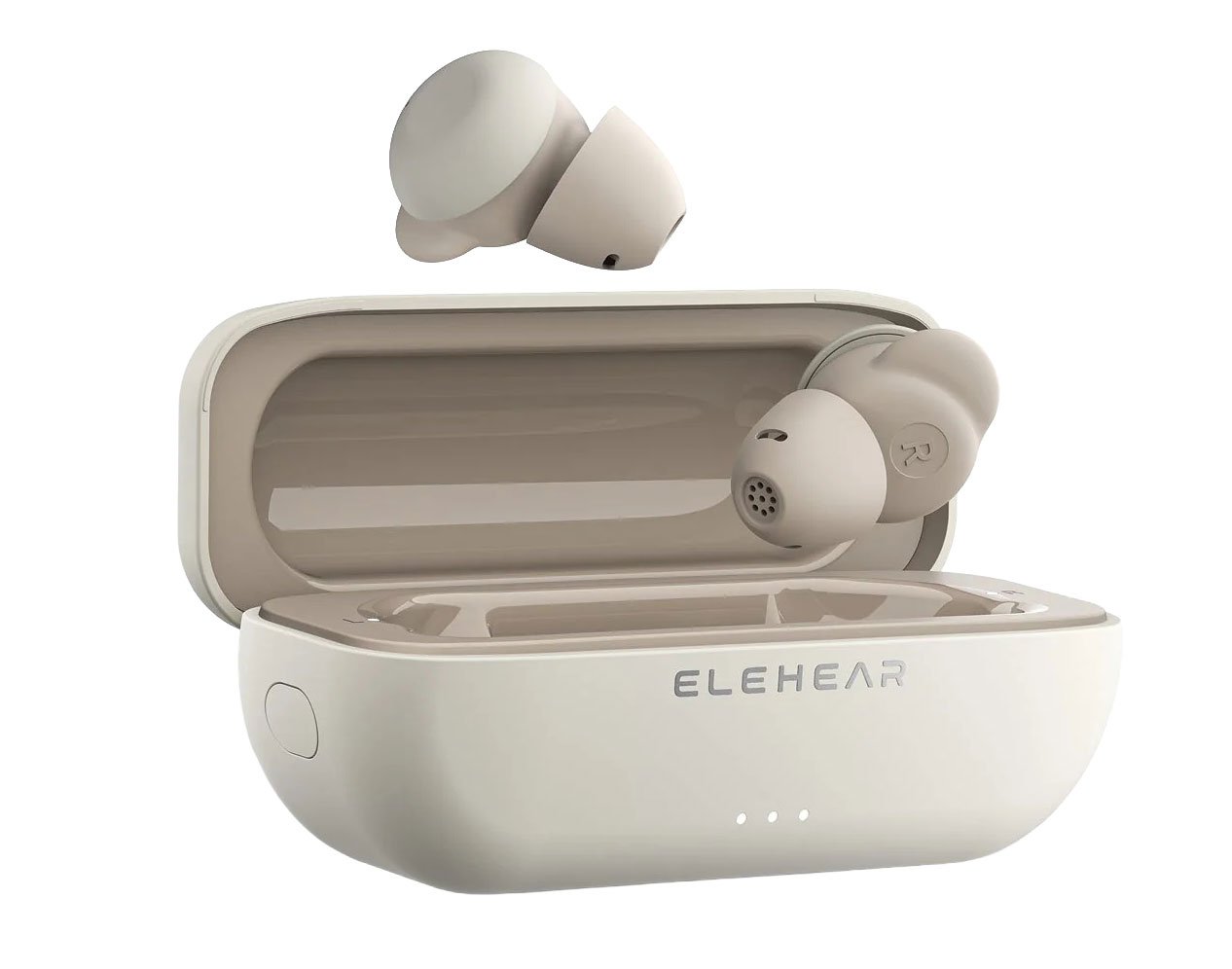
Das ELEHEAR Delight Ladeetui ist ein kompaktes tragbares Ladegerät, das die Hörgeräte zu Hause oder unterwegs mit Strom versorgt. Es lädt die Hörgeräte automatisch auf, wenn sie eingelegt werden, bietet bis zu zwei zusätzliche Ladungen und verwendet einfache LED-Indikatoren, um den Lade- und Batteriezustand anzuzeigen.
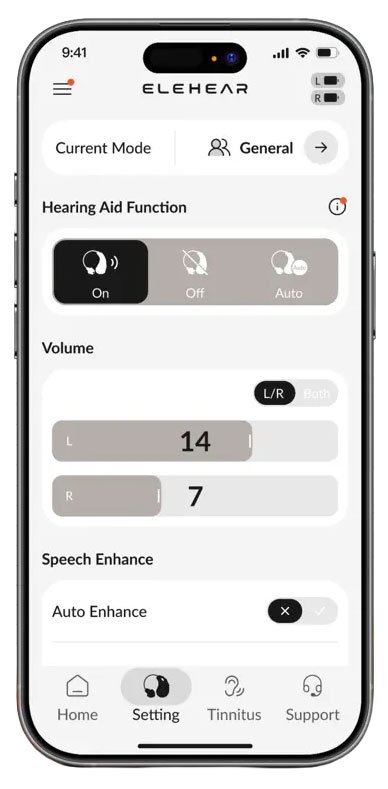
Die ELEHEAR-App ermöglicht es Benutzern, die Delight-Hörhilfen von einem Smartphone aus einzurichten und zu personalisieren. Sie unterstützt Lautstärke-, Ton-, Rauschkontroll- und Preset-Modus-Anpassungen sowie Batterieberwachung und Firmware-Updates.
Verifizierter Händler für Elehear Delight.

Direkt vom Hersteller
Mit kontinuierlicher Fernbetreuung unterstützt, ist ELEHEAR dem Ziel verpflichtet, Ihr Hörerlebnis bei jedem Schritt zu verbessern. Wir hören unseren Benutzern zu und innovieren mit ihren Bedürfnissen im Fokus, um Produkte zu schaffen, die Erwartungen übertreffen. Unsere Mission ist es, sicherzustellen, dass jeder jedes Wort deutlich hört.
Benachrichtigung bei Preissenkung für dieses Produkt
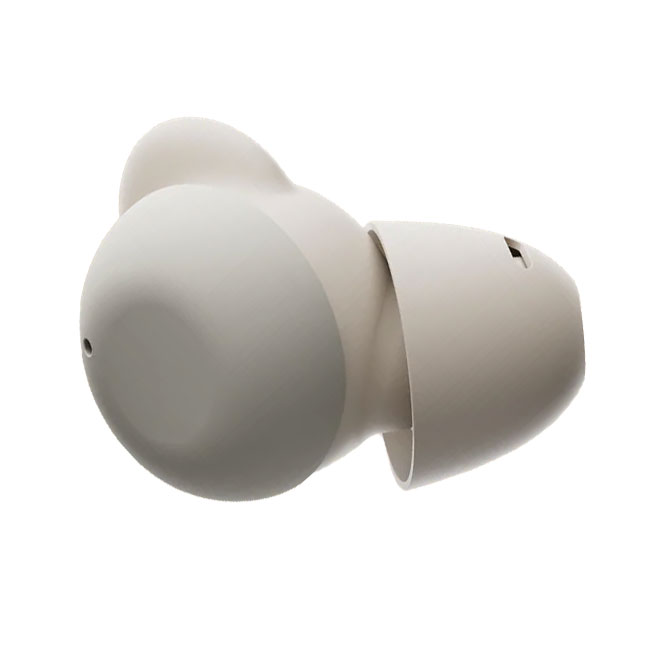
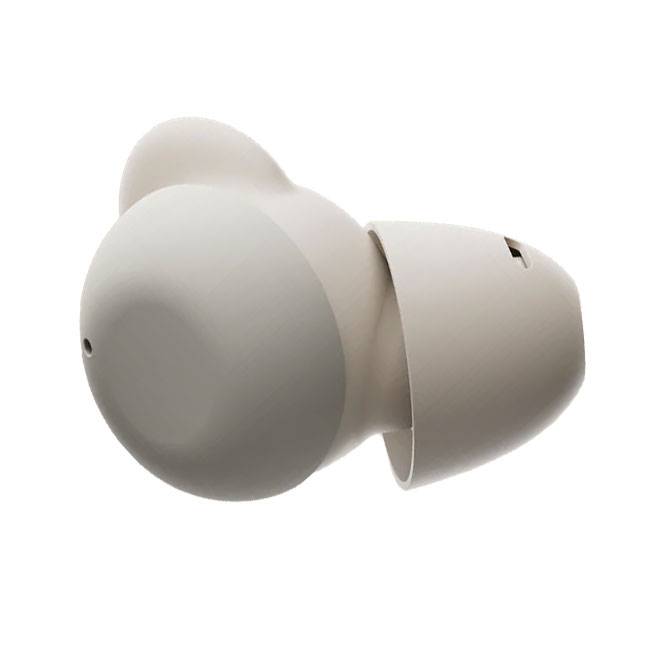
Das ELEHEAR Delight ist ein erschwingliches rezeptfreies Högerät, das aussieht und sich mehr wie ein modernes Earbud als wie ein traditionelles Högerät anfühlt. Obwohl HearingTracker noch keine vollständige praktische Bewertung durchgeführt hat, deuten unabhängige Labortests von HearAdvisor darauf hin, dass das Delight ein starkes Gesamtwert-für-Geld-Verhältnis bietet, mit besonders guter Leistung für alltägliche Gespräche in ruhigeren Umgebungen und besser als erwartet Musikstreaming. Die Hauptkompromisse sind bescheidenere Leistung in lauten Umgebungen und etwas schwächere Rückkopplungsbehandlung, aber für sparsame Käufer, die ein komfortables, App-verbundenes, Earbud-ähnliches Högerät möchten, ist das Delight eine vielversprechende Option.


