Wir überprüfen jeden von uns empfohlenen Artikel unabhängig und schätzen Ihr Vertrauen und Ihre Unterstützung. Wenn Sie über unsere Links kaufen, erhalten wir möglicherweise eine Provision.Mehr erfahren.
Shop
Top-AuswahlTop 10 ansehen
Unabhängig. Unvoreingenommen.
Produktbewertungen.
Hörhilfen
  • Erste Schritte
  • Beste Hörhilfen
  • Hörhilfen vergleichen
  • Preise für Hörhilfen
  • Freiverkäufliche Hörhilfen
  • Kaufanleitung
  • Nachrichten zu Hörhilfen
  • Hörgeräte-Forum
Top-Marken
  • Phonak
  • Oticon
  • Starkey
  • Signia
  • ReSound
  • Widex
Ressourcen
  • Hörverlust
  • Tinnitus
  • Ohrenschmalz
  • Ohrstöpsel
  • Hörvermögen testen
  • Facebook-Gruppe
  • Zubehör-Shop
Über uns
  • Über das Team
  • Wie wir bewerten
  • Mitwirkende
  • Kontaktieren Sie uns
Abonnieren Sie für die neuesten Nachrichten und Bewertungen von uns
Unabhängige Hörgeräte-Bewertungen & Ratings
Aktuelle Branchennachrichten & Experteneinblicke
Kostenlos. Kein Spam. Jederzeit abbestellbar.
Mit dem Abonnieren stimmen Sie unserer Datenschutzrichtlinie zu.
  • Allgemeine Geschäftsbedingungen
  • Datenschutzrichtlinie
© 2026 HearingTracker. Alle Rechte vorbehalten.English
Redaktionell
  1. Startseite
  2. Hörhilfen
  3. Beste Hörgeräte für Musik 202 ...

Best Hearing Aids for Music of 2026: OTC & Rx Options

Not all hearing aids excel at streaming music, but after testing over 80 models, we’ve identified the top performers.
Dr Steve Taddei
Written by
Dr Steve Taddei
Tina Sieber, PhD
Written by
Tina Sieber, PhD
Abram Bailey, AuD
Reviewed by
Abram Bailey, AuD
Independent Testing
HearAdvisor Lab
Aktualisiert am Mar 23, 2026·Wie wir testen

Unser Expertenteam wählt Produkte sorgfältig aus und testet sie gründlich. Wenn Sie über unsere Links kaufen, erhalten wir möglicherweise eine Provision. So halten wir unsere Bewertungen unabhängig.

Warum uns vertrauen?
295+Stunden Audioaufnahmen
95Getestete Hörgerätemodelle
5Branchenführende Audiologen
13Jahre unabhängig geführt & betrieben

2026 Guide Includes:
4 models benchmarked in our lab.

So testen wir

Unsere Empfehlungen

Top-AuswahlBest Prescription Hearing Aid for Music
Phonak Audéo Infinio Ultra
Ab $3,998 pro Paar|Vollständigen Test lesen
Phonak Audéo Infinio Ultra
4.4/5

Das Audéo Infinio Ultra Sphere ist ein Premium-Hörsystem mit Receiver-im-Kanal (RIC), das durch eine Dual-Chip-KI-Architektur angetrieben wird. Seine ActiveVent-Empfänger schließen sich automatisch beim Streaming, und die universelle Bluetooth-Unterstützung funktioniert mit iOS und Android. Die Akkulaufzeit beträgt bis zu 18 Stunden und fällt im Sphere-Modus auf etwa 16 Stunden ab.

Warum wir es ausgewählt haben
  • ActiveVent receivers optimize seal for streaming
  • Universal Bluetooth LE Audio + Auracast-ready
  • Top music streaming score among Rx aids
Kompromiss: Auracast-ready, but still pending a firmware update to enable this feature.
Details ansehen
Best Battery Life for Music
Yeasound RIC800
Ab $599 pro Paar|Vollständigen Test lesen
Yeasound RIC800
4.2/5

Das RIC800 ist ein voreingestelltes Hörgerät im Over-the-Counter-Stil (OTC) vom Typ Receiver-in-Canal mit adaptiver KI-Geräuschunterdrückung, Bluetooth-5.2-Streaming für iOS und Android, Auracast-Unterstützung und bis zu 31 Stunden Akkulaufzeit pro Ladung, mit drei Ladungen im tragbaren Etui.

Warum wir es ausgewählt haben
  • Top-ranked OTC music streaming score
  • 31-hour battery outlasts all earbud-style rivals
  • Bluetooth LE Audio + Auracast to iOS and Android
Kompromiss: No in-app hearing test; sound customization is limited to four presets and a basic equalizer, though Yeasound's support can recommend tailored settings based on an audiogram.
Details ansehen
Best Budget OTC Hearing Aid for Music
JLab Hear OTC
Ab $100 pro Paar|Vollständigen Test lesen
JLab Hear OTC
3.9/5

Das JLab Hear ist ein Ohrhörer-Stil Instant-Fit OTC-Hörhilfe für leichte bis mittelschwere Hörverluste. Es streamt auf iOS und Android über Bluetooth LE Audio 5.3 mit Auracast-Unterstützung, und reaktionsschnelle Touch-Steuerelemente an jedem Bud-Schaft steuern Lautstärke, Programme und Anrufe.

Warum wir es ausgewählt haben
  • Highest music streaming score at this price point
  • Bluetooth LE Audio + Auracast on iOS and Android
  • Touch controls for on-ear playback management
Kompromiss: Battery life of 7 to 10 hours falls short of all-day use, and speech-in-noise performance is below average for the OTC category.
Details ansehen

Compare the Best Hearing Aids for Music

Produkt
Top-Auswahl
Phonak Audéo Infinio Ultra

Phonak Audéo Infinio Ultra

Seite besuchen
Yeasound RIC800

Yeasound RIC800

Seite besuchen
JLab Hear OTC

JLab Hear OTC

Seite besuchen
Apple AirPods Pro 3

Apple AirPods Pro 3

Seite besuchen
Unsere Bewertung4.4/54.2/53.9/54.1/5
UrteilBest Prescription Hearing Aid for MusicBest Battery Life for MusicBest Budget OTC Hearing Aid for MusicBest for iPhone Users
PreisFrom $3,998 / pair$599

Prices and availability are subject to change. We independently review each item we recommend and appreciate your trust and support. When you buy through our links, we may earn a commission.

Looking for a hearing aid with decent music quality when streaming over Bluetooth? We tested over 95 modern hearing aids in the HearAdvisor acoustic lab to reveal the winners (based on hard science). In the micro reviews below, we discuss the hearing aid features that will impact your music listening experience.

If you're a musician or enjoy listening to live or speaker music, know that most hearing aids amplify the same frequency range of 250 to 8,000 Hz, sometimes up to 10,000 Hz. With the right features, however, you can still optimize your hearing aids for live music.

Best Prescription Hearing Aid for Music: Phonak Audéo Sphere Infinio Ultra

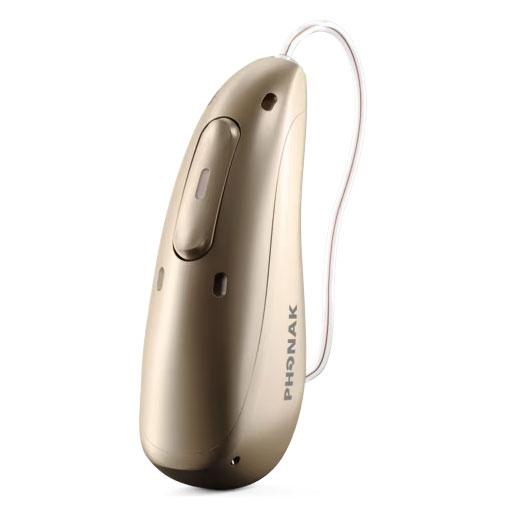
The Phonak Audéo Sphere Infinio Ultra is the best prescription hearing aid for music because it offers universal Bluetooth support and uses ActiveVent receivers. When the aid detects a Bluetooth connection, the receiver automatically closes its vent to block out external noise. As a result, you'll notice improved sound clarity for calls and streaming music; because the vent can re-open, you get the best of both worlds with natural-sounding conversation and general listening.

The Audéo Sphere Infinio is also our top pick for the best hearing aids period.

The Audéo Sphere Infinio Ultra is compatible with Android and iOS and offers low latency transmissions through Bluetooth LE Audio. Note that while it's Auracast-ready, this feature is pending a firmware update. This, however, is true for most devices featuring Bluetooth LE Audio.

When you're not streaming music, the Audéo Sphere Infinio Ultra will give you enhanced speech understanding with the latest AI denoising technology. In the HearAdvisor test lab, it achieved excellent scores for speech in quiet (4.8/5) and speech in noise (4.6/5) after an expertly tuned fit.

Yes, you can safely wear Bluetooth hearing aids all day without any risk to your health. In "Are Bluetooth Hearing Aids Safe?," we discuss Bluetooth radiation and why it poses no risk.

Pros

  • Professional Fitting
    The hearing care provider will fit these hearing aids and should offer quality care and remote programming through the app.
  • Speech Comprehension
    Improved speech intelligibility, thanks to the noise reduction provided by the AI-driven Deep Sonic chip.
  • Sound Clarity
    Automatically adapts to various environments to enhance sound clarity for both speech and streaming music.

Best Battery Life: Yeasound RIC800

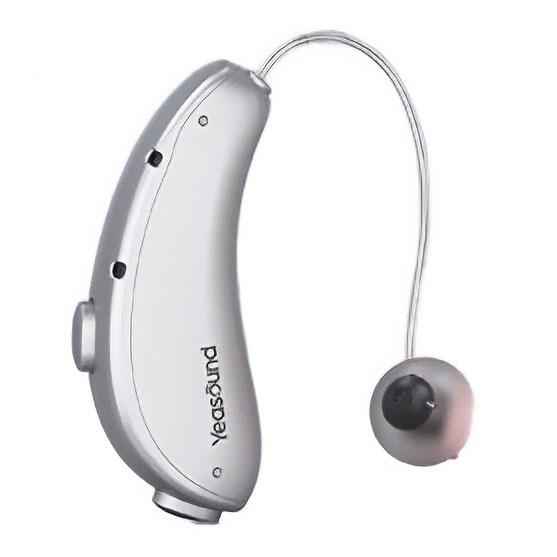
The Yeasound RIC800 is a receiver-in-canal (hence RIC) rechargeable OTC hearing aid that offers up to 31 hours of battery life and excellent streaming features, scoring 4.3 (out of 5) points in the HearAdvisor lab.

Its form factor allows it to pack a larger battery than an earbud, though using the built-in AI-powered adaptive mode, one of its presets, will reduce its battery life. Nevertheless, with the charging case adding three full charges, bringing total battery life to 124 hours max, you might be able to get through an entire week away from an outlet.

Since our original review of the RIC800 in February of 2026, Yeasound has added an app-based hearing test via firmware update, possibly moving the RIC800 beyond preset-only fitting. The company also accepts audiograms by email for remote programming. We’re retesting the RIC800 using the new hearing test feature to confirm how it impacts performance. Check back for our updated verdict.

Although the RIC800 relies on presets, rather than an in-app hearing test or audiogram, it scored well in quiet (4.1/5) and noisy environments (2.1/5). Within the app, you can choose between five presets and fine-tune four of them with a tree-band equalizer, noise reduction level, and directionality. If you're unsure whether your customizations are adequate, you can submit a personal audiogram to Yeasound to receive settings recommendations tailored to your unique hearing loss. In adaptive mode, the RIC800 automatically adapts to background noise. You can also adjust the volume separately for each ear.

Pros

  • Bluetooth 5.2 Audio Streaming
    Low latency streaming to Android and iOS with Auracast support.
  • Generous Battery Life
    Up to 31 hours per charge, plus three full charges with the portable case, giving you up to 124 hours of total battery life
  • AI Noise Cancellation
    In adaptive mode, the RIC800 improves speech clarity by sensing background noise and seamlessly adjusting settings for the best possible listening experience.

Best Budget OTC for Music: JLab Hear OTC

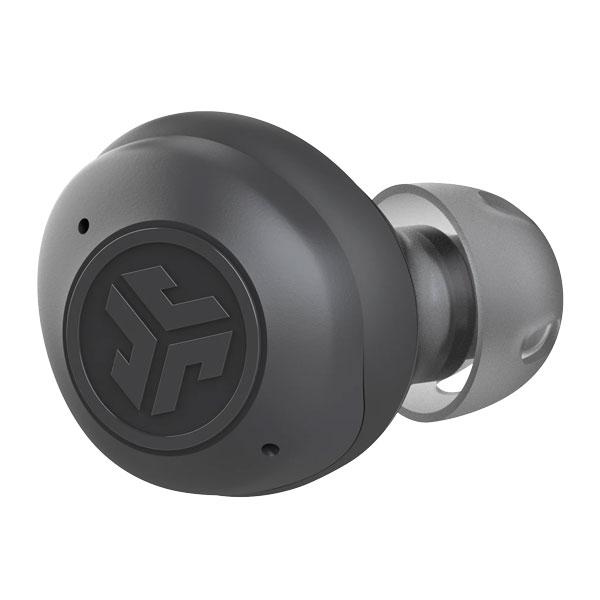
The JLab Hear OTC is an earbud style instant-fit device that is excellent for streaming music, with a HearAdvisor score of 4.6 (out of 5).

The Hear OTC can stream music from Android and iOS with low latency through Bluetooth LE Audio 5.3 (this means it may be able to support Auracast with a firmware update). In our tests, the quality of streamed audio was good and hands-free calling worked well. The touch button on each earbud lets you control the playback and volume, change programs, and accept or end incoming calls.

Hear OTC's speech amplification may seem less impressive, with both speech in quiet (2.7/5) and speech in noise (1/5) scoring below average, but considering its price, it's surprisingly good. In fact, this is one of the most affordable hearing aids you can get.

Pros

  • Price
    The most affordable hearing aid option for music streaming with respectable speech amplification benefits at this price point.
  • Comfort
    Lightweight and comfortable to wear, providing a tight seal without feeling plugged up.
  • Wireless Streaming
    Supports wireless audio streaming and hands-free calling with iOS and Android through Bluetooth 5.3 with LE Audio and Auracast.

Best for iPhone Users: Apple AirPods Pro 3

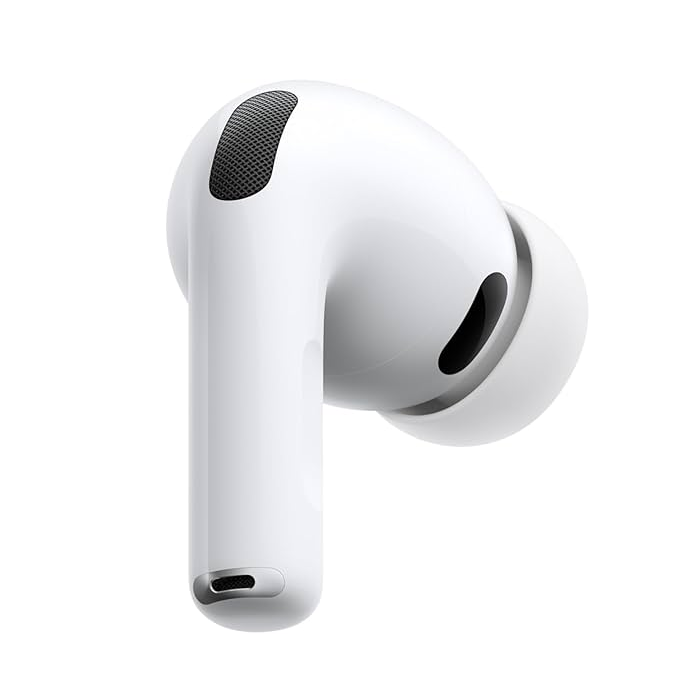
The Apple AirPods Pro 3 offers excellent streamed audio quality, receiving a 4.3 out of 5 in the HearAdvisor lab, and can double as decent-quality OTC hearing aids. Moreover, you can buy a pair for less than $250, putting them at a more realistic price point for advanced earbuds. AirPods also offer desirable health tracking and other hearing features through iOS devices.

Pros

  • Affordable
    The lowest-priced OTC hearing aid on this list.
  • Includes a Hearing Test
    The test is done individually for each ear.
  • Supports Audiograms
    You can upload your professional hearing test data through the Apple Health app.
ADVERTISEMENTad for OticonADVERTISEMENTad for Oticon

While the JLab Hear OTC and the Apple AirPods Pro 3 are the best budget OTC devices for streaming music, their performance as hearing aids—specifically for speech in noise—leaves much to be desired.

Which Product Should I Choose?

The best hearing aid for music streaming ultimately depends on your specific needs and preferences. Whether you prioritize prescription-grade customization, OTC convenience, or advanced earbud features, there is a suitable option available for everyone. Make sure to consider your individual requirements and budget when selecting the ideal device to enhance your music listening experience.

How Picked the Best Hearing Aids for Music

HearAdvisor uses a custom built acoustic laboratory to measure hearing aid performance. Hearing aids are programmed based on a common age-related hearing loss and worn by an industry-standard acoustic manikin. Recordings are then made through microphones in the manikin’s ears, creating quasi-3D audio that emulates what it would sound like if you were wearing devices and streaming.

The KEMAR acoustic manikin wearing Lucid's Engage OTC hearing aids.

HearAdvisor evaluates streaming quality by playing audio (4 different music genres and one podcast) from a paired iOS smartphone. A calibration is performed prior to recordings so that the phone's streamed audio level is consistent across all tested devices, and recordings, at roughly 70 dB SPL. Once recordings are finished, music performance is measured using the Hearing Aid Audio Quality Index (HAAQI)9 which models the impaired auditory system and was designed to match subjective music sound quality ratings from individuals with hearing loss.10

Streamed Music Quality is one of five component metrics that HearAdvisor uses to evaluate hearing aid performance. All metrics are simplified using a 1 to 5 rating scheme, and averaged across both their Initial and Tuned Protocols, creating a single number representative of a device's overall performance—the HearAdvisor SoundScore™. Higher numbers denote a better SoundScore and top-performers receive an Expert Choice Badge—giving a clear stamp of approval for the best products tested.

ADVERTISEMENTad for ReSound

To find the best hearing aids for music, we ranked all hearing aids based on their average music streaming score and removed previous generation products or those that had major flaws. From the remaining models, we selected the best of each category, such as best prescription, best OTC, and best earbud-style hearing aid.

The Problem with Music and Hearing Aids

If you wear hearing aids, you've probably noticed that music doesn't sound as good as you'd like. Most hearing aid users report that music sounds distorted—too sharp and lacking in bass.

This is not altogether surprising as hearing aids have traditionally focused on speech enhancement. They are first and foremost tools for maximizing communication. In developing the audio processing strategies and acoustical designs that work best for speech enhancement, engineers have had to make some unfortunate compromises for the music lovers among us.

ADVERTISEMENTad for ReSoundADVERTISEMENTad for Phonak

Hearing aids have gotten better and better over the years, with user satisfaction keeping pace.6 In the last few years Bluetooth streaming from iPhone and Android has become commonplace. But, have manufacturers made any progress on improving the dreaded sound quality when streaming music?

The short answer is "not really"—there is no great hearing aid when it comes streaming music quality. The best hearing aids are just OK. But, if music streaming is important to you, you'll want to make sure you read this article to learn what hearing aid technologies can impact music quality, and how you can be a smart consumer when it comes to selecting and fine tuning your next all-day companion.

I also work as the Lab Director of HearAdvisor, an independent scientific hearing aid vetting service. In the lab, we ran tests to find the absolute best hearing aids for streaming music quality. My recommendations are based on both HearAdvisor's scientific lab findings and my hands-on experience with these devices in my role as a product reviewer with HearingTracker. Continue reading to learn what hearing devices I liked best and why.

How Speech and Music Differ

Before we dive into technologies, let’s briefly look at the differences between speech and music. Figure 1 shows a ten-second clip of both speech in quiet and a typical rock song. These waveforms represent the sound's shape over time. The speech waveform (left) varies in volume having occasional pauses and louder peaked regions, such as at 3.6 seconds. Conversely, music tends to be much louder on average with less variation. This is to some extent the nature of music and instruments; however, we can also blame loudness competitions in the music industry (i.e., the “Loudness Wars”) driving our music to be less dynamic and more prone to distortions.

Figure 1: Here you can see the waveforms of speech and music audio clips (left and right, respectively).

If we compare volume changes between the two, speech is generally regarded as having a dynamic range of 30 decibels (dB) while music can span the full range of our hearing system.2 Normal conversational speech also hovers around 65 dB and yelling can increase this level impressively to the low 80s. However, even with our greatest vocal effort we fall short of other musical instruments. (see Table 1 for examples of average sound levels).

Instrument

Average sound level

Bass

80.5 dBA

Cello

88.6 dBA

Drum set

93.5 - 94.6 dBA

Flute

88.6 - 95.5 dBA

Saxophone

ADVERTISEMENTad for Starkey

Speech and music also vary in their frequency range. Speech is generally regarded as spanning from 250 to 8000 Hz, though the actual range is slightly broader, with frequencies around 2000 Hz contributing most to speech intelligibility.4 Music on the other hand can cover the entire range of our hearing from 20 to 20,000 Hz given the range of instruments available and various harmonics they produce. The spectrum, or overall frequency content, of the same speech and music files can be seen in Figure 2. Speech drops off below roughly 100 Hz and above 10,000 Hz. Again, the spectrum of the rock music can be seen spanning a broader range with much greater focus in the bass region around 100 Hz.

Figure 2: Here the spectra, or sound energy across frequencies, for the same male voice and rock song are provided. Music can be seen spanning a broader range with greater energy in the lower frequencies.

Hearing Aids are Designed for Speech… Not Music

Now that we have highlighted some differences between speech and music, what are the specific challenges hearing aids face? Here are a few points and recall that these are not necessarily issues as many are designed to aid communication:

ADVERTISEMENTad for PhonakADVERTISEMENTad for Signia

Digital Signal Processing (DSP): Hearing aids manipulate audio with various processes to improve audibility and the wearer's listening comfort. Some examples include wide dynamic range compression, beamforming directional microphones, digital noise reduction, and feedback reduction. There is considerable research supporting the benefits of such DSP for general use. However, they can cause undesirable distortions when listening to both live and recorded music.

Physical Style and Fit: Receiver-In-Canal (RIC) hearing aids are by far the most common. They typically leave the ear canal open in what's referred to as an "open fitting". With open hearing aids, sound can enter your ear in two ways, (1) through the hearing aid speaker and (2) naturally through the ear canal. Many people prefer open-fitting RICs as they are very comfortable and more natural sounding if your hearing loss is limited to the higher-frequencies. They also don't cause your own voice to become boomy when you speak (when bass tones are trapped in the ear by non-open hearing aids, this is referred to as "occlusion").

A man positions the speaker from his RIC hearing aid into his ear canal. The plastic filament pointing down is a retention filament that is placed into the "bowl" of the ear to stop the speaker from working its way out of the ear.

The downside to open-fits is that they do not provide good music sound quality. The instant-fit ear tips used for open-fits offer minimal coupling to the ear canal and little-to-no occlusion below roughly 1000 Hz.3 Without good coupling we lose bass and mid frequencies leading to thin and tinny sounding music.

Speaker Type: Hearing aids use a special type of speaker known as a balanced armature (BA) driver. BA drivers are used because they are small, minimize battery usage, and are efficient at providing amplification for a typical age related high-frequency hearing loss. Other speakers like the dynamic drivers in your car are better for music reproduction though they are not used in traditional hearing aids. Some devices, such as Liberty 3 Pro by Soundcore, include both speaker types in their earbuds. Other devices are employing a newer micro-electro mechanical (MEMs) driver to expand output capabilities.

ADVERTISEMENTad for Signia

Streaming Protocols: Wireless audio streaming with Bluetooth continues to grow in popularity and has become an expected feature of most modern hearing aids. Made for iPhone (MFi) and Audio Streaming for Hearing Aids (ASHA) protocols provide many benefits to the hearing aid user though they tend to degrade the streamed audio signal by adding undesirable distortions and artifacts.5,7

Music Programs, Fine-Tuning, and Music Audiologists

Regardless of these barriers, hearing aid manufacturers are increasingly aware of the importance of music sound quality. New over-the-counter (OTC) hearing aids are also entering the market, providing more opportunities than ever for individuals with hearing loss. Most of these devices offer dedicated “Music Programs,” which adjust device settings to be more advantageous for music listening.

Improve YOUR Experience with Music: These are the BEST Hearing Aid Music Settings for Music Lovers

For example, hearing aid music programs generally disable automatic adjustments that may cause the volume and or sound quality to change intermittently. Compression settings and max peak output (MPO) may be modified to account for the louder volumes and more intense bursts of energy found in music. Feedback cancellation algorithms can also be turned off so instruments like flutes and clarinets do not confuse them causing unnecessary whistling.

Music programs can improve sound quality, but fine-tuning for your specific music needs should be considered.1 For example, you may prefer a more occluding ear-tip or custom earmold to get the most out of your hearing device. Speak with your hearing provider regarding your preferences, musical background, and specific listening needs. Lastly, consider your hearing health and whether your listening habits are potentially hazardous, causing further damage to your ears—loud sound levels are associated with an array of music-induced hearing disorders.

ADVERTISEMENTad for WidexADVERTISEMENTad for Yeasound

It is worth noting that some hearing providers specialize in this area, having both practical and theoretical knowledge of sound, musicality, and the industry. “Music Audiologists'' therefore offer the greatest opportunity to help optimize your hearing devices for music. If you schedule an appointment with a Music Audiologist, you will likely be asked to bring your instrument in-office for more pragmatic testing and troubleshooting.

Music, Occlusion, and Bass

It is worth noting that HearAdvisor programs devices based on industry standards for optimizing speech performance. Music Streaming scores therefore do not reflect the devices being specifically adjusted for music sound quality. It is likely that all devices would perform and score differently if settings, and physical properties, were tuned for music listening. However, this would generally require changes that may compromise both speech performance and user comfort. As this is unlikely for the average person, HearAdvisor provides scores based on the predominant approach to hearing aid programming.

This begs the question, what are some changes that would benefit music sound quality? To put it simply, more bass. We have all heard car-rattling subwoofers and the explosive “booms” commonplace at theaters. As it turns out, even individuals with hearing loss find good low-frequency representation, or bass, important when judging music sound quality11. There are many factors at play but bass remains a top priority.

Eargo 7 hearing aids on my record player after a listening experiment.

While modern hearing aids are capable of doing this, audiologists tend to minimize bass for several reasons. One good example is user comfort. Occlusion, or a good ear canal seal, is required for hearing aids to provide bass and this can inadvertently cause a “barrel” or “echo” like sound quality when you speak. This is the result of low-frequency buildup in your ear canal and is a common complaint among hearing aid users13. If this isn’t making sense, plug your ears and voice the “e” sound.

This tradeoff between comfort and music sound quality is important and HearAdvisor offers metrics for both Streamed Music Quality and My Own Voice for this reason. Devices that offer more occlusion, either due to their default configuration or manufacturer recommendations, tend to score better for Music Quality. Table 3 below shows the ear tips used for all devices listed in this review, as well as our previous review. The resulting occlusion for several of the devices, shown here as real-ear occluded insertion gain (REOIG)12, is provided in Figure 3.

Device

Setup

Music Score

AirPods Pro 3

Closed ear tips

4.3

Oticon Intent

Bass dome double vent

4.0

Phonak Sphere

Power dome

Figure 3: Here we plot the real-ear occluded insertion gain (REOIG) averaged between both the left and right ears. This can also be thought of as insertion loss, or the amount of sound reduction observed in the ear canal when a device is being worn.

As previously mentioned, music sound quality and own voice comfort tend to have an opposite relation. Devices like the Phonak Lumity receiver-in-the canal hearing aid were rather occluding due to the fitting software recommending an unvented double flange power dome (black line in Figure 3). While this helped Phonak’s Streamed Quality score, it resulted in a lower My Own Voice score (0.9 out of 5). This trend can be seen in Figure 4 across various devices tested by HearAdvisor. 

Figure 4: Here we see a plot from HearAdvisor’s database showing the relation between My Own Voice and Streaming Music Quality Score. Each dot represents a different device's performance and a clear trend can be seen where better scores for the Own Voice Metric (closer to 5) are also associated with lower Streamed Music scores. The inverse is also true, supporting that devices with more occlusion will have better bass frequency response making them (1) better for music but also (2) less comfortable when speaking.

Attention Musicians and Music Fans

If you are reading this, it is likely that music is a pastime, passion, and or career. Be mindful of the hazards loud sound exposures pose on our hearing system and practice safe listening. Sound induced hearing damage is irreversible and commonly associated with other hearing disorders such as tinnitus. Fortunately, this type of hearing loss is almost completely preventable with education and minor effort—this holds true for those who have existing hearing loss and wish to preserve their ears. Here’s a short list to this ends:

  • Speak with a Music Audiologist and have them perform a hearing evaluation to (1) set a baseline and (2) monitor your hearing going forward.
  • Purchase quality earplugs and use them. We've tested and reviewed top musician's earplugs.
  • Fight the urge to listen at loud volumes and work to decrease your exposures to those that are excessive.
The Best Earplugs for Concerts in 2023
  • Use the iOS Health app to monitor your streamed listening levels and adjust accordingly.
  • Use a sound level meter (SLM) app such as NIOSH SLM to check your exposures in loud environments. Apple Watch offers similar warning features.
  • Be aware that there are many situations where hearing devices should be removed to reduce exposures to loud sounds. Hearing aids, when programmed properly, will not damage your hearing. However, they will not protect you from hazardous sound levels.

References

  1. Chasin M. (2021). Three distinct hearing aid programs for music? Hearing Review, 28(8):16.
  2. Chasin, M., & Russo, F. A. (2004). Hearing aids and music. Trends in Amplification, 8(2):35-47.
  3. Cubick, J., Caporali, S., Lelic, D., Catic, J., Damsgaard, A. V., Rose, S., ... & Schmidt, E. (2022). The Acoustics of Instant Ear Tips and Their Implications for Hearing-Aid Fitting. Ear and Hearing, 43(6):1771-1782.
  4. French NR, Steinberg JC. (1947). Factors governing the intelligibility of speech sounds. JASA. 19(1).
  5. Hoel, R., & Motos, T. (2011, October). Challenges in 2.4 GHz wireless audio streaming. In Audio Engineering Society Convention 131. Audio Engineering Society.
  6. Kochkin, S. (2010). MarkeTrak VIII: Consumer satisfaction with hearing aids is slowly increasing. The Hearing Journal, 63(1):19-20.
  7. Kuk, F., Crose, B., Korhonen, P., Kyhn, T., Mørkebjerg, M., Rank, M. L., ... & Ungstrup, M. (2010). Digital wireless hearing aids, Part 1: A primer. Hearing Review, 17(3):54-67.
  8. Rawool, V. W. (2012). Hearing conservation: In occupational, recreational, educational, and home settings. Thieme, 2012.
  9. Kuk, F., Keenan, D., & Lau, C. C. (2009). Comparison of vent effects between a solid earmold and a hollow earmold. Journal of the American Academy of Audiology, 20(08):480-491.
  10. Kates, J. M., & Arehart, K. H. (2015). The hearing-aid audio quality index (HAAQI). IEEE/ACM transactions on audio, speech, and language processing, 24(2), 354-365.
  11. Arehart, K. H., Kates, J. M., & Anderson, M. C. (2011). Effects of noise, nonlinear processing, and linear filtering on perceived music quality. International Journal of Audiology, 50(3):177-190.
  12. Dillon H. (2012). Hearing Aids. Thieme.
  13. Jenstad, L. M., Van Tasell, D. J., & Ewert, C. (2003). Hearing aid troubleshooting based on patients' descriptions. Journal of the American Academy of Audiology, 14(07):347-360.
Diesen Beitrag teilen
  • Best Lists
Warum uns vertrauen?
295+Stunden Audioaufnahmen
95Getestete Hörgerätemodelle
5Branchenführende Audiologen
13Jahre unabhängig geführt & betrieben

2026 Guide Includes:
4 models benchmarked in our lab.

So testen wir

Inhaltsverzeichnis

  • Introduction
  • Best prescription hearing aid
  • Best Prescription Hearing Aid for Music
  • Best advanced earbud
  • Best Battery Life for Music
  • Best OTC hearing aid
  • Best Budget OTC Hearing Aid for Music
  • Best for iPhone Users
  • Best hearing aid in noise
  • How We Tested
  • Why Music is Hard for Hearing Aids
  • Music-Related Hearing Damage
Schnellurteil

Die 2026 Auswahl

Aktualisiert 2026 • 95+ Getestete Modelle
Top-AuswahlBest Prescription Hearing Aid for Music
Phonak Audéo Infinio Ultra

Premium-Hilfe mit KI-gestützter Sprachklarheit, ActiveVent-Empfängern und universeller Bluetooth-Unterstützung.

Expertenbewertung
4.4/5
From $3,998 / pair
Best Battery Life for Music
Yeasound RIC800

Voreingestelltes OTC-Hörhilfegerät mit KI-Geräuschunterdrückung, universallem Bluetooth und langer Akkulaufzeit.

Expertenbewertung
4.2/5
$599 pro Paar
Best Budget OTC Hearing Aid for Music
JLab Hear OTC

Budget-Ohrhörer-Stil OTC mit Bluetooth LE Audio, Touch-Steuerelementen und Auracast-Unterstützung.

Expertenbewertung
3.9/5
$100 pro Paar
No telecoil or profound loss options

All picks target mild to severe hearing loss, and none carry a telecoil. Anyone needing higher gain or loop system access in theaters, places of worship, or public venues should look at a full prescription fitting instead.

1

Fit affects music quality: A tighter ear seal means better bass and fuller streamed sound. Earbud-style and receiver-in-canal (RIC) devices with closed tips consistently outscore open-fit aids on HAAQI (measured via HearAdvisor's music score). Thus, if music matters, fit matters. But keep in mind that you're trading music quality for own-voice comfort, as a tighter seal can make your voice sound boomy or echo-y to yourself.

2

Auracast support is rolling out: Right now, the Yeasound RIC800 is the only fully Auracast-enabled hearing aid on this list. The other devices are Auracast-ready, meaning they're pending a firmware update. Music fans eager to connect to live broadcasts should pick a hearing aid that supports Auracast, now or in the future. Until Apple natively supports Auracast, iOS users should double-check whether the hearing aid app will let them connect to public broadcasts.

3

Lab scores have a ceiling: HAAQI music rankings reflect standard speech-optimized programming, the way most people actually wear their aids. Music-specific tuning, a dedicated music program, or a music audiologist consultation can push performance meaningfully beyond what the scores show, especially if the intended use is to amplify live music.

Lab testing

Each device was tested in HearAdvisor's acoustic lab using a calibrated manikin and real-world ambisonic recordings, producing objective, reproducible performance scores.

Hands-on testing

An audiologist on our team wore each hearing aid for at least one week, evaluating build quality, battery life, Bluetooth stability, comfort, and day-to-day handling.

Streamed music quality

Hearing aids were ranked by their rating for streamed music and selected based on other standout qualities. Music performance was measured using the Hearing Aid Audio Quality Index (HAAQI).

$100
$240
Freisprechen
Wiederaufladbar
iPhone-Streaming
Android-Streaming
Telefonspule
Universal Bluetooth Support
Compatible with Android and iOS for audio streaming and hands-free calling through Bluetooth Classic and LE Audio.
  • Battery Life
    Up to 18 hours, 3 hours to recharge, with a 30-minute quick charge yielding up to 6 hours of use.
  • Build Quality
    IP68 water and dust resistant.
  • Cons

    • Size
      Less discrete than competitors due to a slightly larger behind-the-ear unit.
    • Battery Use
      Battery drops to around 7 hours in the AI-driven Sphere mode and there's no disposable battery option.
    • Performance in Noise
      Potentially poor call quality in noisy environments.
    • No Telecoil
      No support for loop systems or CROS. If this matters to you, consider the Oticon Intent prescription hearing aid.
    IPX6 Water Resistance
    Built to withstand immersion in three feet (one meter) of water for up to one month.
  • Feature Rich App
    The companion app includes useful controls and advanced features like a built-in tinnitus masker and a live listen function.
  • Remote Care Services
    Help from a professional is available through the Yeasound app.
  • Cons

    • Preset-Based Setup
      No app-based hearing test or audiogram support. Fine-tuning the hearing aids inside the app is limited.
    • Dust Ingress Protection Unknown
      The X in the IPX8 rating means that the RIC800 have not been officially tested for protection against solid particles like fine dust or sand.
    Touch Controls
    Responsive touch button on each earbud gives you more control over current playback than any prescription hearing aid.

    Cons

    • Speech Benefits
      Instant-fit device that might not provide sufficient or ideal amplification for your hearing loss as you're limited to presets and app customizations without an on-ear hearing test.
    • Battery Life
      Only 7 (with streaming) to 10 hours per charge and flimsy portable charger.
    • Build Quality
      IPX4 rating, meaning they can withstand water splashing from any direction, but their dust resistance is unknown.
    • No Professional Hearing Care
      The online Help Center and standard Customer Support can assist with technical questions only.
    Sound Personalization
    The Hearing Assistance menu within iOS lets you fine-tune the amplification, balance, tone, and ambient noise reduction, and you can boost conversations.
  • Wireless Streaming to iOS and Android
    Excellent Bluetooth streaming quality and hands-free calling.
  • Cons

    • Requires an iOS Device
      Setting up, tuning, and controlling the AirPods Pro 3 as hearing aids requires an iPhone or iPad.
    • Poorly Accessible Features
      Hearing health features are buried in the Settings menu and split across multiple screens.
    • Short Battery Life
      Depending on your usage and settings, you can expect eight to ten hours per charge and up to 24 hours with the charging case.
    • Short Lifespan
      The Lithium-ion batteries will likely start failing after two to three years. Unfortunately, AirPods are not designed to be repaired.
    • Tech Support Only
      Since these aren't hearing aids, support will be limited to technical concerns.

    88.2 - 92 dBA

    Violin

    85.5 -87.8 dBA

    Table 1: Average sound levels of various instruments (Adapted from Rawool, 2012, pg. 203).

    4.2

    Jabra Enhance Plus

    Closed EarGels

    3.8

    Lexie B2

    Open dome

    2.3

    Lucid Engage

    Open dome

    2.2

    Jabra Enhance Select

    Open dome

    1.7

    Table 3: Ear tips used for testing in HearAdvisor's Initial protocol. Ear tips are chosen based on default configurations (OTC) or manufacturer recommendations (Rx). When configured with open domes, products typically have lower music scores.
    • Dr Steve Taddei

      Dr Steve Taddei

      Doktor der Audiologie

      Steve Taddei, Au.D., vereint seinen Abschluss in Audiotechnik vom Columbia College Chicago mit seinem Doktorat in Audiologie der Northern Illinois University, um Hörtechnologien voranzutreiben und das Bewusstsein für Hörverlust als Laborleiter bei HearAdvisor zu schärfen. Er trägt auch zu verbraucherfokussierten Bewertungen von Hörgeräten und Ohrstöpseln auf HearingTracker.com bei und inspiriert zukünftige Fachleute durch seine Positionen als Lehrbeauftragter an mehreren Hochschulen, um die nächste Generation zu ermutigen, ihre Leidenschaften zu entdecken und zu verfolgen.

    • Tina Sieber, PhD

      Tina Sieber, PhD

      Gesundheitsschreiber

      Tina Sieber ist eine Technologiejournalistin mit über 10 Jahren Erfahrung und einem PhD in Biochemie. Nach einem Anfall von plötzlichem einseitigem Hörverlust wurde bei ihr 2018 ein gutartiger Gehirntumor diagnostiziert. Seitdem schreibt sie über Hörverlust und testet Hörgeräte für große Technik-Publikationen.

    • Abram Bailey, AuD

      Abram Bailey, AuD

      Gründer und Präsident

      Dr. Bailey ist ein führender Experte für Verbrauchertechnologie in der Audiologie-Branche. Er ist ein überzeugter Befürworter der patientenzentrierten Hörkommunikation und audiologischen Best Practices und begrüßt jede technologische Innovation, die den Zugang zu qualitativ hochwertigen Hörergebnissen verbessert. Dr. Bailey hält einen Au.D. vom Vanderbilt University Medical Center.

    Bewertung
    4.2
    Yeasound RIC800
    Angebot anzeigen
    Best Battery Life for Music: Yeasound RIC800
    Ab $599pro Paar

    Das RIC800 ist ein voreingestelltes Hörgerät im Over-the-Counter-Stil (OTC) vom Typ Receiver-in-Canal mit adaptiver KI-Geräuschunterdrückung, Bluetooth-5.2-Streaming für iOS und Android, Auracast-Unterstützung und bis zu 31 Stunden Akkulaufzeit pro Ladung, mit drei Ladungen im tragbaren Etui.

    Wichtige Merkmale

    Hands-Free
    Wiederaufladbar
    Streaming
    Streaming
    Induktionsspule
    Angebot anzeigen

    Expertenbewertung

    Bewertung
    4.4
    Phonak Audéo Infinio Ultra
    Angebot anzeigen
    Alle Angebote anzeigen
    Bewertung
    3.9
    JLab Hear OTC
    Angebot anzeigen
    Alle Angebote anzeigen
    Bewertung
    4.1
    Apple AirPods Pro 3
    Angebot anzeigen
    IPx8
    Best Prescription Hearing Aid for Music: Phonak Audéo Infinio Ultra
    Ab $4,598pro Paar

    Das Audéo Infinio Ultra Sphere ist ein Premium-Hörsystem mit Receiver-im-Kanal (RIC), das durch eine Dual-Chip-KI-Architektur angetrieben wird. Seine ActiveVent-Empfänger schließen sich automatisch beim Streaming, und die universelle Bluetooth-Unterstützung funktioniert mit iOS und Android. Die Akkulaufzeit beträgt bis zu 18 Stunden und fällt im Sphere-Modus auf etwa 16 Stunden ab.

    Ideal für

    MusikliebhaberLaute UmgebungenTinnitus-Linderung

    Wichtige Merkmale

    Hands-Free
    Wiederaufladbar
    Streaming
    Streaming
    Induktionsspule
    Angebot anzeigen
    Alle Angebote anzeigen

    Expertenbewertung

    Best Budget OTC Hearing Aid for Music: JLab Hear OTC
    Ab $100pro Paar

    Das JLab Hear ist ein Ohrhörer-Stil Instant-Fit OTC-Hörhilfe für leichte bis mittelschwere Hörverluste. Es streamt auf iOS und Android über Bluetooth LE Audio 5.3 mit Auracast-Unterstützung, und reaktionsschnelle Touch-Steuerelemente an jedem Bud-Schaft steuern Lautstärke, Programme und Anrufe.

    Ideal für

    MusikliebhaberWert

    Wichtige Merkmale

    Hands-Free
    Wiederaufladbar
    Streaming
    Streaming
    Induktionsspule
    IPx4
    Angebot anzeigen
    Alle Angebote anzeigen

    Expertenbewertung

    Best for iPhone Users: Apple AirPods Pro 3
    Ab $240pro Paar

    Die AirPods Pro 3 sind kabellose Ohrhörer mit FDA-zugelassener OTC-Hörhilfenfunktion, die in iOS integriert ist. Sie unterstützen einen In-App-Hörtest und Audiogramm-Upload, bieten feinkörnige Soundpersonalisierung und liefern bis zu 10 Stunden Akkulaufzeit im Hörhilfenmodus.

    Ideal für

    Musikliebhaber

    Wichtige Merkmale

    Hands-Free
    Wiederaufladbar
    Streaming
    Streaming
    Induktionsspule
    IP57
    Angebot anzeigen

    Expertenbewertung

    IP68